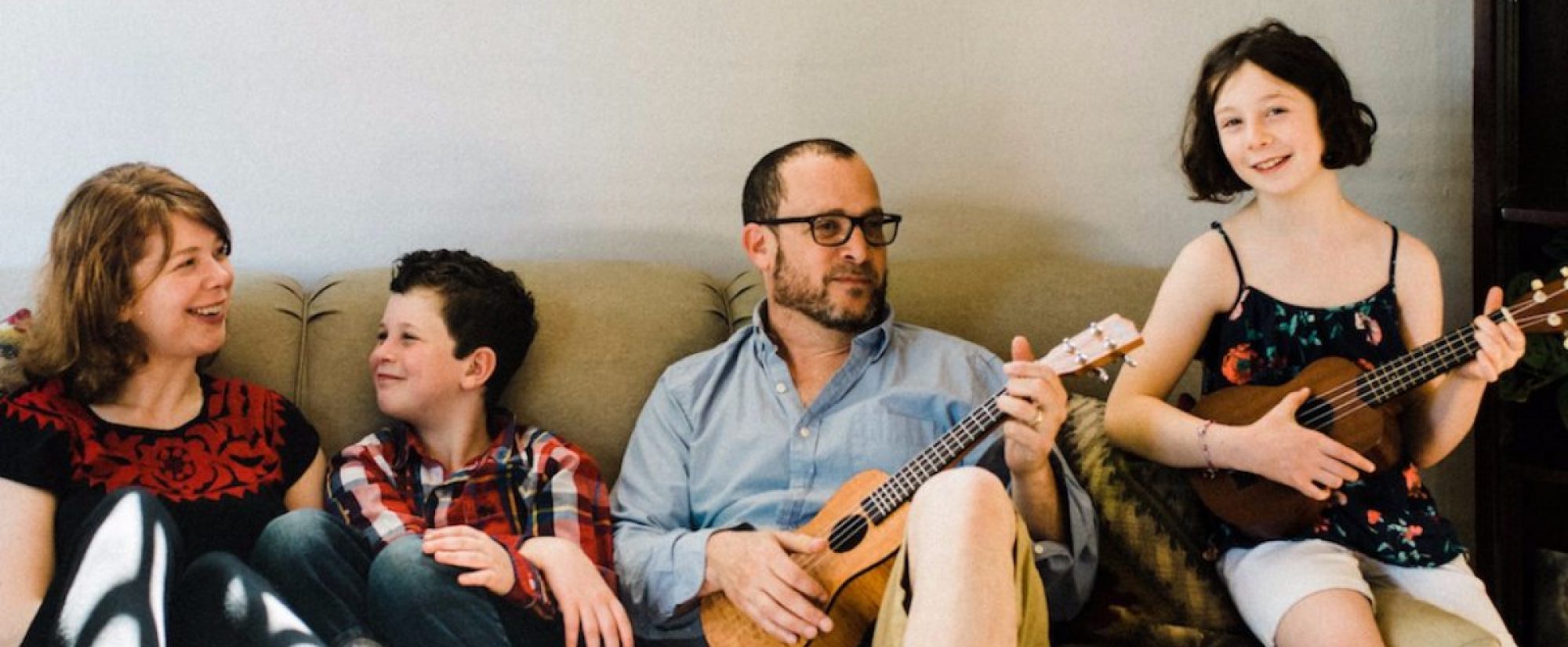
We are a family of four that decided to step off the treadmill of life in Portland, Oregon and travel in Southeast Asia. We will be volunteering, road schooling and slow traveling for a year or more. We have created this site primarily as a journal to document our photos, experiences and thoughts.
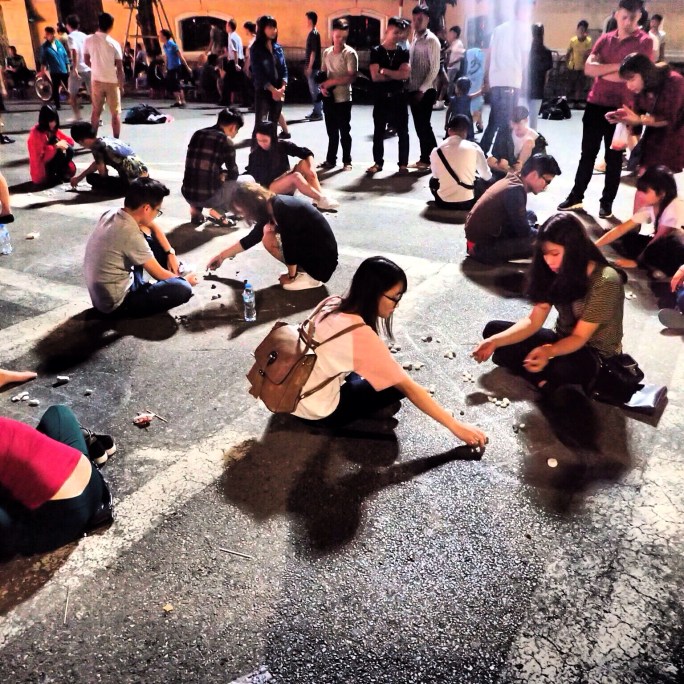
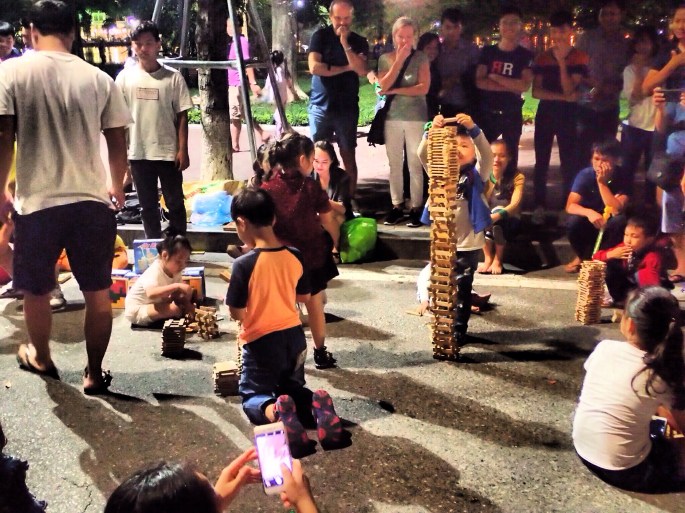
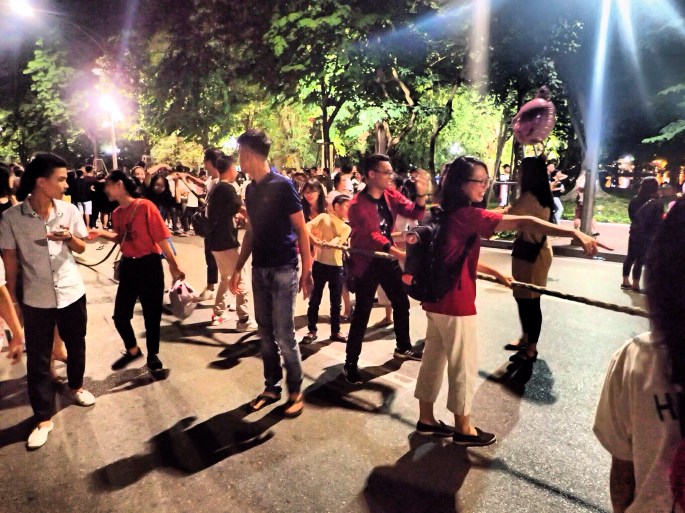
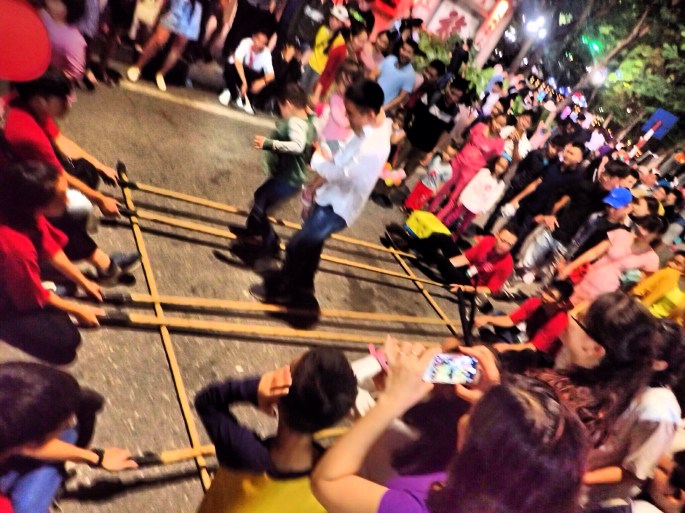
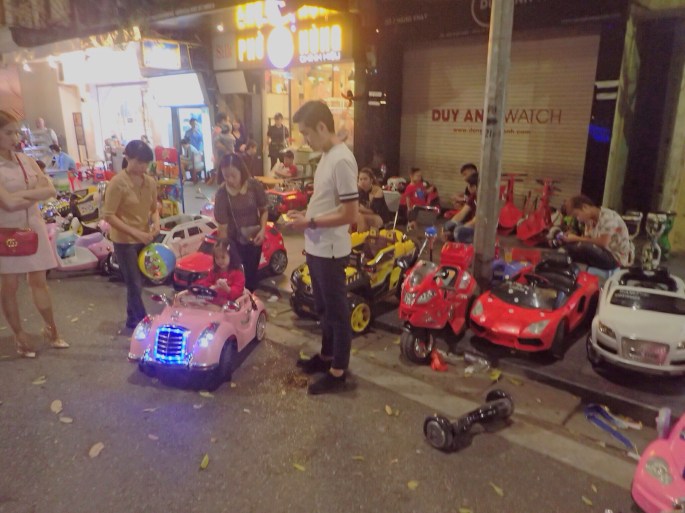
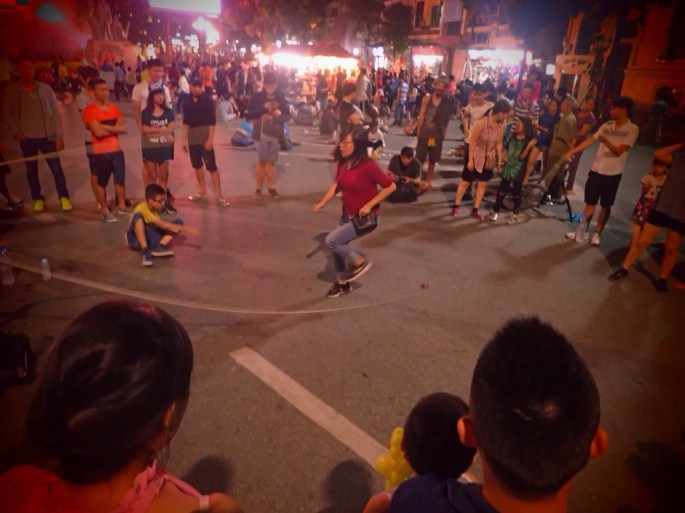
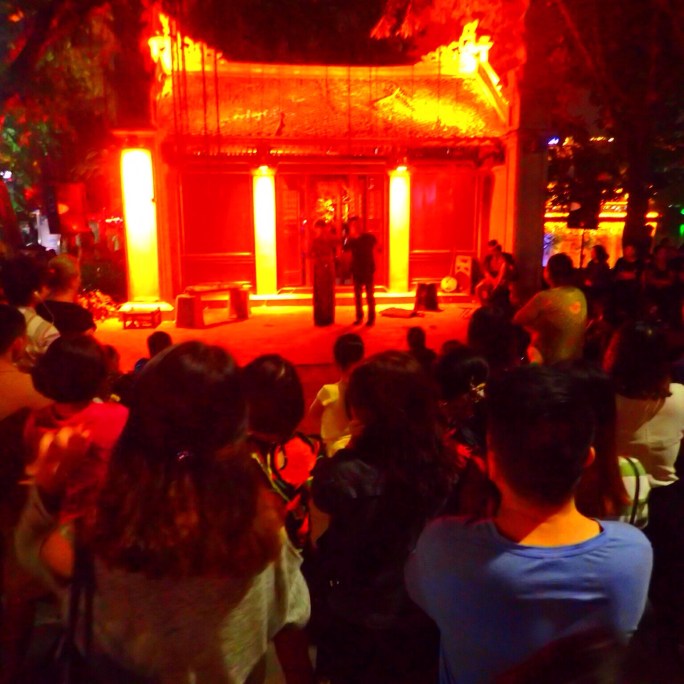
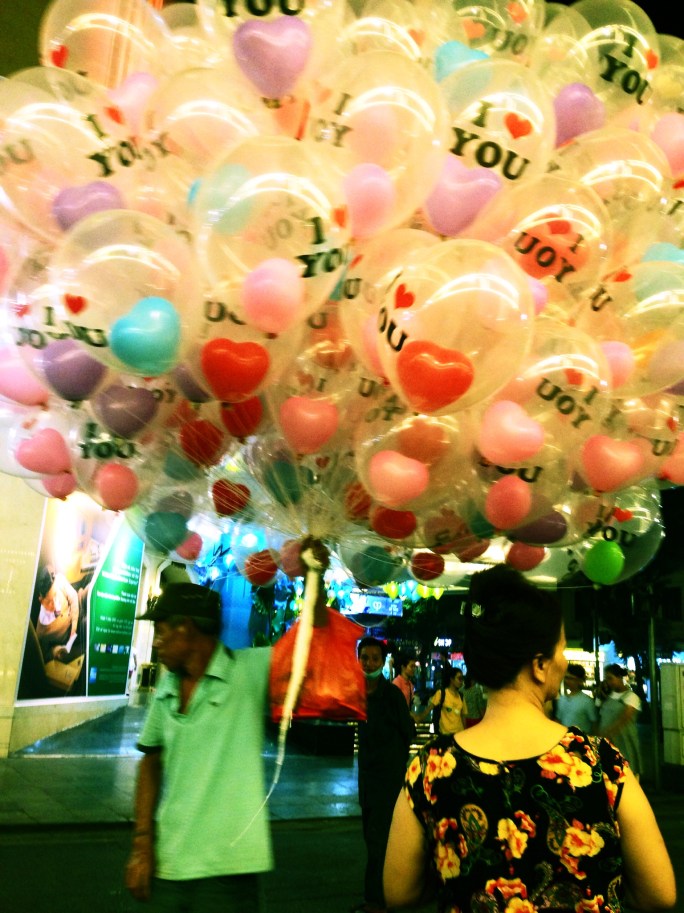
The government of Hanoi has closed the roads to traffic along Hoan Kiem Lake from Friday evening to Sunday evening every weekend. This is a pilot program that started less than a year ago. Experiencing this area around the lake, full of people, students, children, families–all gathering to play, sing, eat, walk–without cars or motorbikes is fantastic. It is an amazing wonderland of wholesome fun. Young people and old people gather in the street, sprawl out and play games–Jenga (wooden block towers), Moncala (chalk and rocks), jump rope, tugawar, ballroom dancing, roller skating, concerts and hackysack (played with a weighted birdie), henna tattoos, puzzles and Kareoke. The area provides breathing room and space to gather and play in a crowded and congested city. All are welcome. In contrast, when traffic resumes on monday, the sidewalks are packed with parked motorbikes, noise has increased tremendously and our experience diminishes. While I am happy that Hanoi has created this haven for pedestrians, it saddens me to have the return of motor vehicles during the week. However, if everyday was like this, maybe the three-day reprieve would be less joyous.
Moncala with chalk and rocksJengaTug o WarJumping gameKids drive these carsJump ropePerformance
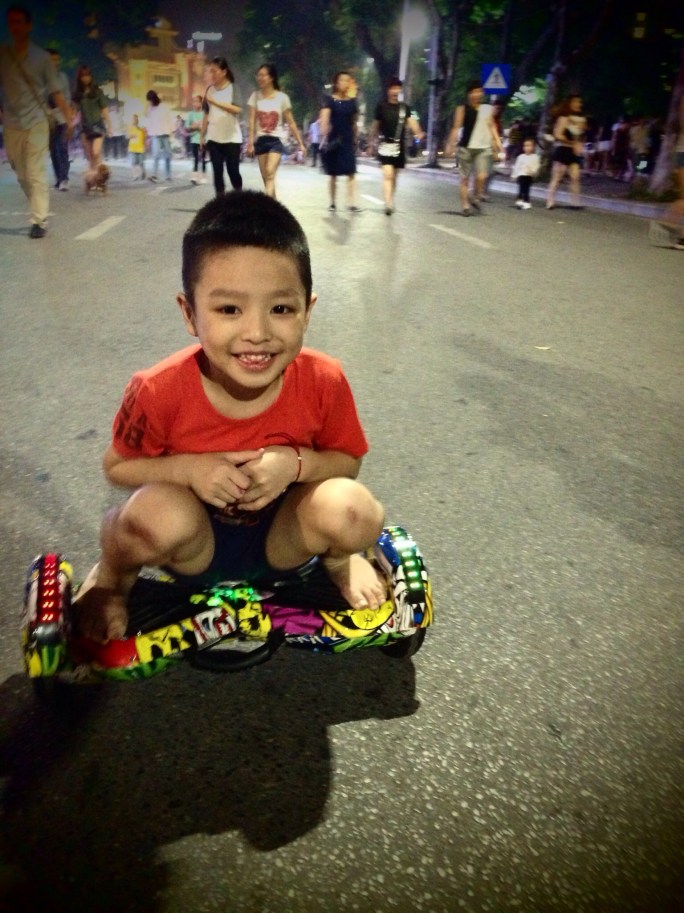
Hover boards attached to a seat
Jack and Addie swerving through the crowd
One of the highlights for the kids was renting hover boards with seats attached and driving them through the crowd. Its really quite fun to watch.
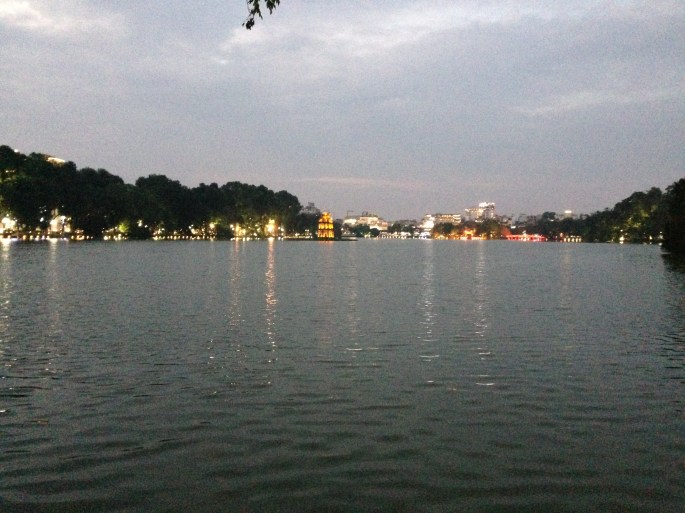
Hoan Kiem Lake at night–photo does not capture the magic
This was our last night in Hanoi. Saturday morning we go to the countryside to volunteer. We do not have a clue what it will be like and are nervous. A leap of faith. That is what this whole trip is about.
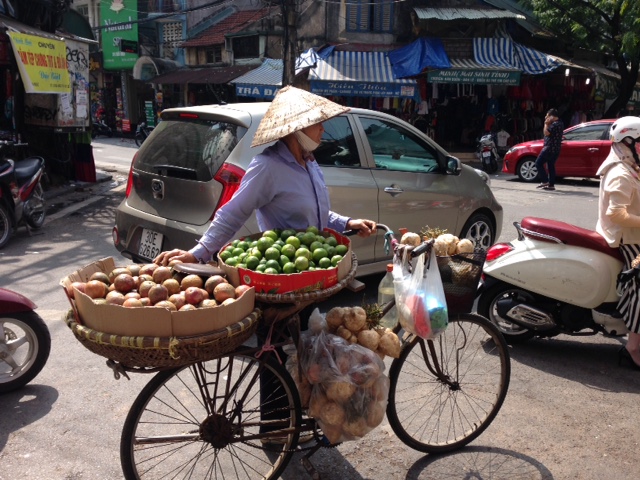
Totally spoiled by the honesty of Malaysia we were initially caught unawares. Hanoi is a busy, crowded, hungry city and as a white foreigner you are a walking $ sign, an easy mark. Capitalism is very new here and everyone is struggling to survive. We have been scammed by the fruit guy, by the jelly dessert woman–overcharging us by 500%, not giving us change back. The bicycle vendors, often overcharge by ten times. This being day two, we are on our game now. Having read online what scams go on here, we have gotten off lucky. The denominations of Dong are so large, it is confusing. Since we do not know the price of things and cannot speak Vietnamese, we are vulnerable. And once someone has your money, it is very hard to get it back. However, we are having great experiences as well and most of our interactions are positive. It just makes us weary and tired to be on guard. We just have to be more careful here.
There is a particular scam that keeps targeting Cork. A guy tries to “fix” your shoes, applies “glue” to your shoes (which is really solvent) and then offers to repair your shoes, afterwards asking for money. These men are persistent and are attracted to Cork’s Keens. His Keens now have a small area where the glue dissolved due to this scam. Cork actually intervened on another tourist’s behalf and we were followed three blocks with a guy yelling “F…Y.. Sir.” At least he was being polite.
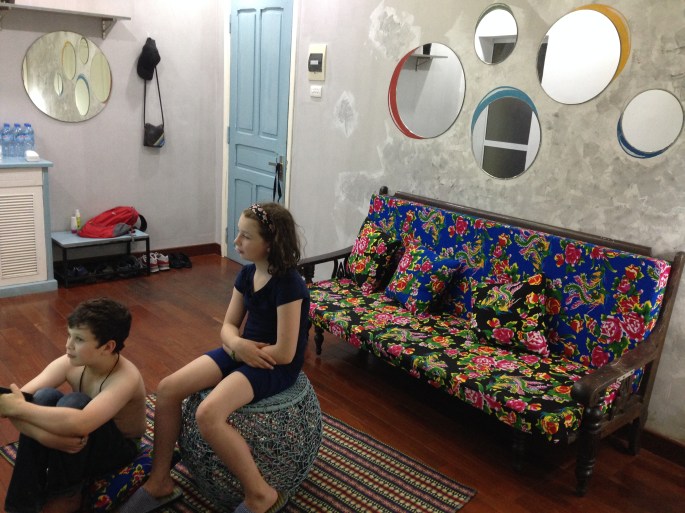
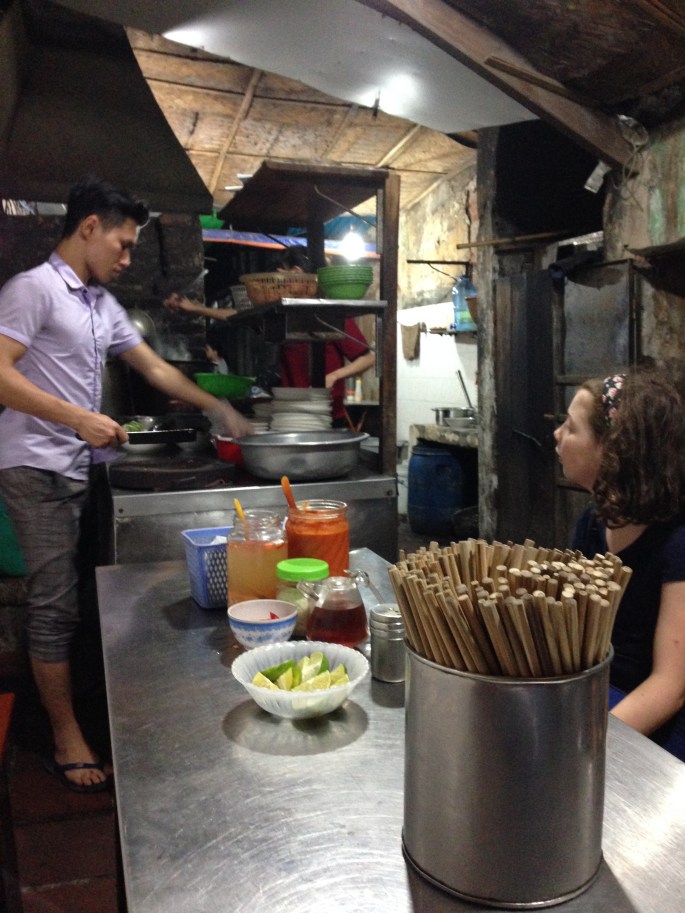
A small hole in the wall Pho restaurant near the lake that was recommended by our Airbnb hosts. We are staying in the Old Quarter in a traditional Vietnamese neighborhood with close together apartment buildings. The sounds of our neighbors are near–a Rooster, scooters, people exercising, kids crying, sounds of cooking. Airbnb is interesting, because every new place we get a little vision into another way of living.
Kids happy to have found an English cartoon networkCork getting an idea about where the heck we are!Facing the other apartment buildings
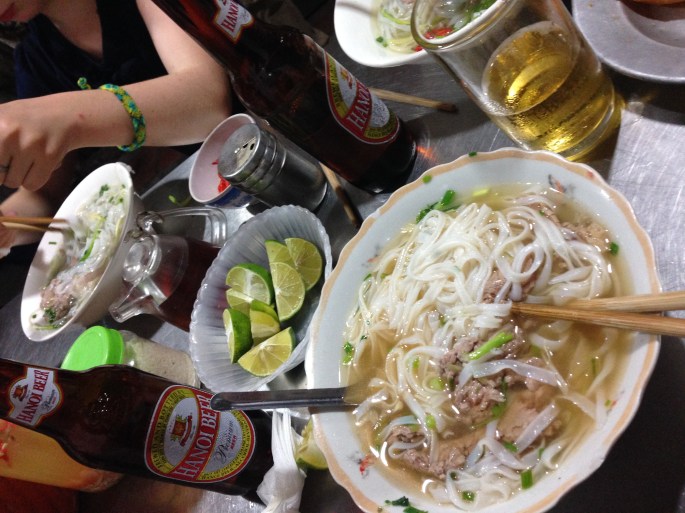
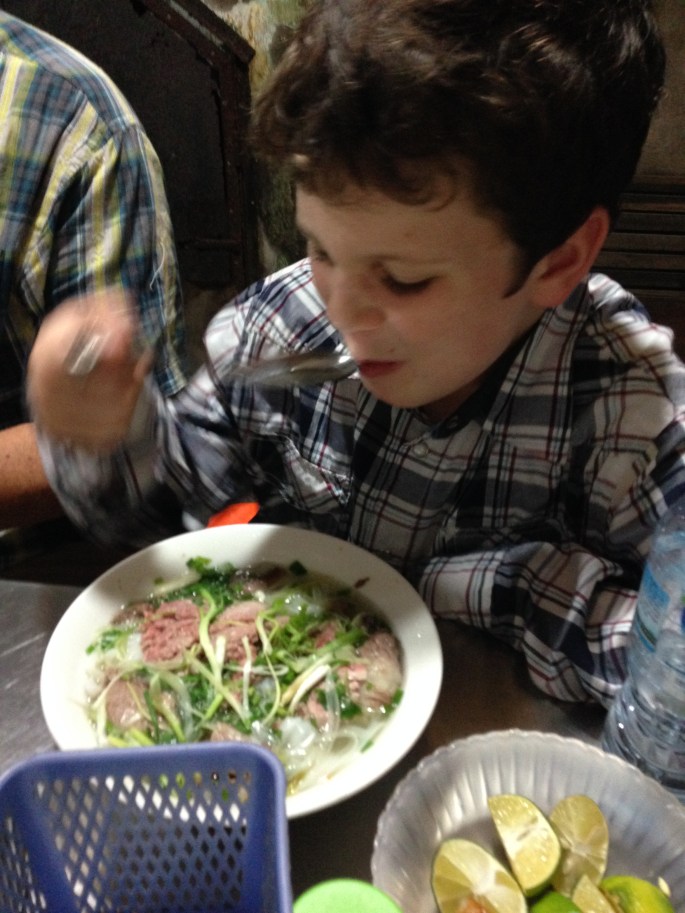
We walked to Pho Thin near all the festivities around Hoan Kiem Lake (apparently every weekend they close down the streets to traffic and all in Hanoi gather to sing, dance, play and eat). Our restaurant has one long table and a nearby grill which serves one specialty, Beef Noodle Soup. And beer (.90 for a Hanoi brew). It was a good introduction to Hanoi!
Behind our table, Scooters would drive through the restaurant
The Vietnamese language is really hard. I am struggling just to say thank you. There are six tones, and no matter what I cannot get it right. Thank you is Cam on. It sounds like Gauhm Uhhn, but there is a M or N sound and a little G at the end–and in flat tone. If you say it in the wrong tone, you are saying “Shut up.” Wow —and that is just one word. Luckily, Hello is a little easier, Xin Chao (or Sin Chow) which I can manage. All the signs are in Vietnamese. We do not know how to order or what to order. Addie pleads with us to tell them “not spicy” or “no mayonnaise” and we shrug, there is no way. We are using a lot of hand gestures and depend on the kindness of strangers to help us when we look confused.
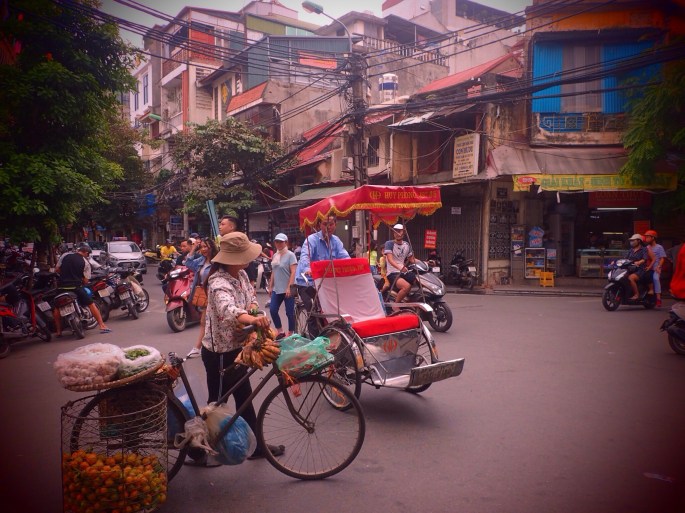
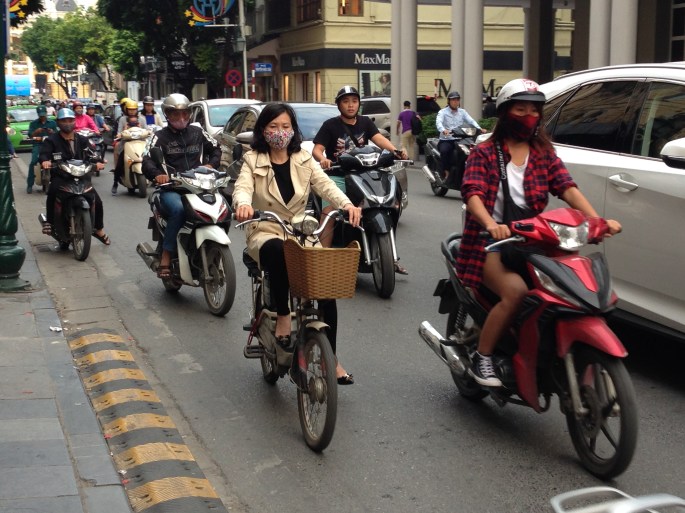
Scooters. Motorbikes. Buses. Oh, My.
There are over 7 million people in Hanoi and over 4 million motorbikes.
Swarms. Like bees, their high pitch sound is a constant. Horns. And they do not go one direction, it is every direction. Often there are whole families on one bike, babies, toddlers standing between parents. The scooters mix with cars, buses, bicycles. There is huge cargo packed on the scooters–a Gas tank, crates of Coke, Garden equipment, animals… When helmets are worn (most riders do not), they are thin, almost decorative, with a cute hole cut out at the base of the skull (where the cerebellum resides) for a ponytail. It leaves my mouth agape with incredulity. I am both shocked at the risk taking and have admiration for everyone’s deft navigation. There is a mandatory helmet law, but it appears not enforced or followed. I have not seen an accident yet. There are more motorbikes than households in Hanoi. It is our goal to not get hit while walking. We repeat the mantra as we walk cross the street, slow and focused, as running or darting across the street does not allow for the scooters and cars to slow and avoid you. We hold hands and go for it–steady and determined.
— I have to say the above video is a good representation, but actually multiply the density of bikes and cars by five, narrow the streets for the old quarter and add some buses. Then you have it. (Just Google Hanoi traffic old quarter to get an idea of our daily challenge of not getting hit)
Vietnamese roads are ranked among the world’s worst for motorcyclists.
Traffic accidents remain the biggest single cause of fatalities in Vietnam even as the country has been working to make local roads safer.
According to the World Health Organization, on average, road traffic accidents kill approximately 14,000 people in Vietnam every year and are the leading cause of death among those aged between 15 and 29 years.
The country recognizes the problem of pollution and safety from the traffic congestion and is working on plans to increase use of public transport, create MRT subway lines and even ban motorbikes from downtown by 2025. But change is slow and budgets get cut, so as of now, Motorbikes rule the road. They even ride on the sidewalks. When we leave our apartment, we are tense and are alert. It is exhausting. Vietnam has been the most challenging country I have ever been to.
(Cars only make it worse, and as people make more money they all want cars.)
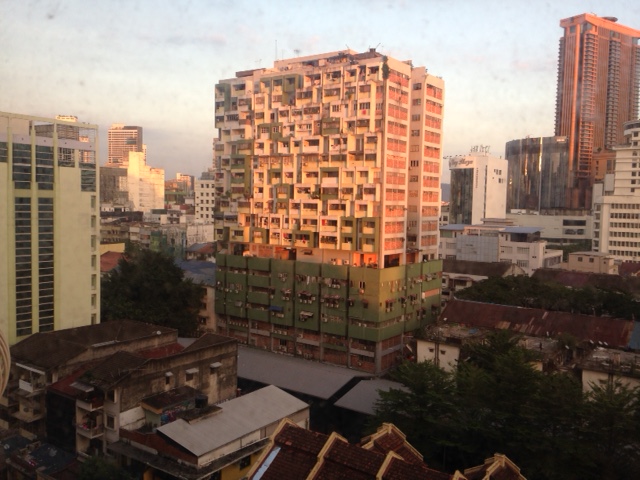
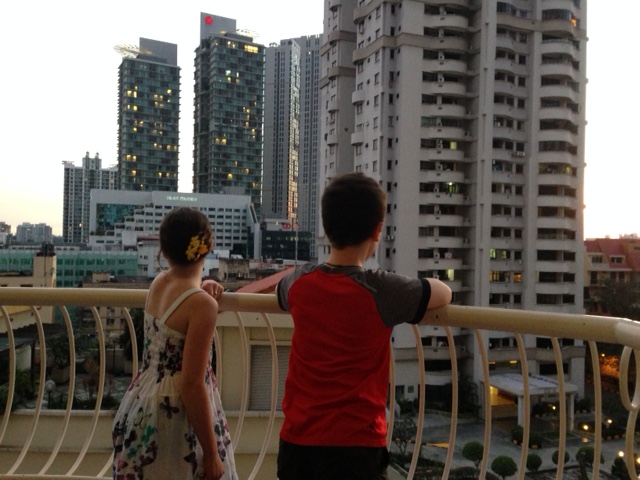
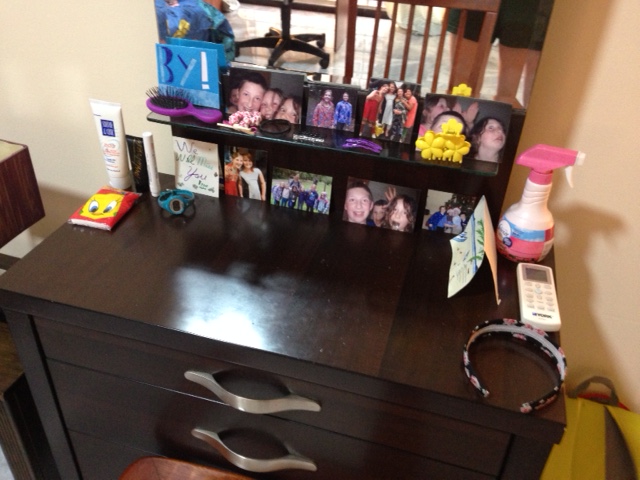
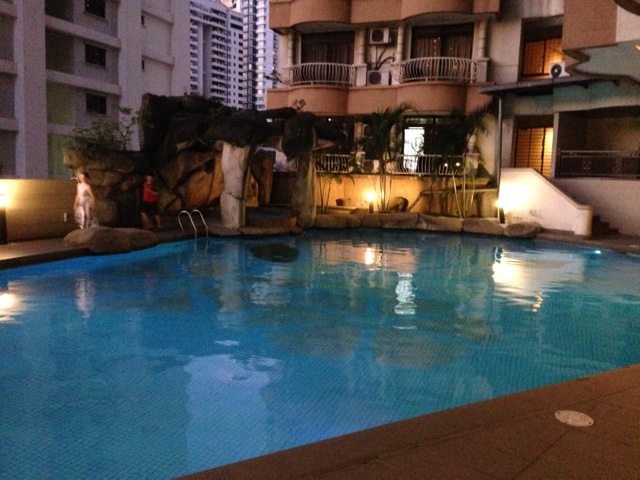
Our family is staying in a condo, a large two bedroom, three bathroom apartment in an old, once grand building right smack in the middle of a very busy sector of old Kuala Lumpur. Everything is dark mahogany and marble. It is a different experience than our introduction to KL, where we stayed in a modern high-rise near the Petronas Towers, felt like we were in a futuristic city full of tall columnar buildings and malls. Now massage parlors, street hawkers and hungry business owners scrap a living on our street. KL is the first city in Malaysia that I have seen people panhandling and begging in the streets.
View from the stairwellBuilding view through our window
MarbleAddies room–She sets up every new space like homeOutdoor pool
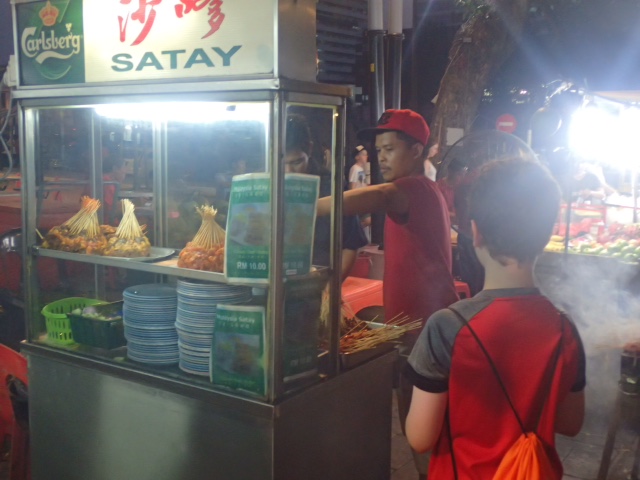
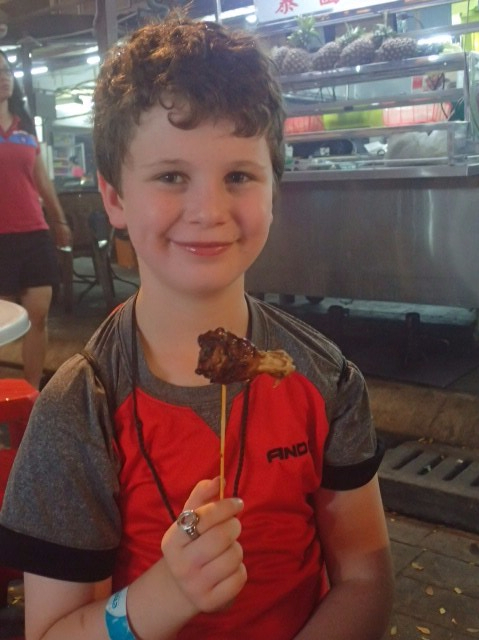
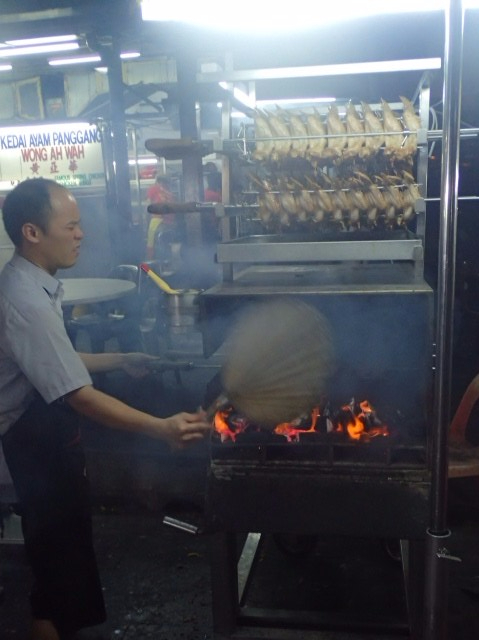
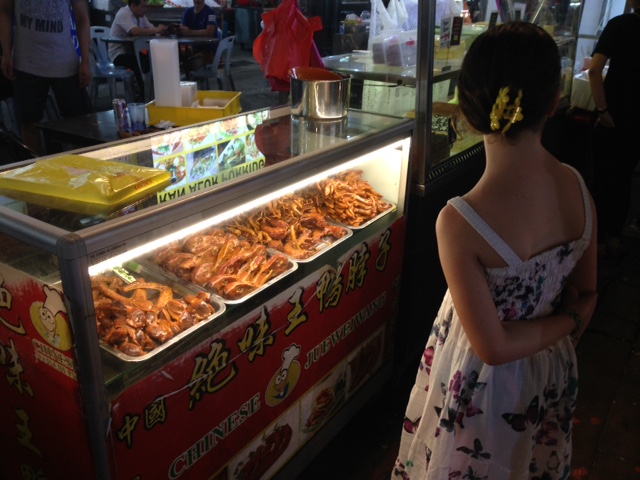
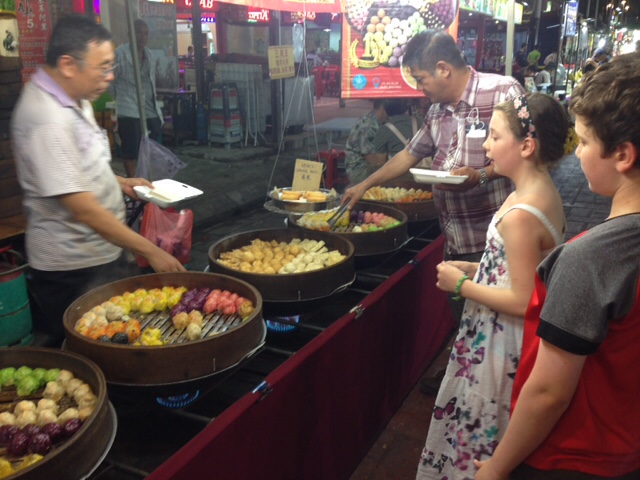
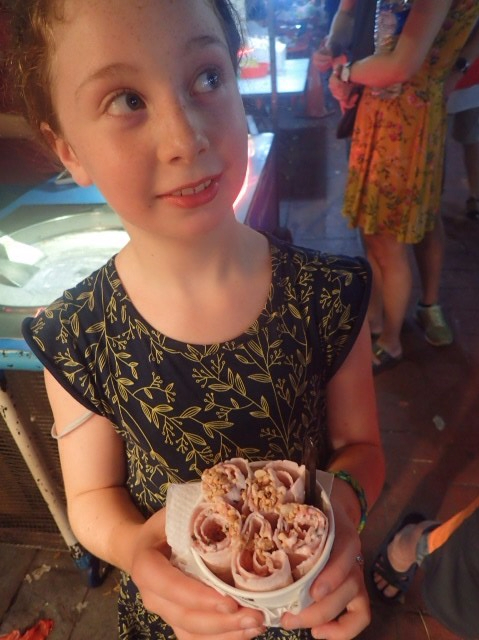
The famous street Jalan Alor, normal street by day, people and hawker stands by night, is the place we go to eat nightly. We already have our favorites. Chicken Satay, spring rolls from the Dim Sum cart, Fried ice cream, beer for $1 and Thai green curry. It is an overwhelming mix for the senses. A melange of no less than three pop songs, petrol fumes, charcoal smoke and a rotting whiff of Durian mixed with fish sauce.
Satay 10 for 10 ringitBBQ chicken wings
All parts chickenFavorite spring rolls
Fried ice cream (actually frozen quickly with dry ice)
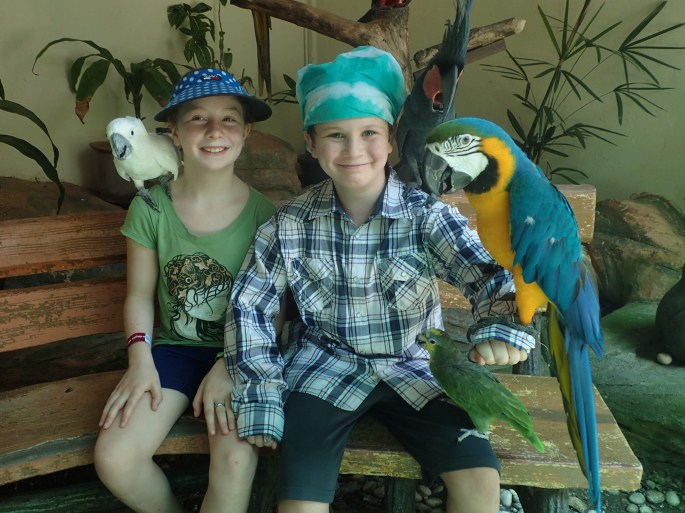
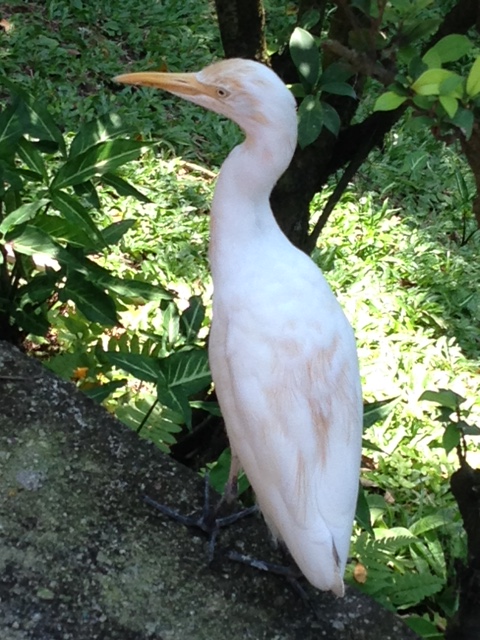
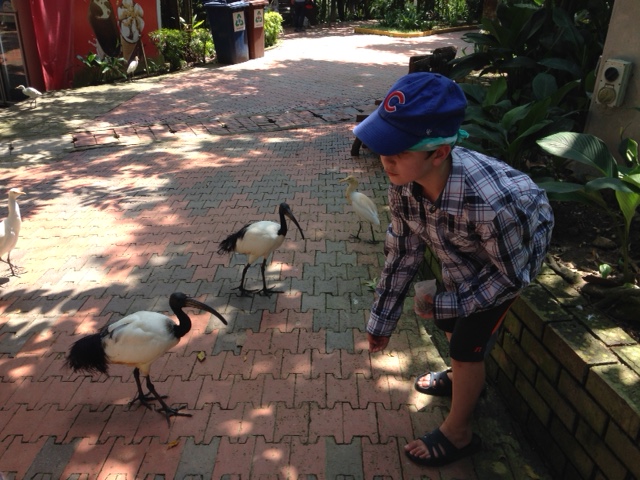
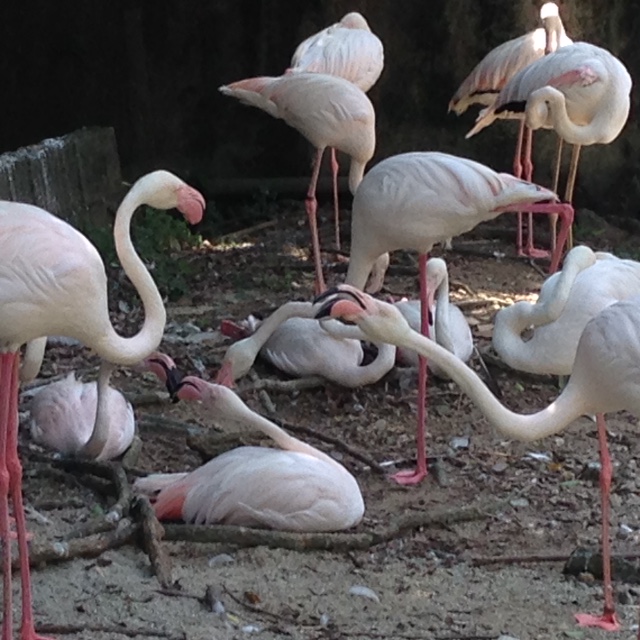
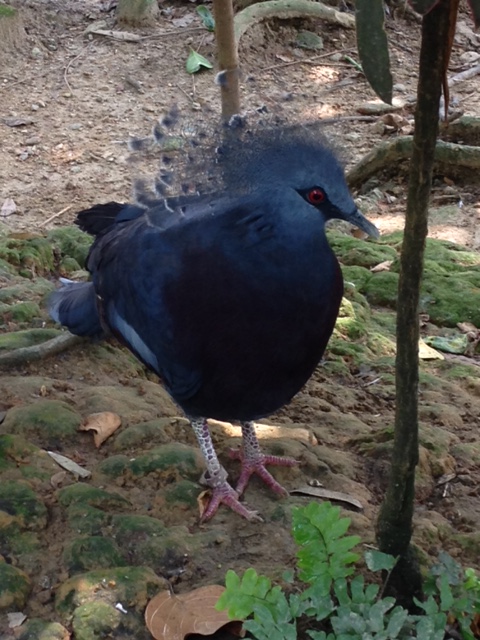
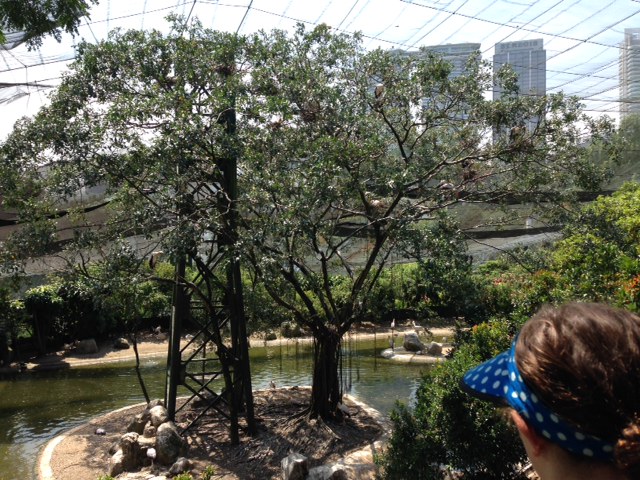
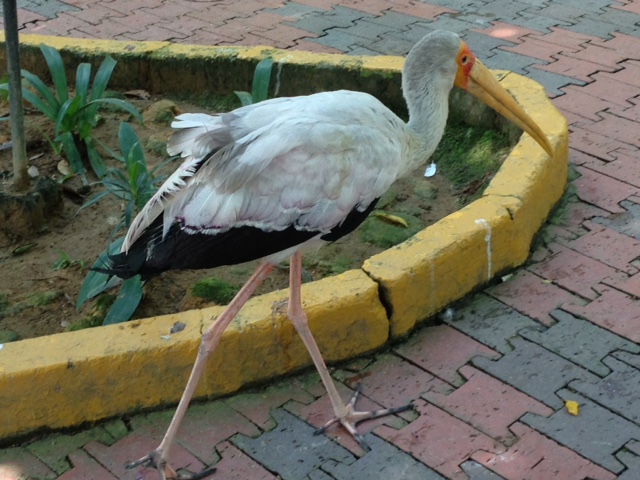
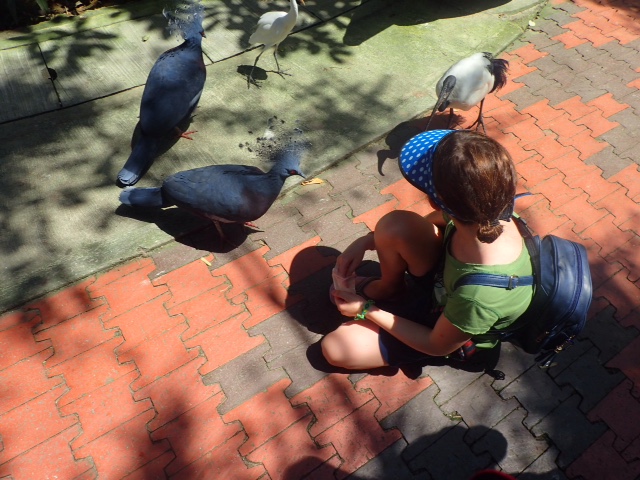
On our second day we decided to go to Kuala Lumpur’s Bird Park, advertised as the largest free flight walk in Aviary in the world. And it was impressive. We walked on paths alongside exotic large birds and ducked our heads as they flew by. It is 21 acres of verdant park, streams and waterfalls, home to 3000 birds representing 200 species. The large birds seemed prehistoric up close, and a little bit dangerous. As toddlers chased large storks and parents nonchalantly reached out to touch Cranes, I reflected on the differences regarding safety in the US vs Malaysia. After we got home Jack and Addie researched a bird of choice and created an informational pamphlet describing the characteristics of their bird—Jack chose the Great Horn Bill and Addie chose the White Pea Fowl. I could not believe how blessed we are to have this outing be our field trip today.
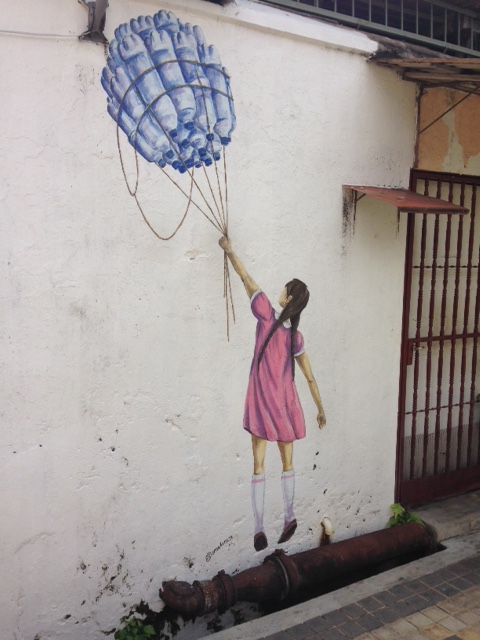
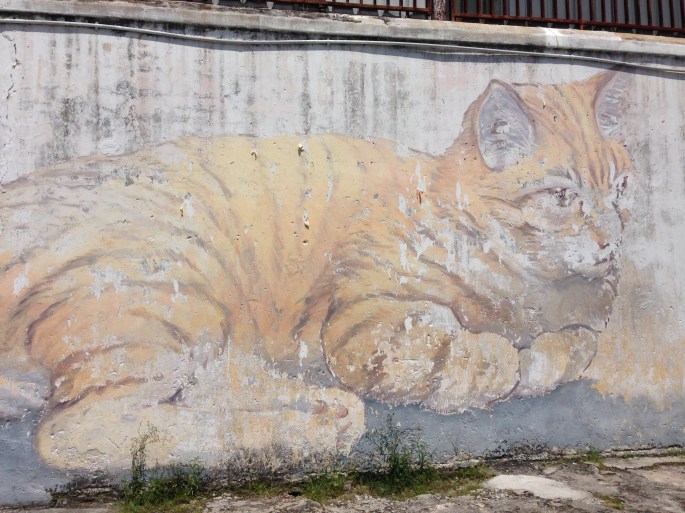
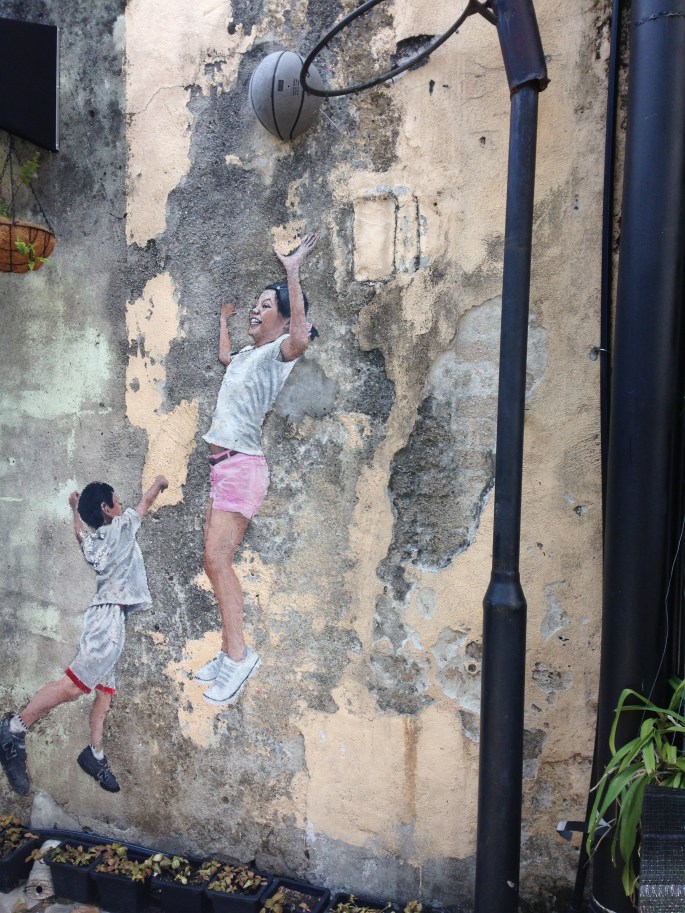
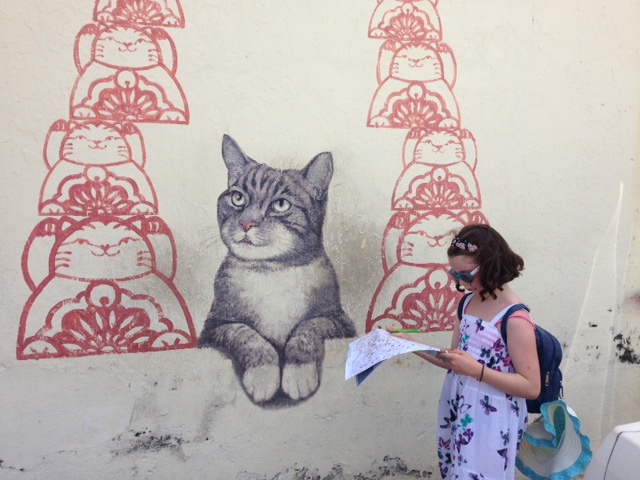
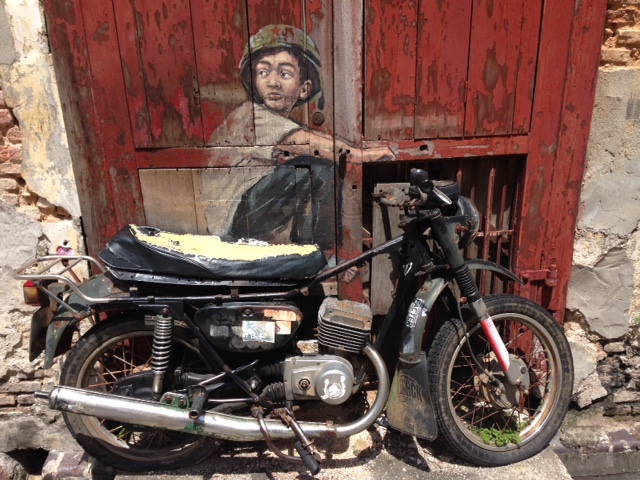
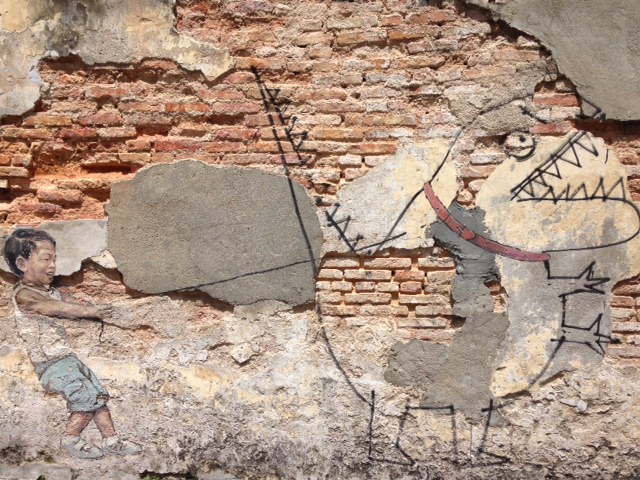
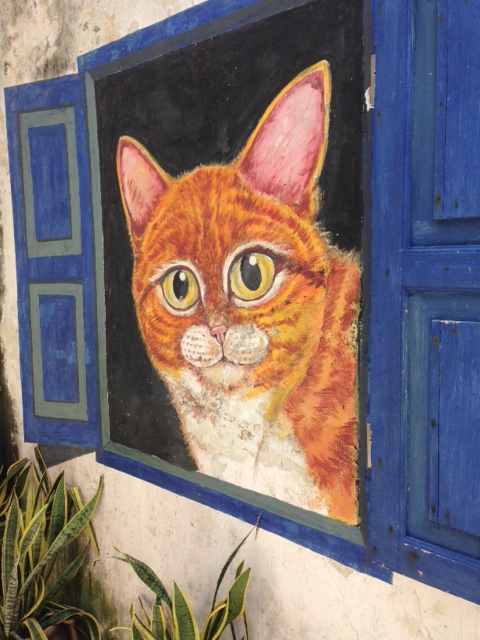
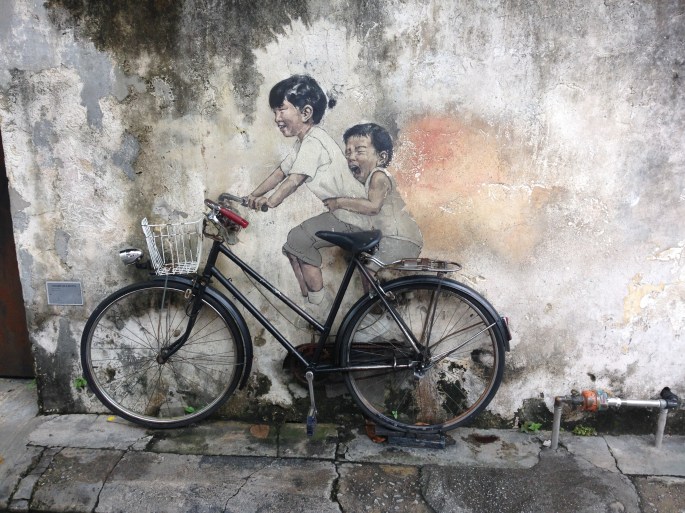
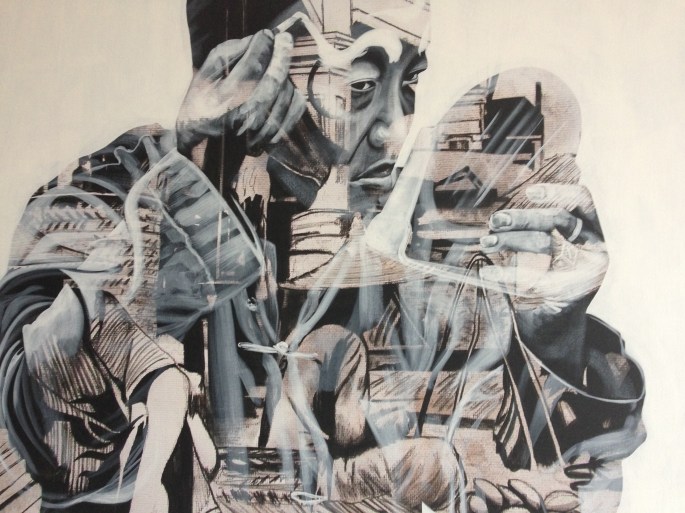
Georgetown decided in 2013 to employ many artists to paint murals on building walls within the small streets of the heritage district. They have become a very popular tourist attraction. In Montessori education there are “Going Outs” which are field trips planned and executed by the students with limited adult help. We decided that we would give Jack and Addie a map and they would find all the street art.
“Instruction becomes a living thing. Instead of being illustrated, it is brought to life. In a word, the outing is a new key for the intensification of instruction ordinarily given in the school.” – Dr. Maria Montessori
We split into two teams and created a challenge to see which team could find the most, and document with photos in the fastest time. The challenge involved directions, map reading, bus riding and the reward was having the final say in what restaurant we dine at the following night. Reading and deciphering a map is challenging for an adult, much less a ten-year old. It was great fun and became a day’s activity. Jack won the challenge, his choice, the Burger joint on the corner “Two Buns”(Penang’s LittleBigBurger…).
Above map shows Penang island off of Malaysia mainland. (courtesy to Ben Bochner)
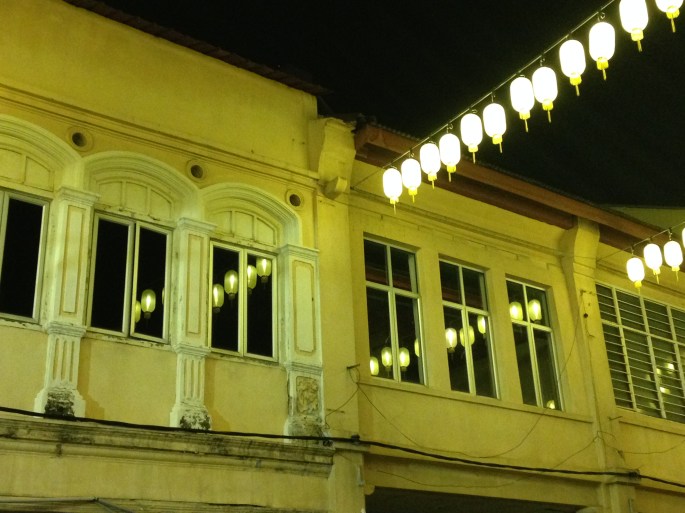
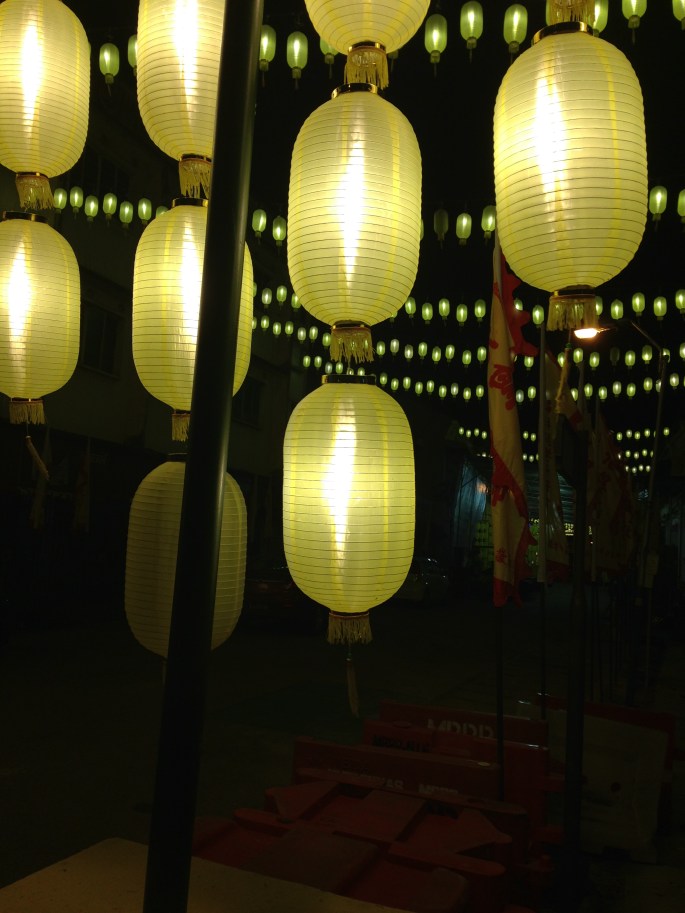
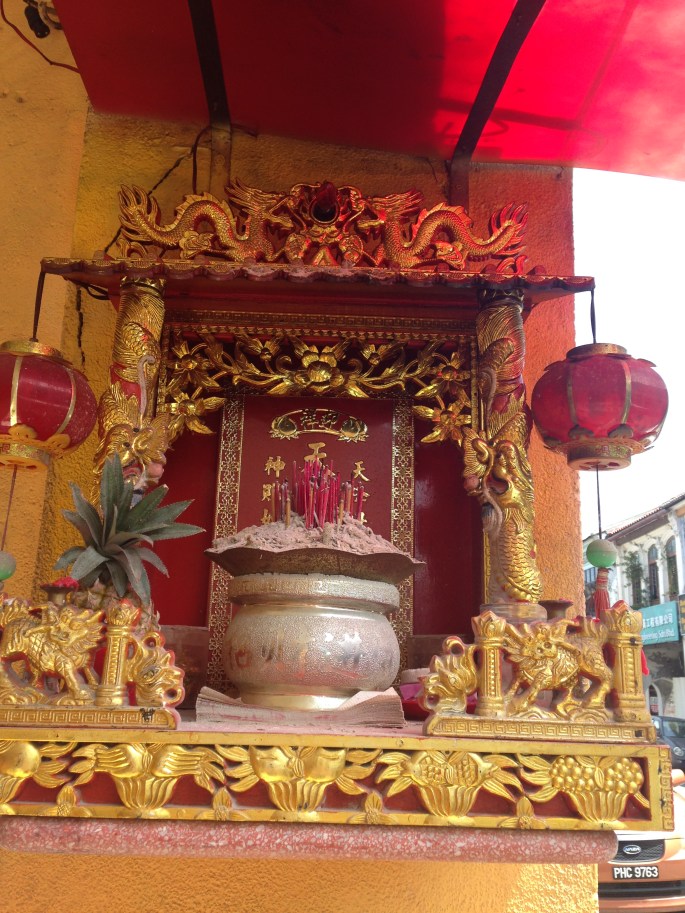
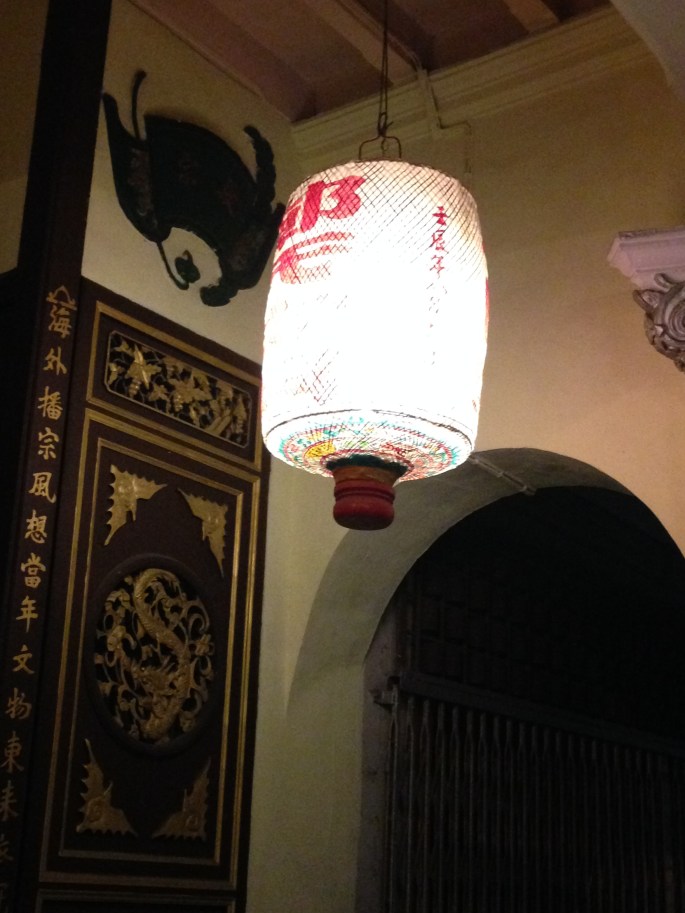
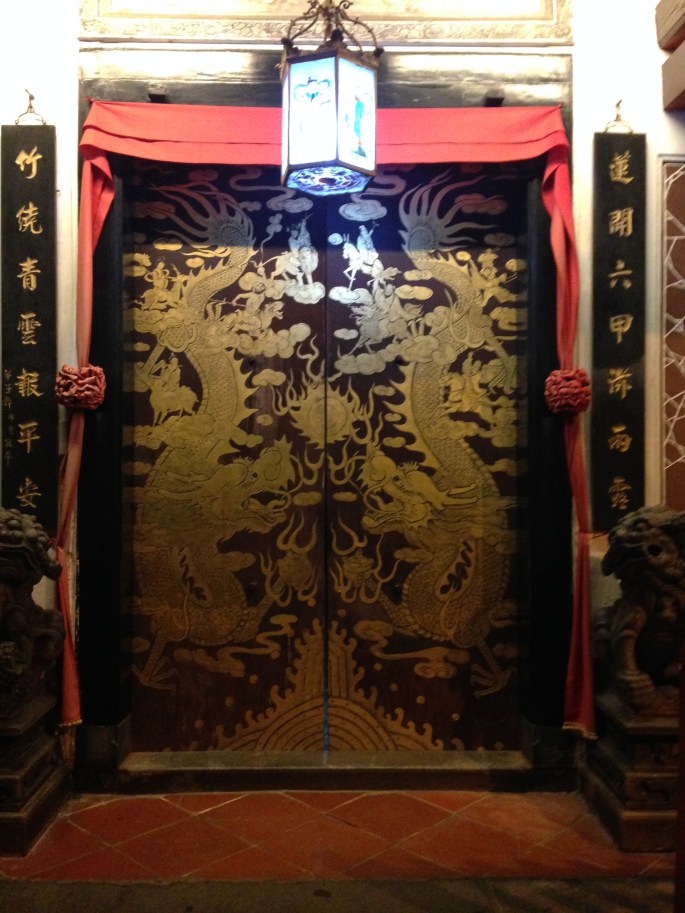
Geogetown is the capital of the Malaysian state of Penang, a small island off of NW Malaysia. The first British settlement in the 1700s, an important port for trade and known as the gastronomical hub of Malaysia. Throughout history people immigrated to this area and there is a mix of Malay, Chinese and Indian culture which is often reflected in the cuisine. We are staying in the heritage district, an area filled with prewar buildings, small winding streets with jagged sidewalks and filled with the goings on of the average Penang citizen. This town lacks the Jonkers vibe of Melaka, not as many tourists flock here. The city feels gritty, edgy, real. European and Chinese style converge, and there are old British buildings graced with large Chinese doors, shrines and lanterns. Penang is known for its amazing food and horrible traffic–both we experienced.
The hard edges and authenticity of Penang is what we like. It is the first city that we could envision ourselves living in. However, since there is so much English that prevails, are mystical talents of native language are not sought after (however life here would be relatively easy to navigate considering the wide-spread use of English).
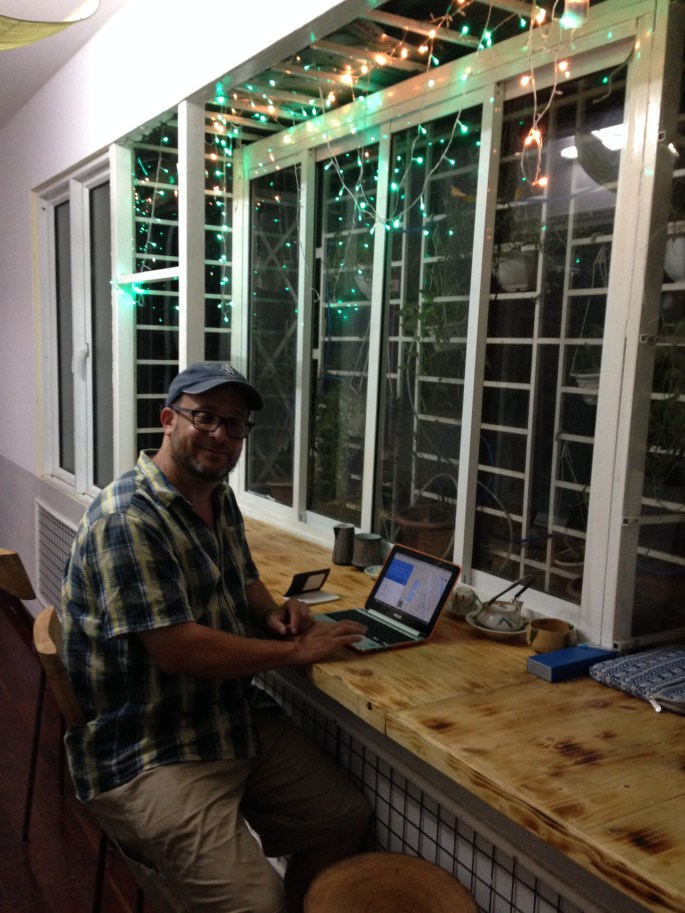
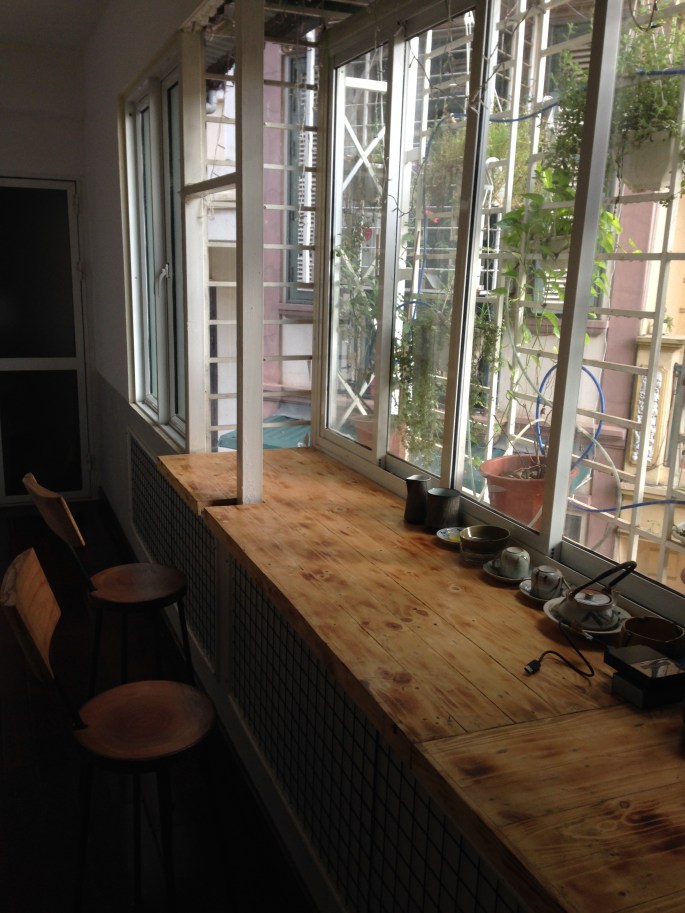
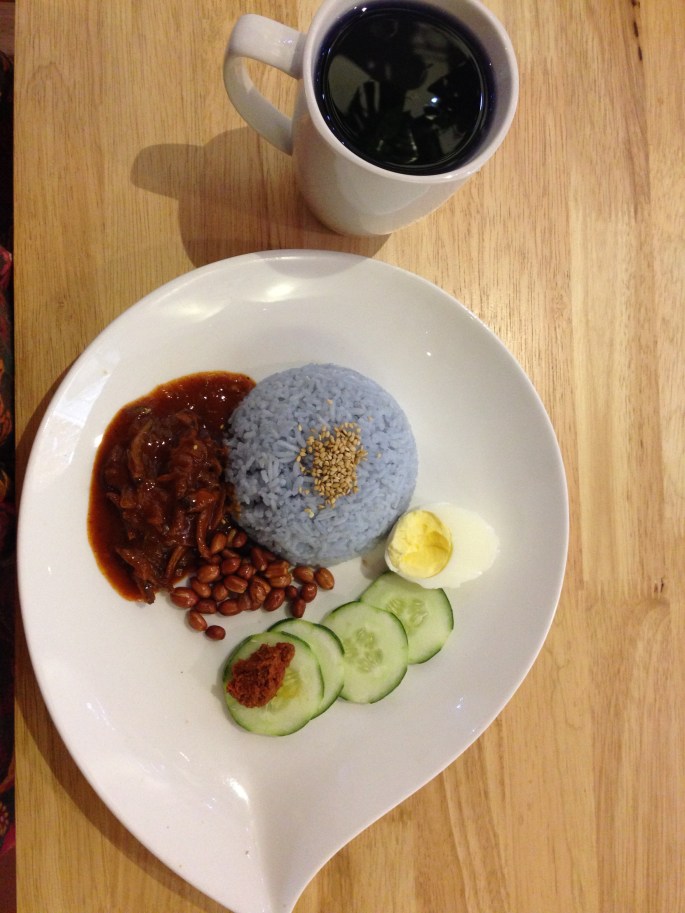
We are staying in a prewar building, turned into an Airbnb and cafe. It is a nice setup and our room is large and airy. There are small birds that Addie and Jack enjoy playing with and feeding (supervised by the owner Patrick). There is a simple well-appointed cafe downstairs that is open from 8-11 and serves breakfast. They are family run with a very limited menu, but the food is exquisite, cheap and delicious. I wake early and do computer work downstairs in the cafe. I enjoy my time alone, listen to music, write emails, research or work on the blog. I drink “Butterfly Pea tea” an herbal tea that is colored blue. The cafe also cooks the rice in the tea water lending the dish a blue color. I eat Nasi Lamak, a traditional Malay breakfast of coconut rice, dried fish, egg, peanuts, crackers, cucumbers and sambal paste ($.90). I love it.
Bird play
cafe
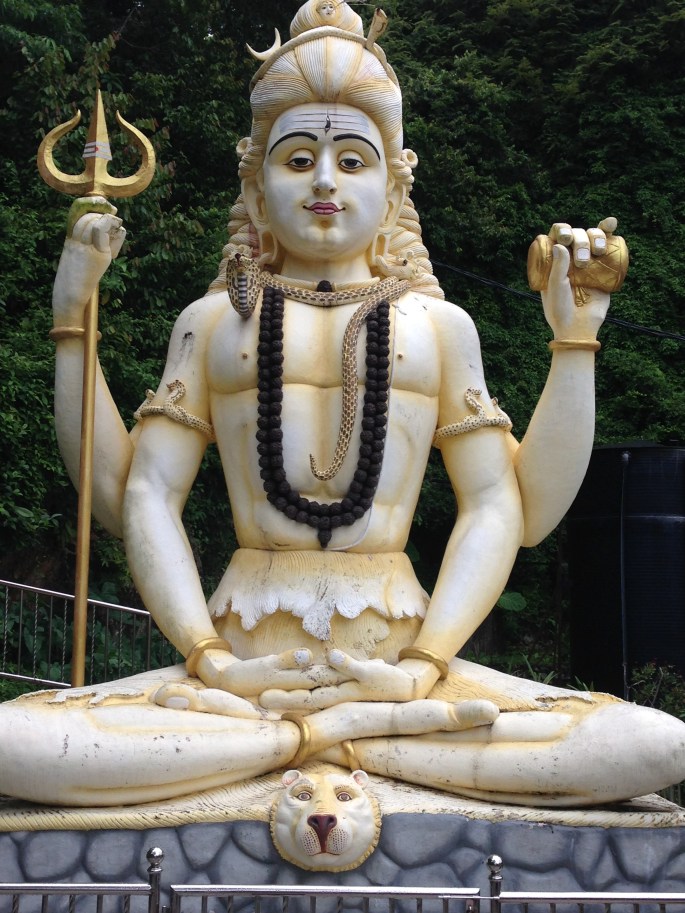
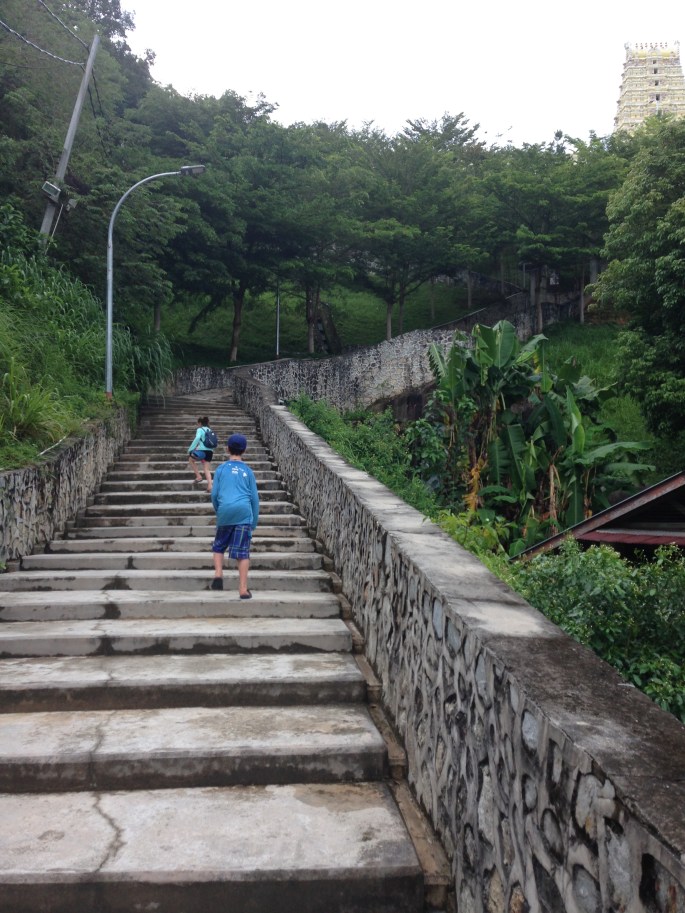
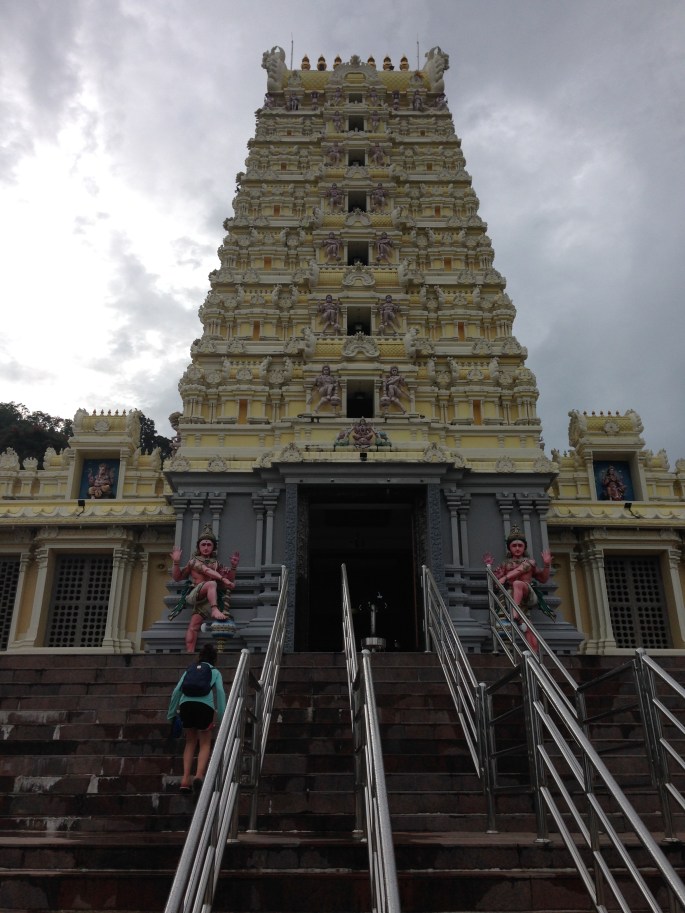
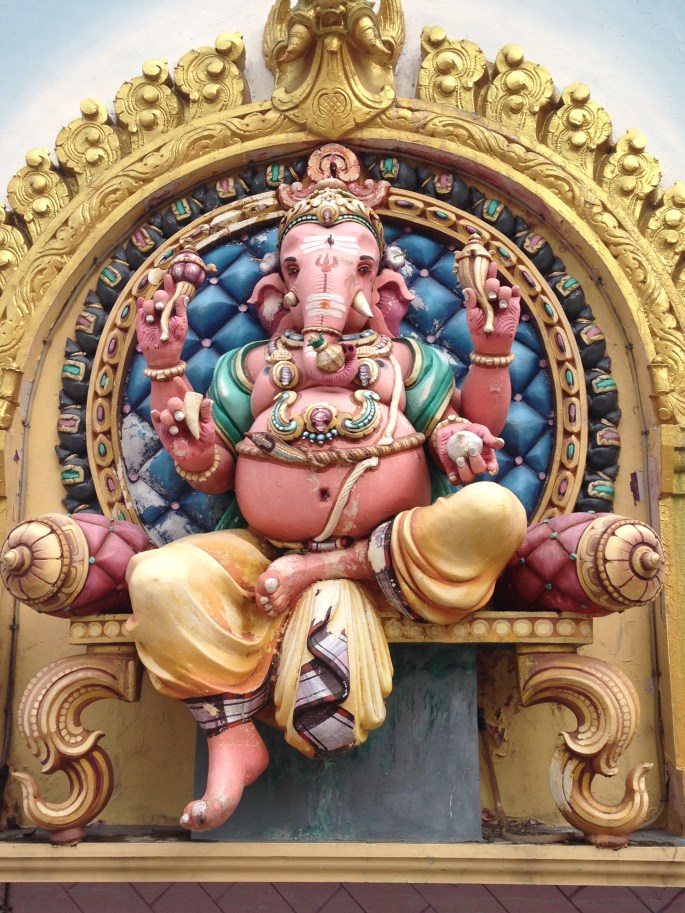
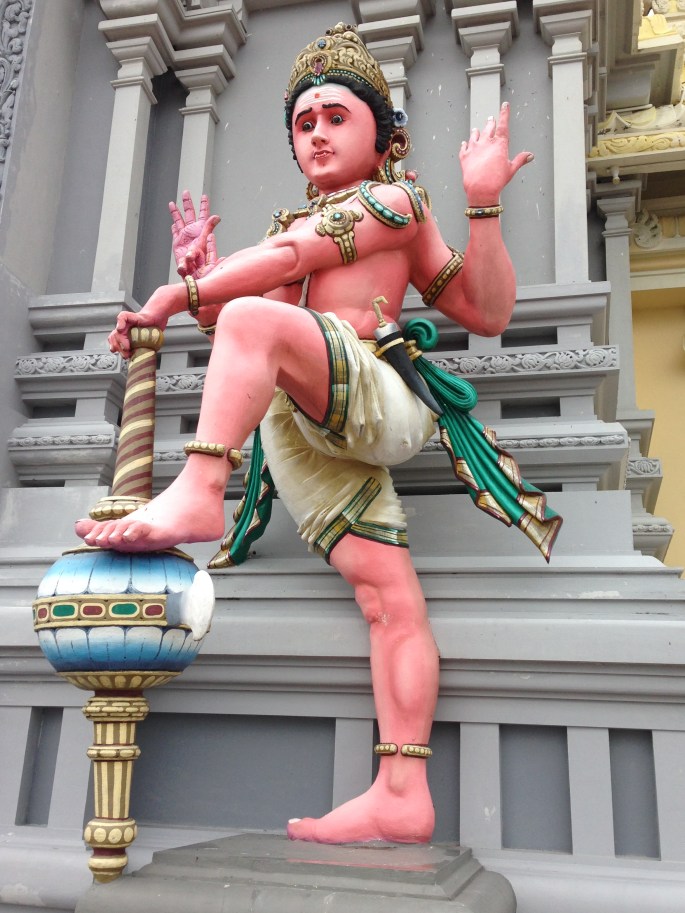
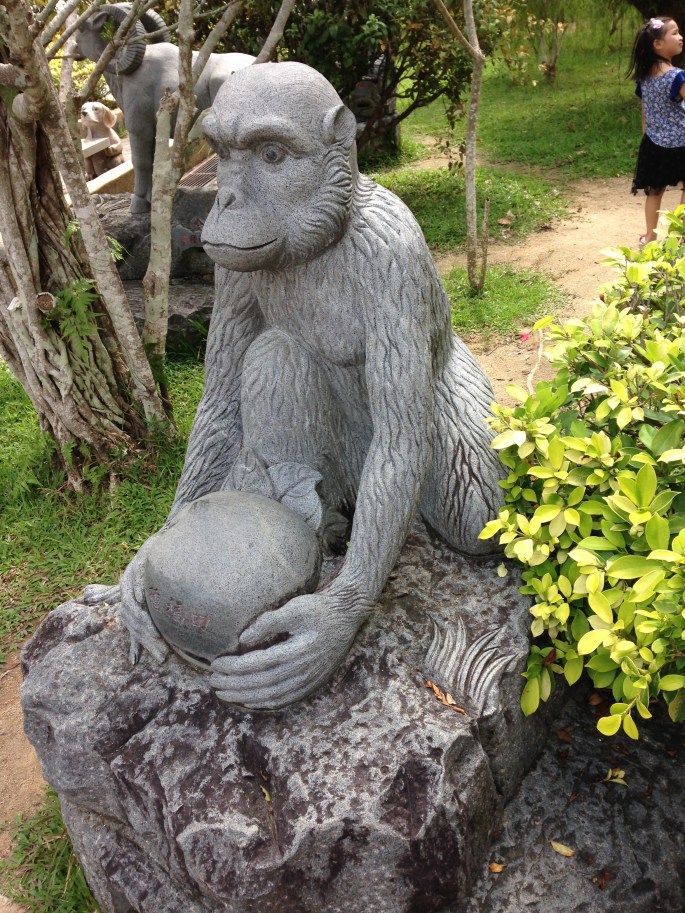
We also saw our first Hindu temple. It is called the Waterfall Hill temple and it is atop a long staircase. Kind of amazing. It is an active temple with worshipers and since we were wearing shorts, we did not go in. There were monkeys all over, we saw a few with babies clinging to their undersides.
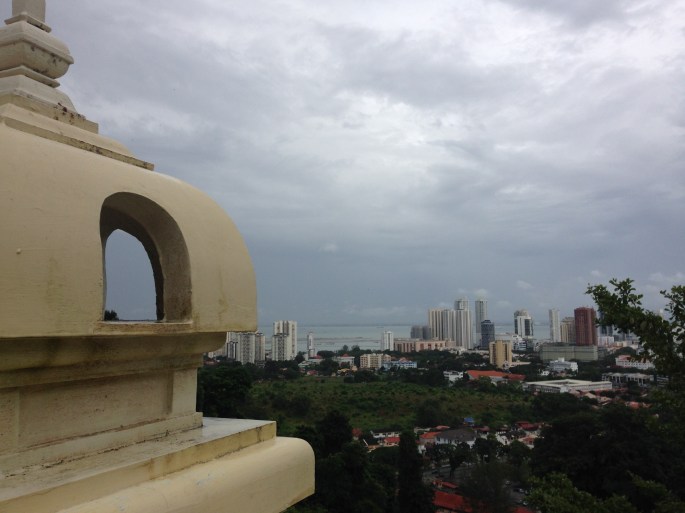
Waterfall Hill TempleView of Penang
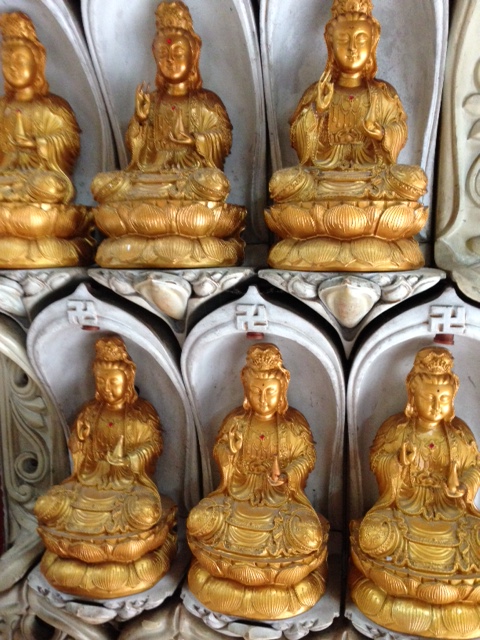
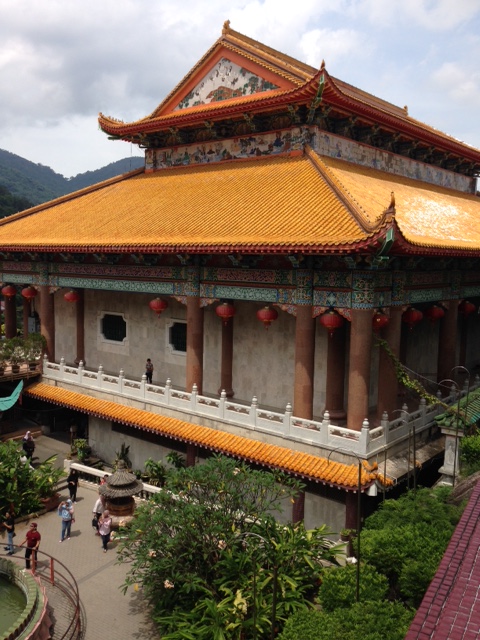
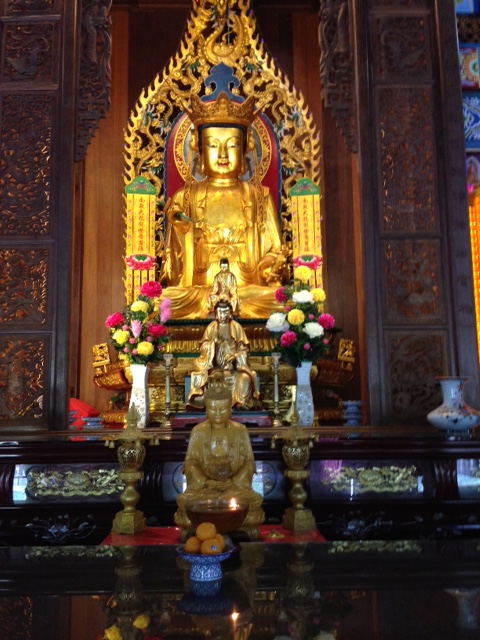
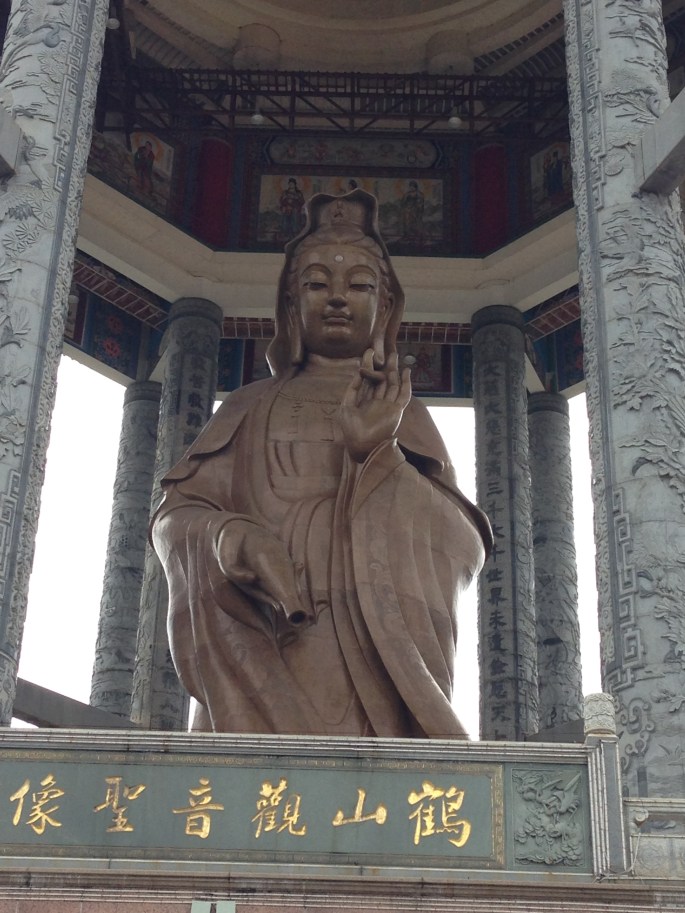
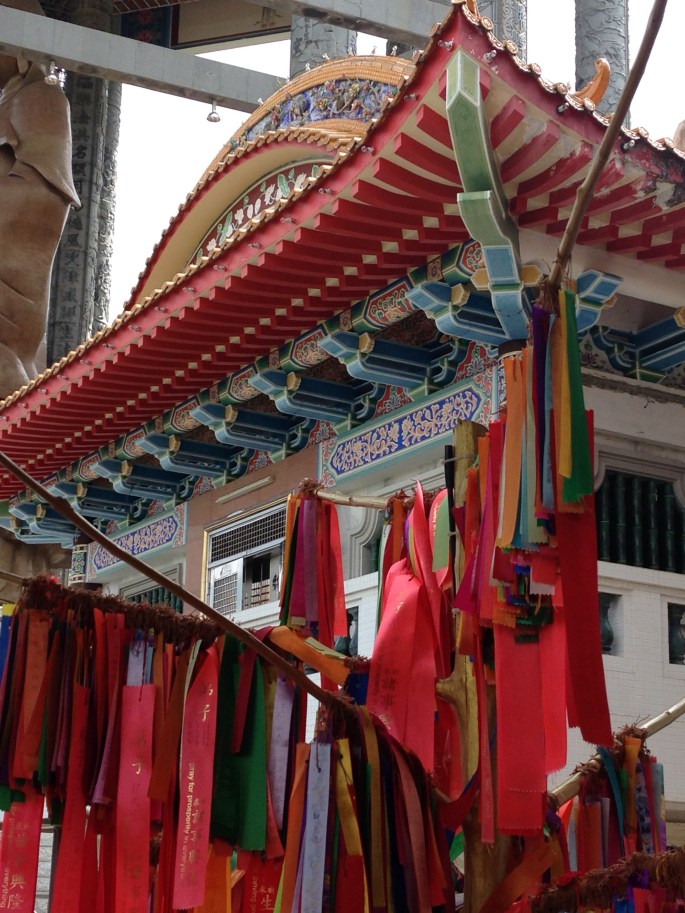
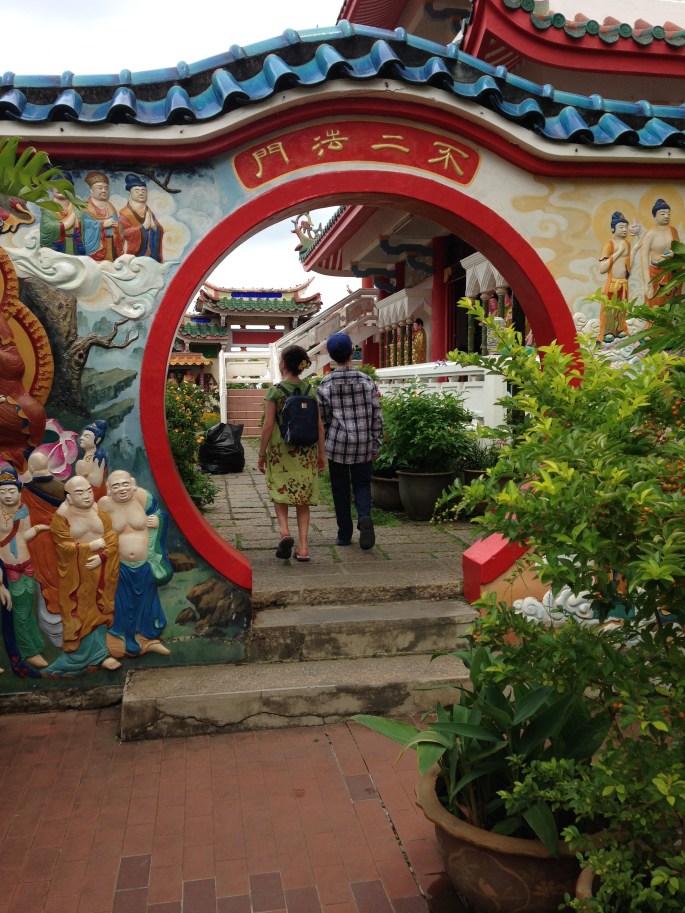
We also ventured to see the Buddhist Temple Kek Lok Si. It is again high atop a hill and faces the sea, the view is impressive. The seven-storey Pagoda’s walls are lined with 10,000 bronze statues of Buddha. Kuan Yin, the Goddess of Mercy stands at the forefront, about 120 feet tall, and stares at the Sea.
Buddha statues that line the wall
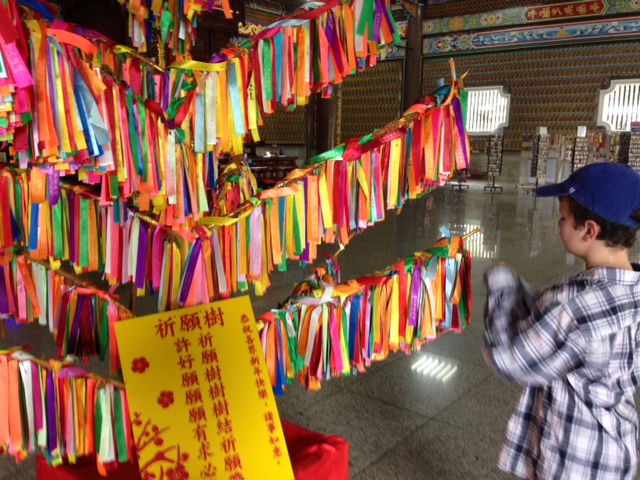
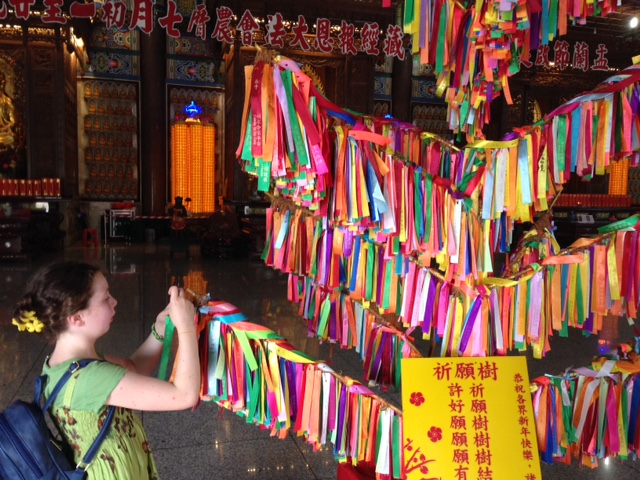
Kuan YinPrayer tree outside PagodaJack placing his prayerAddie placing her prayer
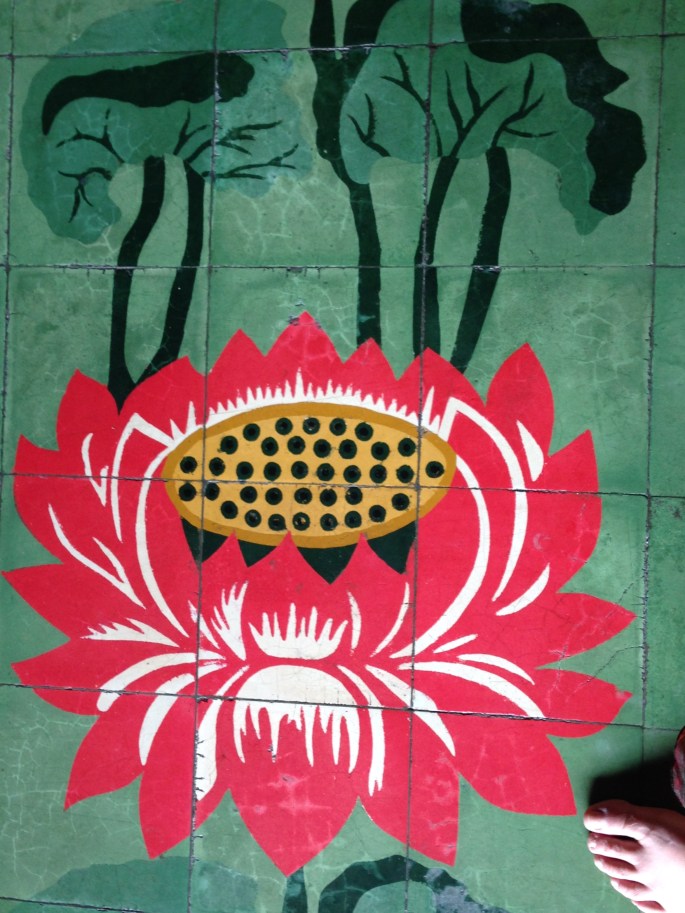
Floor tile in Temple
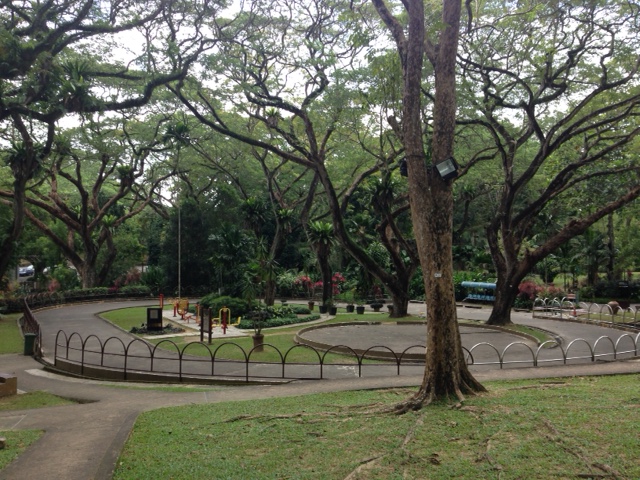
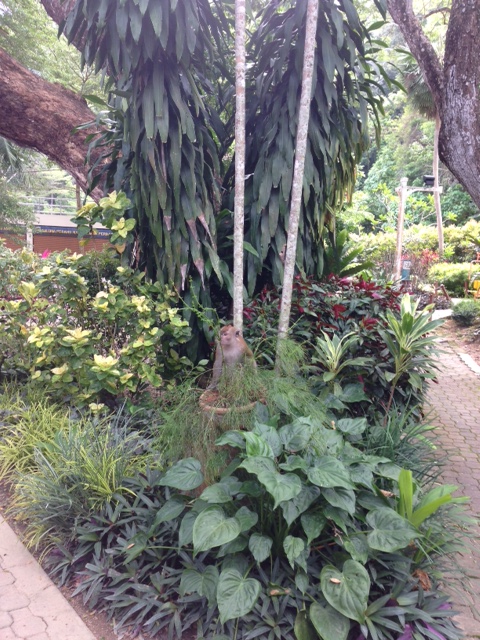
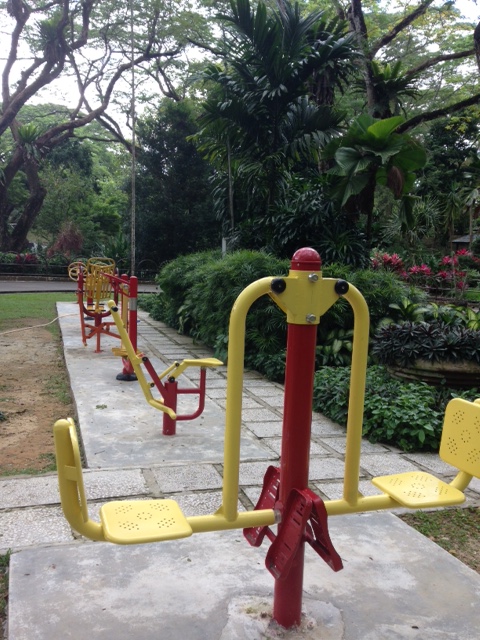
We spent a full week in Penang. We visited the municipal park which was tropical and grand, 172 acres filled with exercise equipment, playgrounds, a skate park and practice fields. It also has wading pools, fountains and swimming pools, but sadly they were under repair when we visited. It was designed as an open air oasis for the locals to escape city life. The large green space is well taken care of and allows one to breath in deep and forget the traffic congestion of Penang.
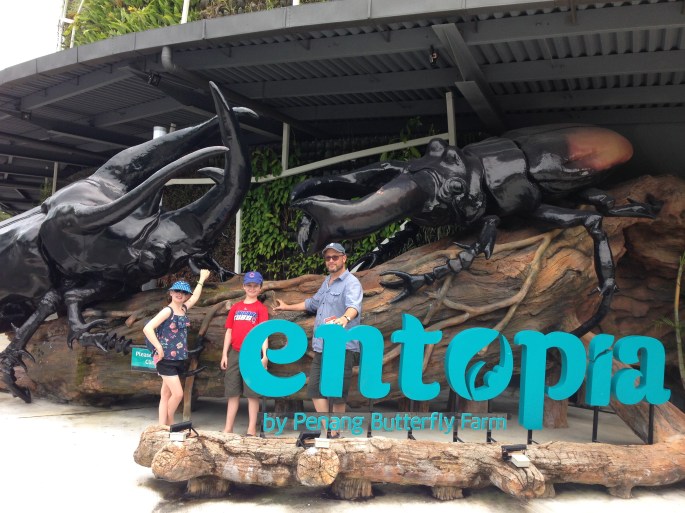
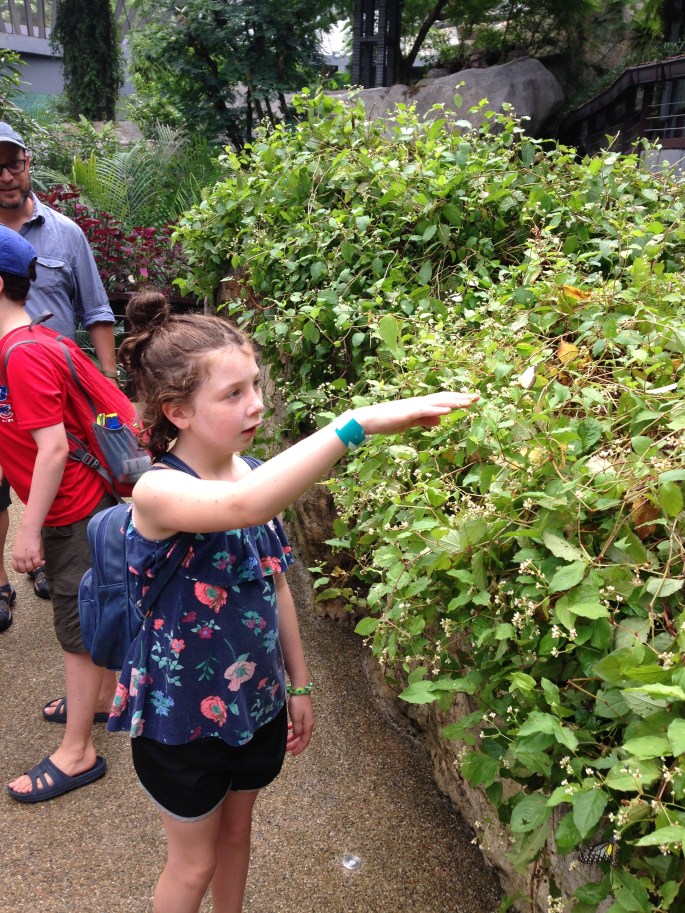
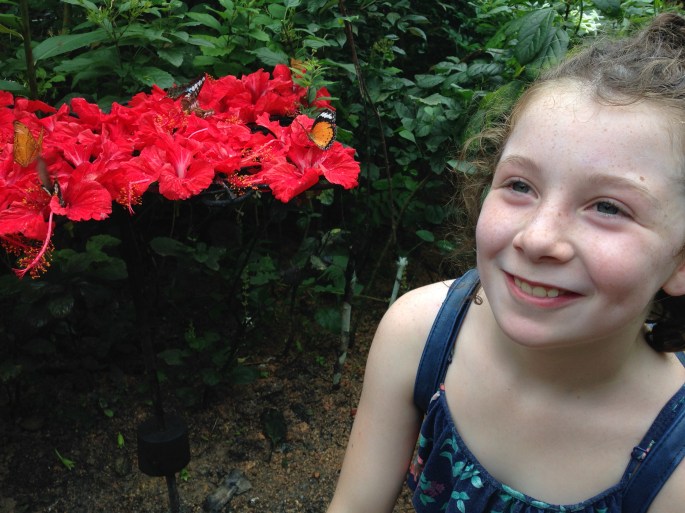
Penang has put some serious money into its tourist resources. There is a double-decker HoponHopoff bus that can take you around the sites. There is a free bus as well that you can take locally. We took the bus to Entopia, a large educational park dedicated to insects, snakes and butterflies. There is a steamy outdoor garden covered by a glass cieling that is home to thousands of butterflies. The $10 admission was worth it.
We really enjoyed Penang. After seeing the Anthony Bourdain episode on Penang, we already feel like we need to go back. Now, a five hour bus to Kuala Lumpur for a few days and then a flight to Hanoi, Vietnam. We spent a month in Malaysia and had a great time. It was a great place to begin our adventure. Relatively easy travel with a family. I expect Vietnam to present new challenges…
We are heading into our fourth week travelling. Our life is not all Instagram moments. It was expected that we would hit a down point or slump at this point, but it still feels like a bummer. Those mornings when I am thinking, “What did I do” and “11 more months?” get me down. Cork mused last night that we spend a lot of time together. Its not negative, but is constant and wears on you. Sometimes you just need a little space. And Jack and Addie need interaction with other kids or at least other adults. We all irritate each other at times. The little snatches of time that each of us get alone are fleeting and when we are hot and sweaty, tired, the bus is late and the kids are whining or saying they are hungry (even though we just ate, but they did not like their noodles…) it can be overwhelming.
Big cities and rooms without any outside seating area are especially hard because there is nowhere to escape. We are finding that small towns or beaches work better for us. Situations where we have a lot of interaction with fellow travelers and locals provide another outlet for our energy. Also, structure is good, even loose works. Somehow, making a plan makes everything feel more manageable. Negativity does not work and makes everyone grumpy so we really try to stay positive. It is important to model a tone for our children.
We have been putting out emails to “Workaway” hosts to query about volunteer opportunities for our family. There are very few opportunities to volunteer as a family in Malaysia, but our next destination is Vietnam, and that country is both hungry and welcoming of our family volunteering. If it all works out, later this month we will go stay with a family and volunteer to teach English for two weeks, more if we all enjoy it.
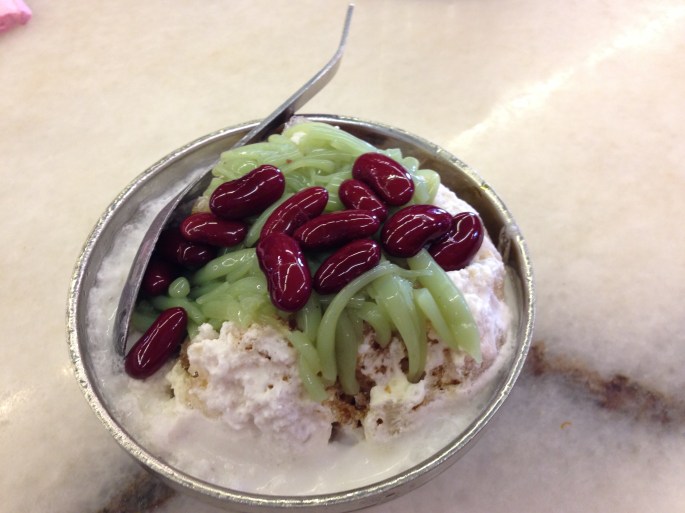
It is funny, the kids have adjusted to this life really fast. It is now normal to see monkeys and rats while surrounded by people that look different and speak another language. We walk in the streets dodging cars and motorcycles (no sidewalks) —the unfamiliar has become familiar. What is really amazing is they did not have any idea what to expect. Both Cork and I have traveled to this part of the world before, albeit 20 years ago. At dessert last night (jelly cubes and brown sugar in a bowl of ice and milk) we told them of our plans to volunteer. We explained that a man named Mr.Giao was going to pick us up in Hanoi and we are going to go live with him and his extended family for two weeks and teach at their school. They heard the information, nodded, and then Addie turned to Jack and wanted to show him how the jelly cubes danced in her bowl of milk. Cork and I turned to each other and shrugged. I guess they trust us.
Leong Fun Milk
What we miss the most is our friends and family. Technology has made staying in touch so much easier. I remember the expensive phone calls I would place in the middle of night to my parents from France when I was a 17 year old exchange student. Letters were the only form of communication. Now, with Google hangouts we can talk with anyone over the internet for free. It is amazing. The kids often video chat with their friends and this bolsters their moods! Now when we want to go somewhere we can order a cheap GRAB car (Asia’s Uber) and through GPS they know exactly where we are and we can use Google maps to figure out where we are going. It has been awesome. In Portland, I did not have a smart phone. However, after living this nomadic lifestyle I am a technology convert. In this foreign environment, the internet has become a necessity not a luxury. No Luddites here.
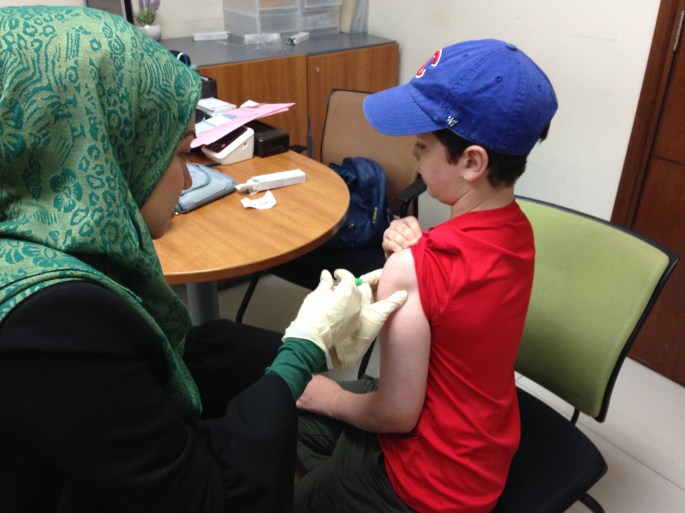
We came to Kuala Lumpur to get vaccinations, and the Rabies series is complicated. A series of 3 shots (day 0,7,28) and then if you do get bitten, you still need two additional injections. Without the vaccination, if bitten, you need five injections of Rabies immune globulin (which is only found in the large cities). If bitten or scratched by a dog, cat, bat or monkey–instructions are to wash it very well and then get to a medical facility which will assume the animal has Rabies. If not treated, the disease is 100% fatal. There are outbreaks all over SE Asia. If vaccinated, you still receive two injections, but just the normal vaccine which is available locally. We decided that we would not risk it and were trying to arrange our travel so that we would come back to KL for the vaccinations day 7 and day 28. In the states, the vaccination costs $1000 a person and is not covered by insurance. In KL it is $150 per injection (we thought it would be cheaper).
It is all a game of numbers. Statistics. We had a big discussion and decided against getting the rabies vaccinations. We are all weary of animals here, will take any bite or scratch very seriously and are prepared to interrupt our trip and fly to Singapore for treatment. We also have WorldNomads insurance, which does cover airlift for emergency treatment, so this cost was included in our calculus. The kids were relieved that they were not going to get three shots!
We went to the Petronas Tower Clinic and talked to the doctor there. She agreed with our decision. We did get the Typhoid vaccine and felt good about that. She said that everyone in the clinic receives this vaccine and since we all love to eat street… food, it was imperative.
The famous Petronas Towers that are in all the action films
In Melaka we decided to go to the public pool, which was this gorgeous Olympic size, 12 ft deep, outdoor pool that cost 50 cents admission. There is a strict dress code, only lycra, fully covered and our swimsuits were looking a bit ragged so we did get some looks. But we could have been stared at because I think it is a rare site to see a Western family take a dip in the local pool. Also, there were no ladders or steps for getting out, so that was tricky and awkward. But most confusing for us was that there seemed to be serious lap swimmers, both kids and adults, as well as classes and instruction, but absolutely no lane lines or demarcations as to what direction people were supposed to go. People swam length wise and width wise. Staying by the wall became the safest course for us. It was like driving in Asia, there are rules, but we do not know what they are and it seems a bit chaotic. It is hard not to observe the scene and think that simple lane lines would really make it much more enjoyable. But, I have to admonish my American propensity for organization and order and realize that there are many ways to do things, and this is how you swim in Melaka.
The above map is for Ben Bochner
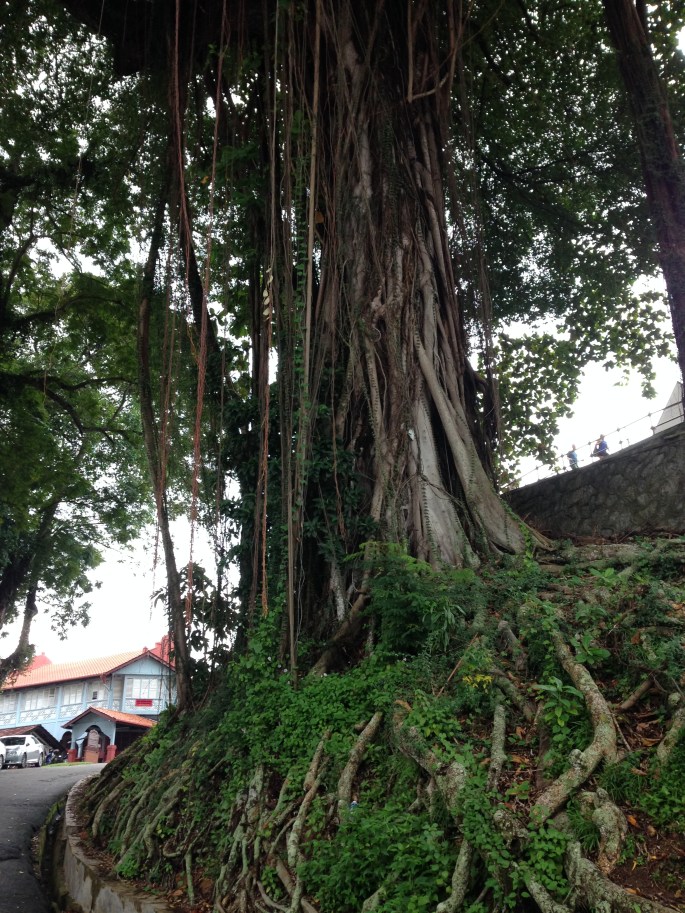
Melaka was originally covered with these giant trees and jungle before being developed. The remaining trees help me imagine this land before cities. The car in the background gives the size perspective.
Huge trees grace this land.
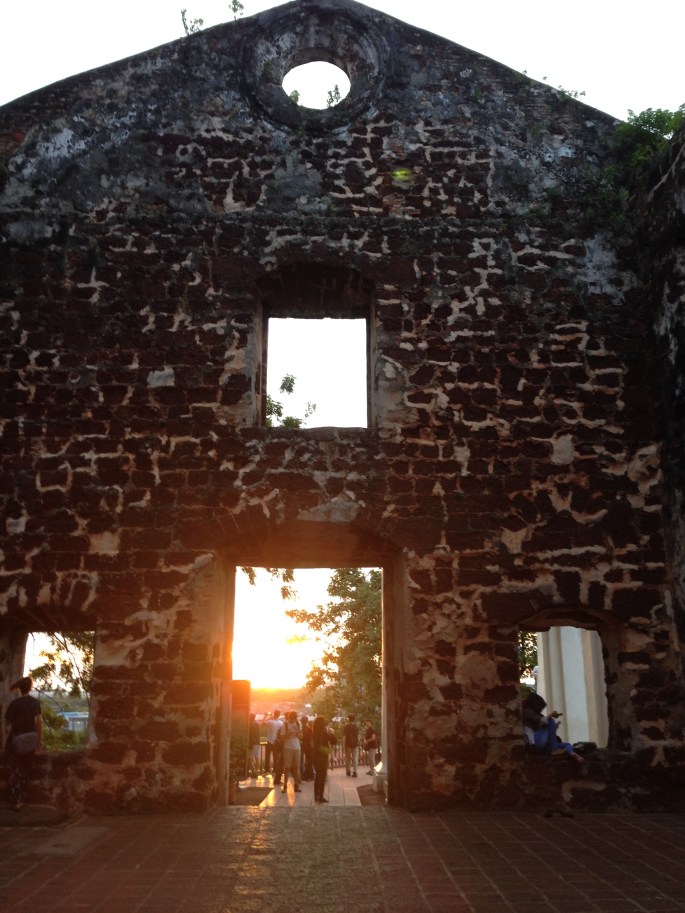
The history of Melaka saddens me. Colonialism is always tragic, acts of greed and evil against families. Originally a small fishing village that was fertile (you can still see the huge trees that must have covered this region) founded by Parameswara, the first Sultan in 1400. Melaka became a thriving and strategic international port city that dominated trade and was a necessary stopping point for ships from China and India. In 1511 the Portuguese decided to take over Melaka and attacked and conquered the city (murdering or selling the Muslim inhabitants into slavery). Instead of taking over commerce successfully, they disrupted the trade system and Asian trade became scattered over a number of ports. The Dutch decided to attack the Portuguese and took over Melaka in 1641, making more of a mess of things (while murdering and enslaving anyone in their way) and, finally, Melaka was ceded to the British in 1824 who neglected it completely, focusing on Singapore as it’s primary port. After a few years under Japan’s rule in the early 1940s, it was finally declared as part of an independent region in 1956! In 1989 it was declared a historical city, followed in 2008 with a UNESCO World Heritage Site designation.
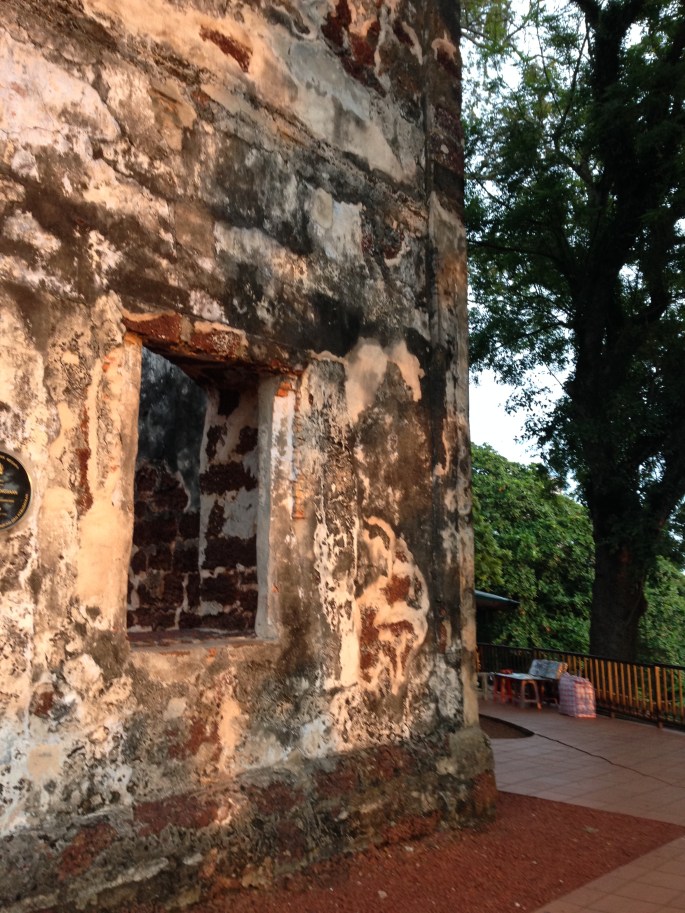
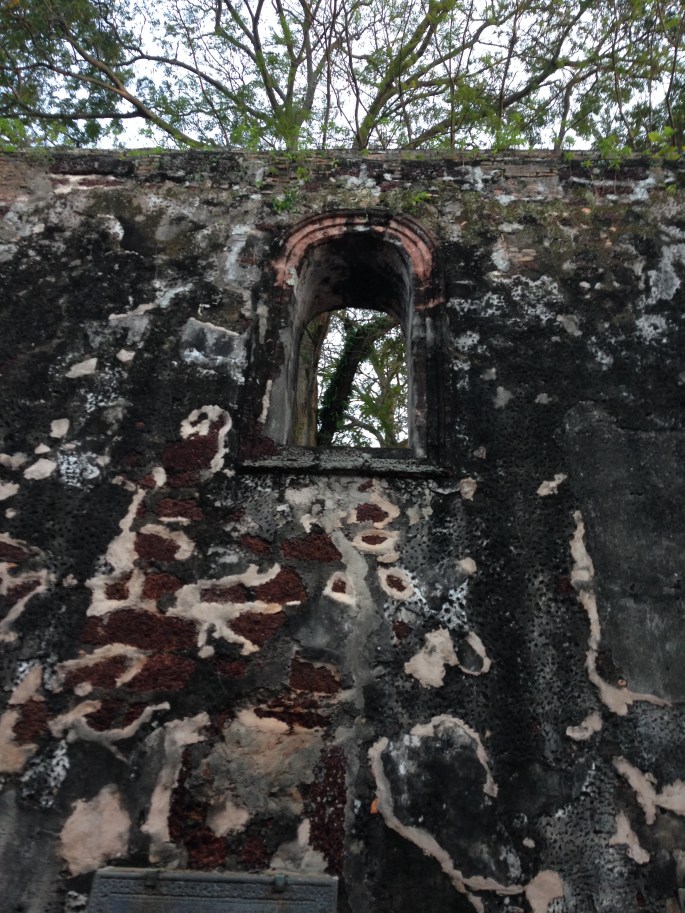
St.Pauls church 1521St Pauls ruins 1521
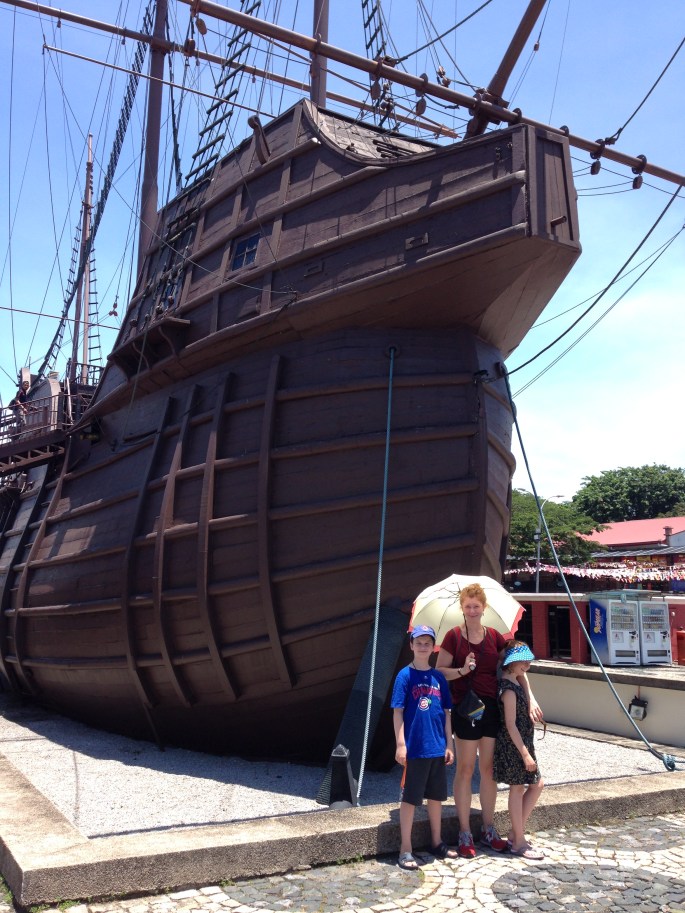
St. PaulsSt.PaulsMaritime museum
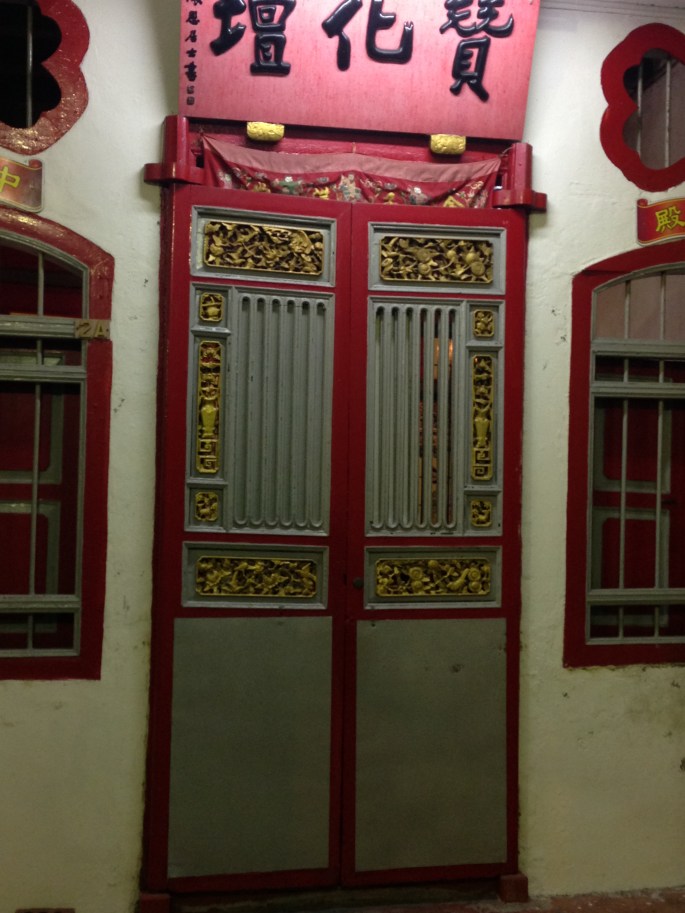
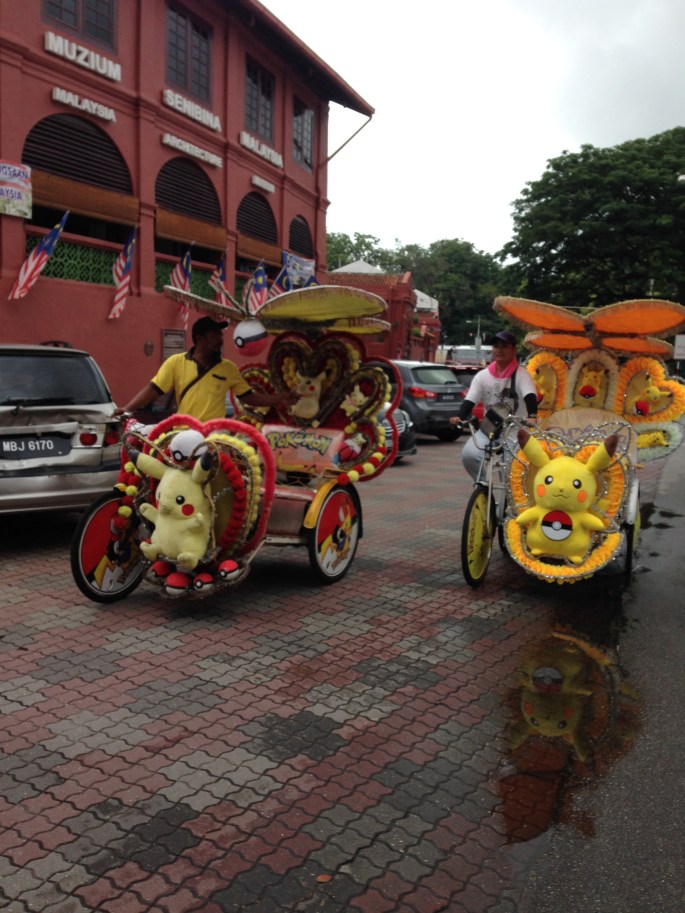
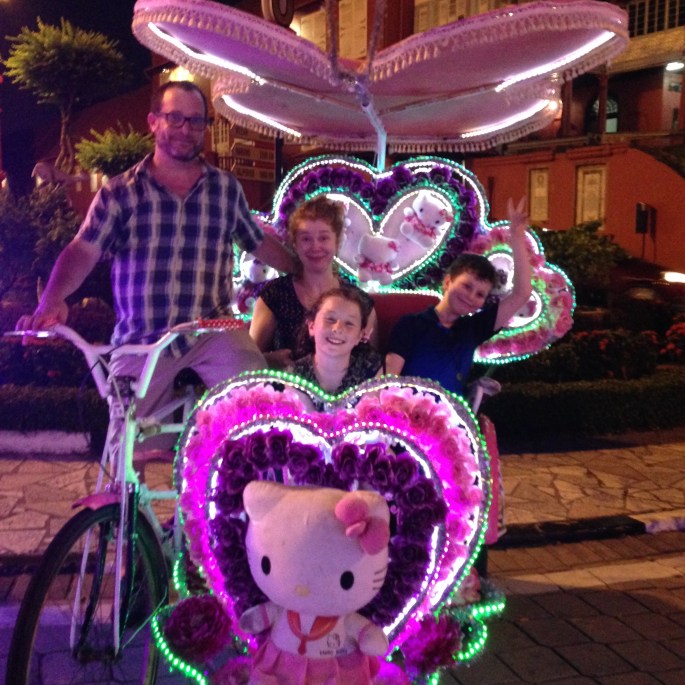
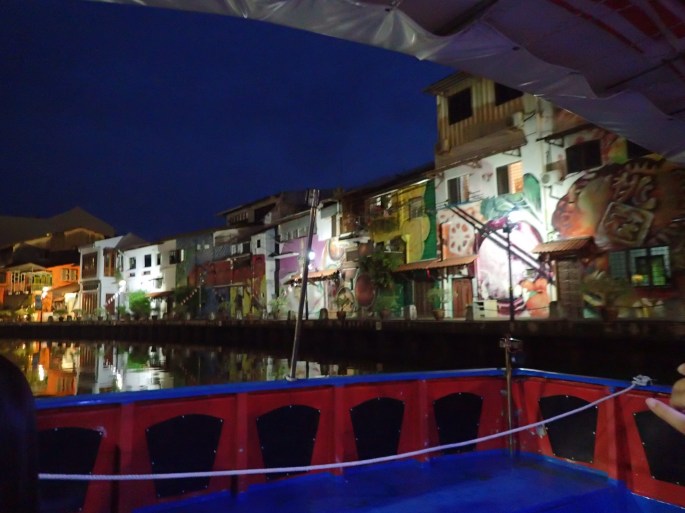
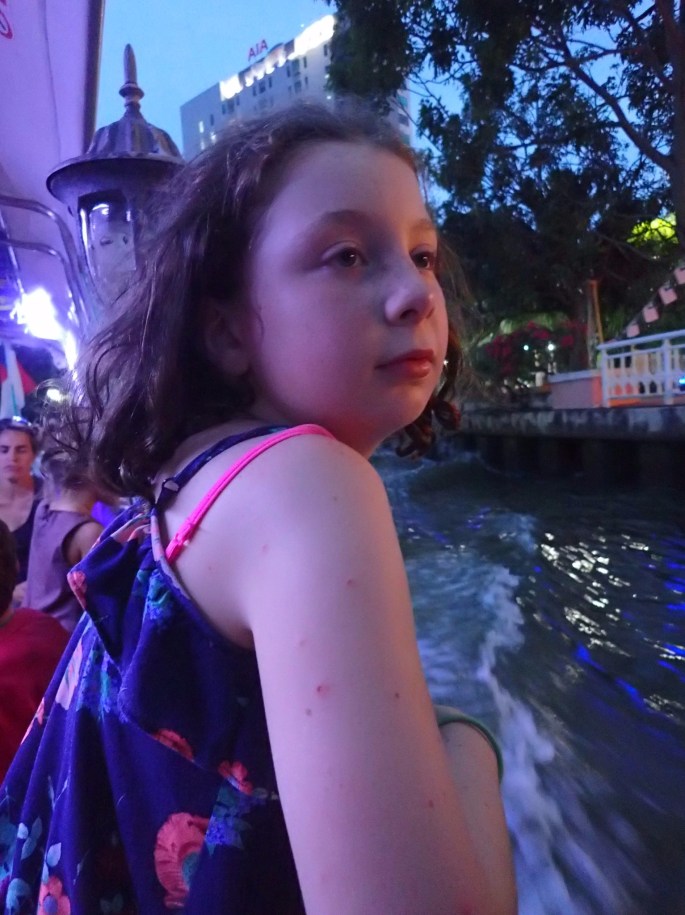
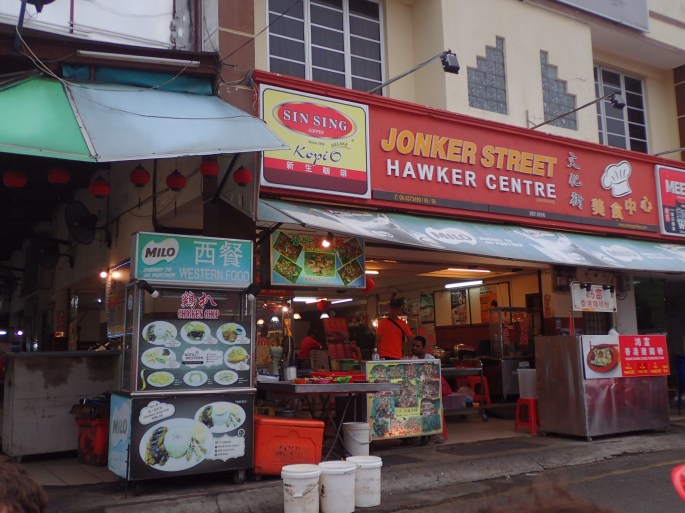
Now Melaka is a bustling tourist destination that caters primarily to Chinese tourists (so much so that Chinese is more useful than Malay, so we are back to speaking English). It actually feels like a small Chinese city. People jam the small winding streets of the old Portuguese prewar buildings in Jonkers (Chinatown), ogle the ruins of Catholic churches and ride loud colorful bicycle carts decorated in HelloKity and blasting Despacito. The once vibrant river that carried all the trading boats is now a murky river littered with sediment and trash. There are tourist cruises that take people up and down the river, but they go so fast that one is unable to enjoy the unique views and I could not hear the narrator that was telling the history of Melaka as the pop music played loudly. But, I have to say the breeze was glorious. Although it gets sticky and hot during the day, the early evenings are graced with a cooling wind off the ocean that is so refreshing (as well as a Tiger beer of course!)
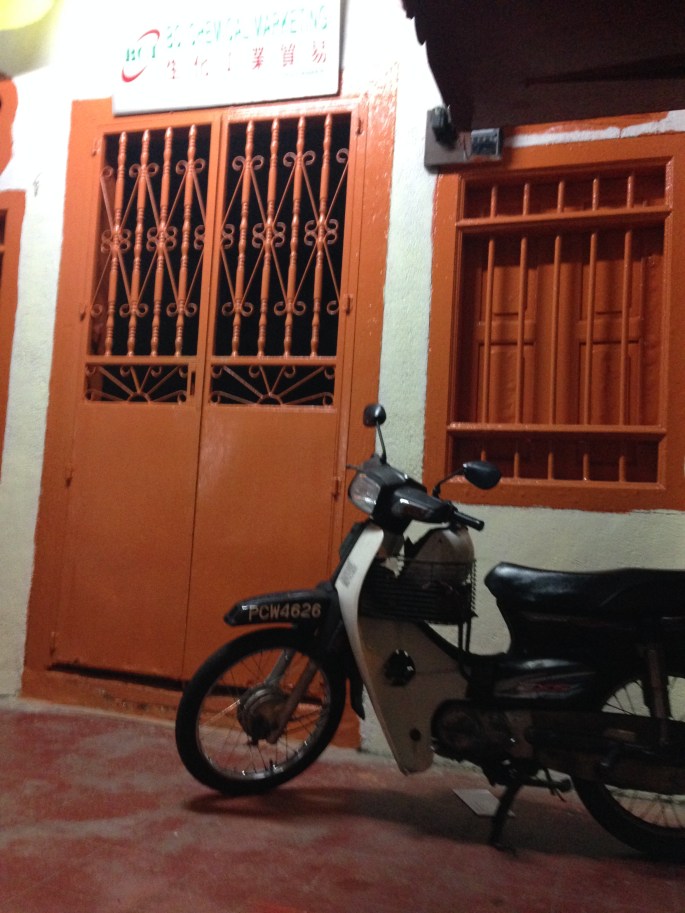
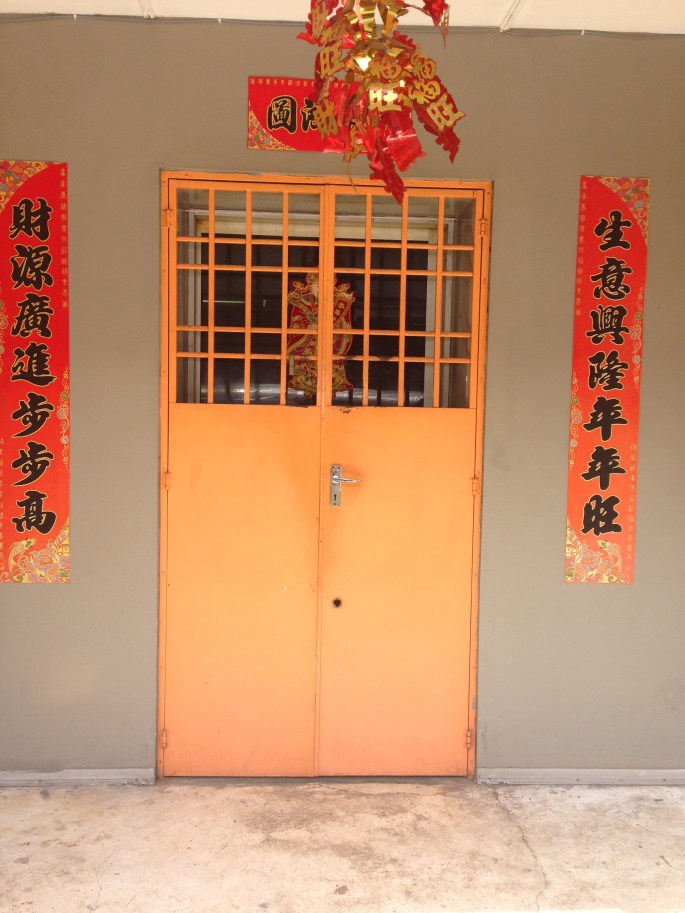
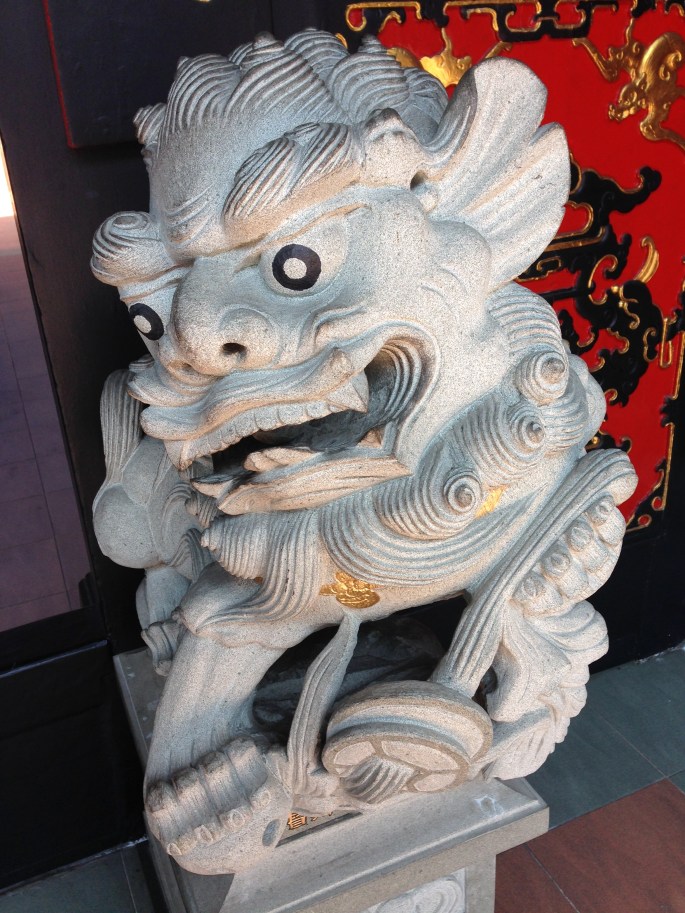
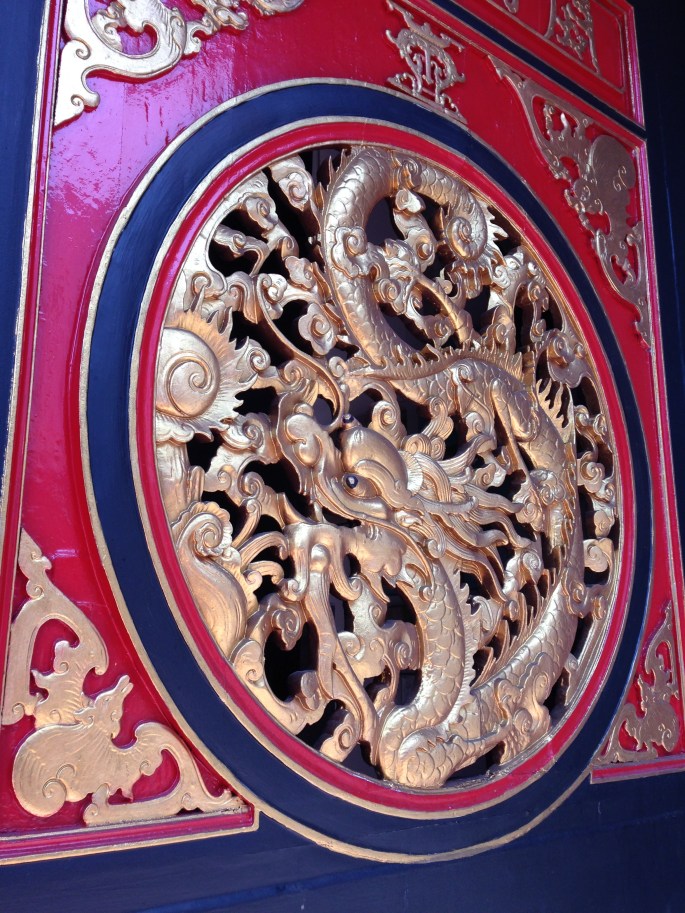
Rich Chinese cultureDecoration near doorsTourist bicyclesThe kids were so excited!DoorwaysDoorwaysRiver cruisesNight cruiseAddie taking in the view
Melaka is known for its high density of museums. We went to see the Body exhibit, the one that has desiccated and silicone injected real bodies displayed and talks about the mechanism of the body. While the museum staff was very friendly, the exhibits were odd, the English was clunky, there were very unscientific proclamations about the differences between the genders (men are goal oriented, women are fat but beautiful… ) We noticed that all of the genitalia was covered by paper tags!
Malaysia is a multicultural and multiconfessional country, whose official religion is Islam. As visitors we experience this in the following ways. I would say that 98% of Malay women’s heads are covered by the Hijab (although sometimes there is a stylish baseball cap turned backwards on top). There is daily call to prayer that is played through out the city, a haunting and spiritual sound that I love. Everyone takes off shoes going inside, sometimes even restaurants (I totally understand, and seeing the bathroom situation which utilizes a lot of water, no shoes inside is welcome). It is difficult to find alcoholic beverages in normal hawker stands and restaurants and there is a general modesty in clothing (again appreciated by the sun fearing redhead that prefers all skin covered anyhow). Also there are few dogs. Hearing about and experiencing the anti Muslim rhetoric that is buzzing through the US, I would expect to be on the receiving end of general weariness and mistrust. This would seem a natural response to our country’s shameful behavior of late. However I am constantly in awe of the capacity of humans for kindness. We have received nothing but smiles, welcoming nods, helpful guidance and knowing glances (when as a family we are having a moment of struggle). One of the reasons we wanted to travel was to truly be peace ambassadors and in our small way combat the hate that pervades the air space. We are consistently overwhelmed by the generosity of spirit we encounter daily.
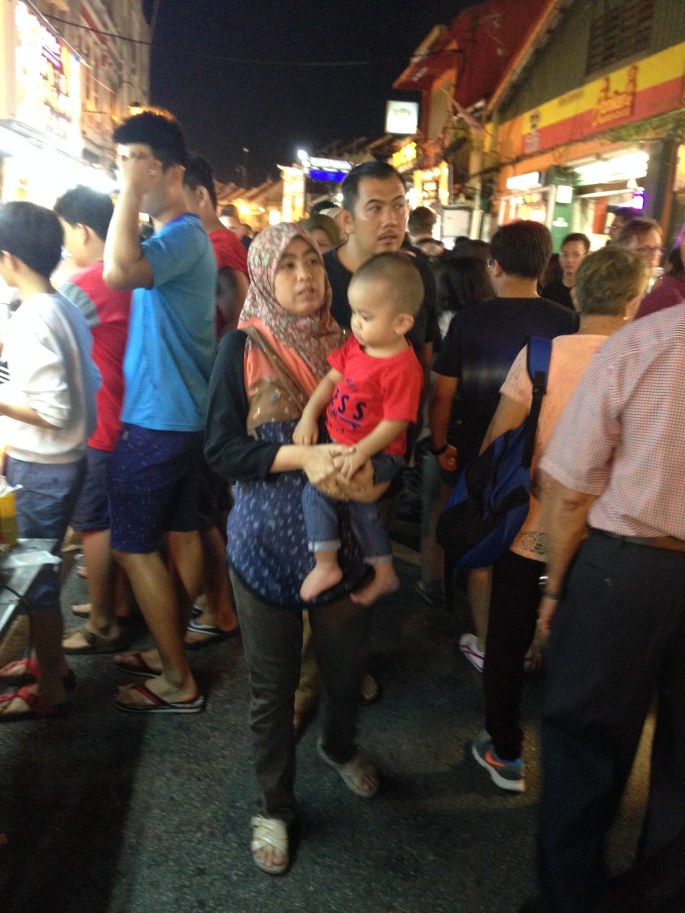
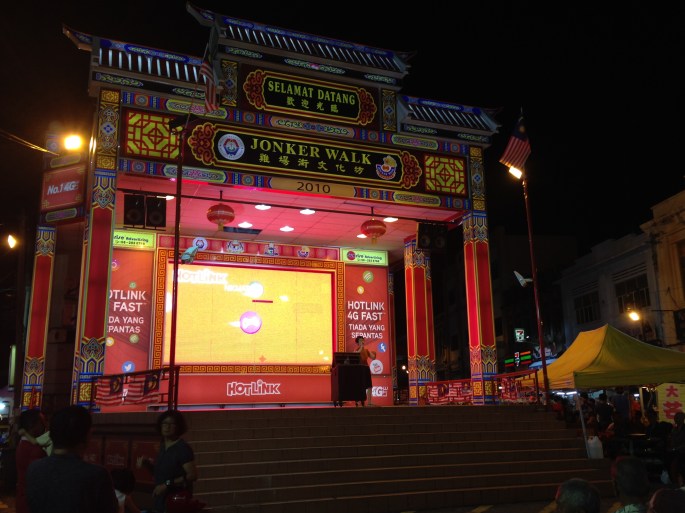
The crown jewel of Melaka is the night street market, Jonkers street, which thankfully is closed to traffic and happens weekly Friday through Sunday. We spent a lot of time walking these streets, in search of just the right trinket and tasting odd foods. There was a lot of schlock, plastic toys and cheap jewelry. We were rewarded with the discovery of a large stage that hosted Karaoke. Women in their 70s belting out Chinese songs to an audience of seated Chinese men and women of the same age. It is these scenes of daily life that I live for and cannot capture on film.
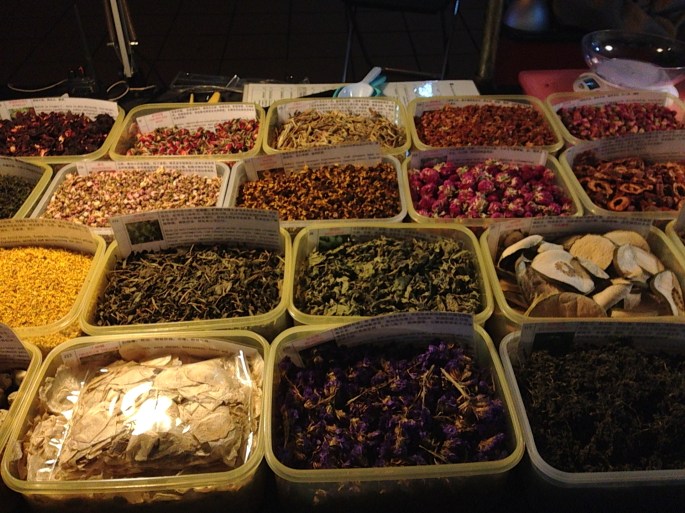
Chips fried on a stickPicking out just the right ringLots of peopleDim Sumkaraoke stageSpicesHandpainted shoesCendol
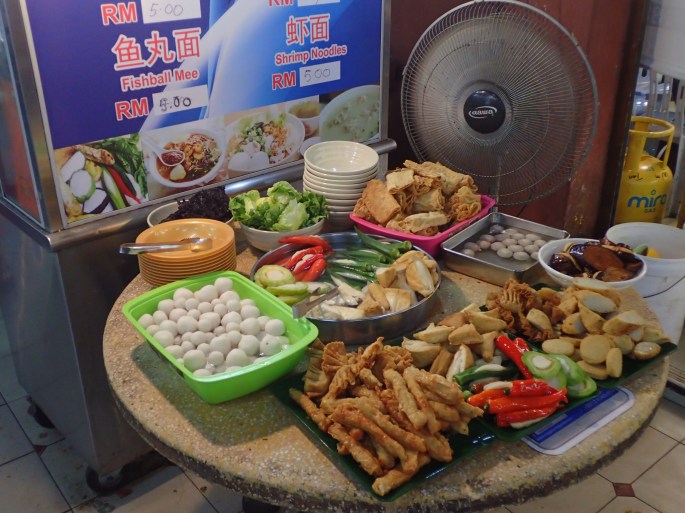
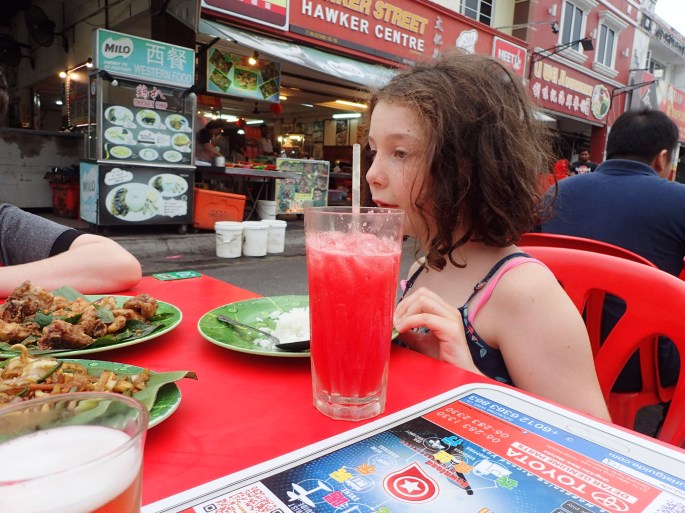
Food shapes our daily experience. I think the kids are eating a majority of rice, bread (roti) and fruit. They do not like how spicy the food is. We often wander into street stalls and order something, shrug our shoulders, not really knowing what we will get. We lucked out and our airbnb was one block walk from amazing local food which we frequented. Often the wait staff was less than 10 yo (parents did not speak English), but somehow really competent. There is something a bit unsettling about a steely eyed 8 yo opening and serving a beer.
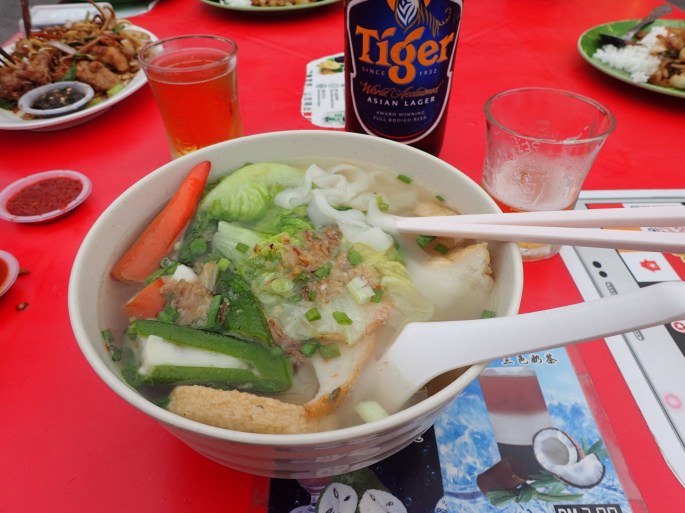
Our local corner jointIngredients to choose from for a soup, all vegetables stuffed with fishThe resulting soup
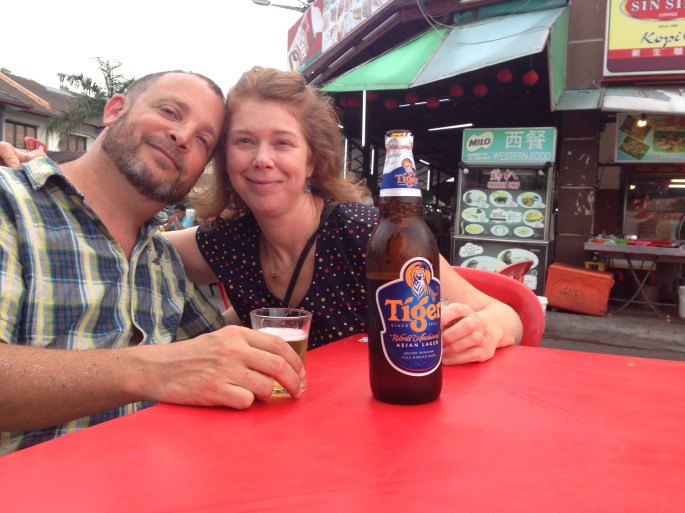
Tiger!
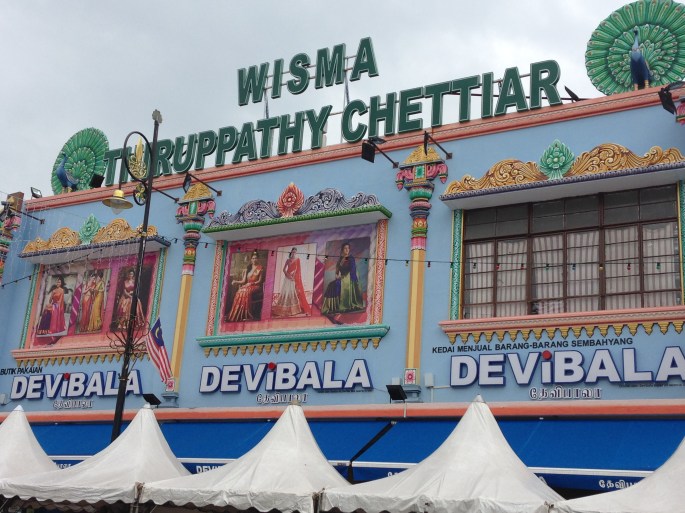
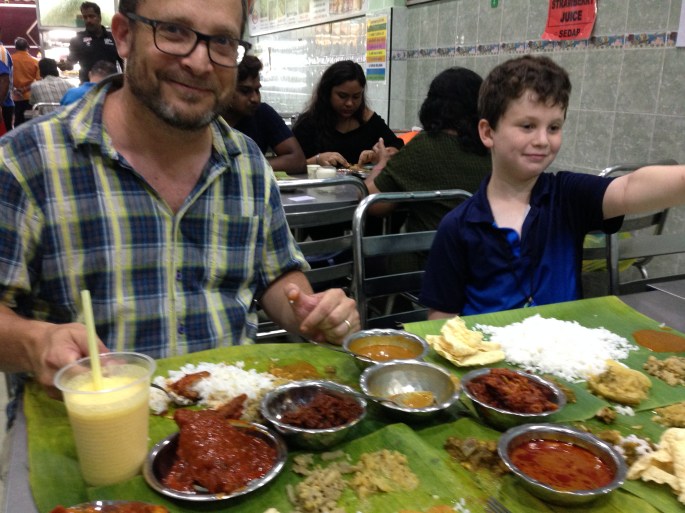
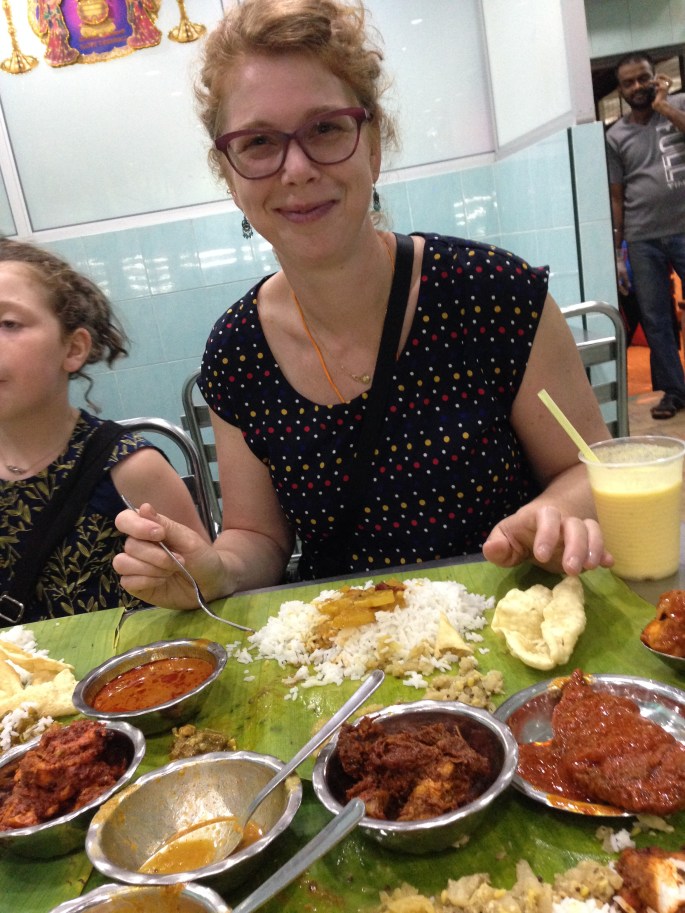
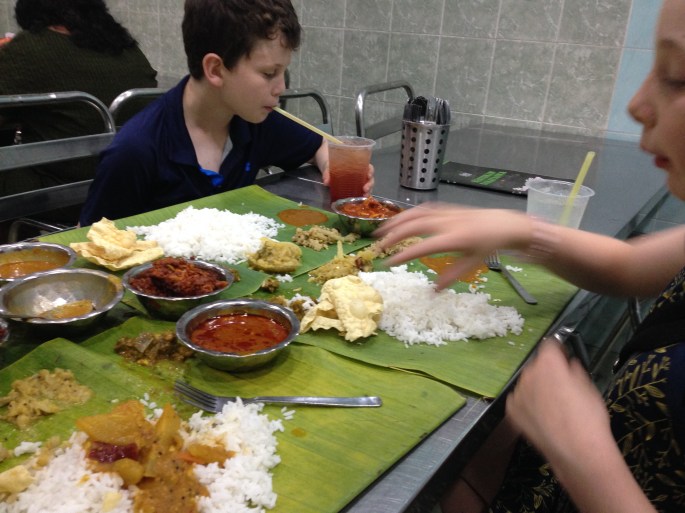
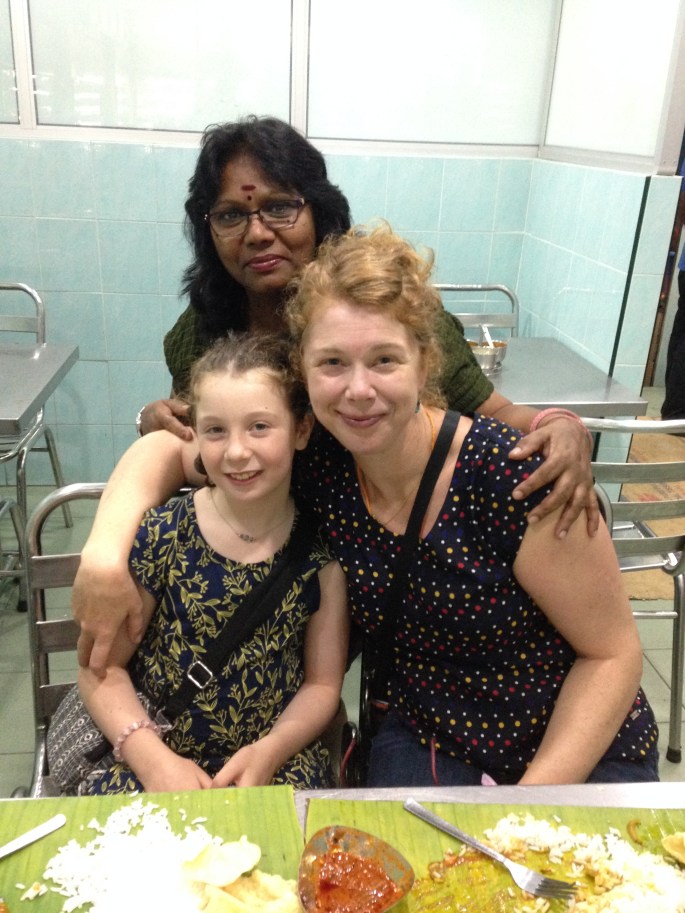
We went to Little India in Melaka and were introduced to Banana leaf curry. Since we had no idea how to order, we ended up getting way too much food. We had a very conscientious and motherly male waiter who shook his head when it was clear we going to be unable to finish. The food was great, but we over ate so the experience left us feeling a bit ill.
Little IndiaBanana Leaf curry
Nearby restaurant goer
Sometimes you just need a taste of Western food. We have gone to McDonald’s once. We found a Hipster cafe called the Daily Fix in Jonkers that was expensive, but a flavor of Portland.
A little taste of hip
After Melaka we head to Kuala Lumpur for a couple of days. We have vaccinations to get there! A three hour bus ride.



 Totally spoiled by the honesty of Malaysia we were initially caught unawares. Hanoi is a busy, crowded, hungry city and as a white foreigner you are a walking $ sign, an easy mark. Capitalism is very new here and everyone is struggling to survive. We have been scammed by the fruit guy, by the jelly dessert woman–overcharging us by 500%, not giving us change back. The bicycle vendors, often overcharge by ten times. This being day two, we are on our game now. Having read online what scams go on here, we have gotten off lucky. The denominations of Dong are so large, it is confusing. Since we do not know the price of things and cannot speak Vietnamese, we are vulnerable. And once someone has your money, it is very hard to get it back. However, we are having great experiences as well and most of our interactions are positive. It just makes us weary and tired to be on guard. We just have to be more careful here.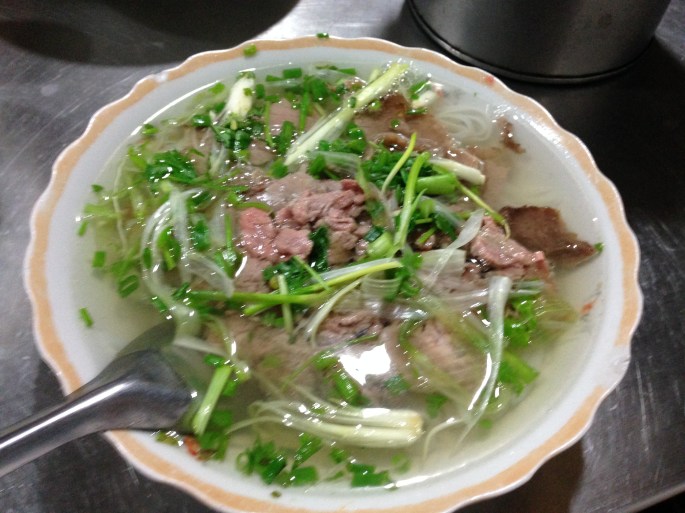









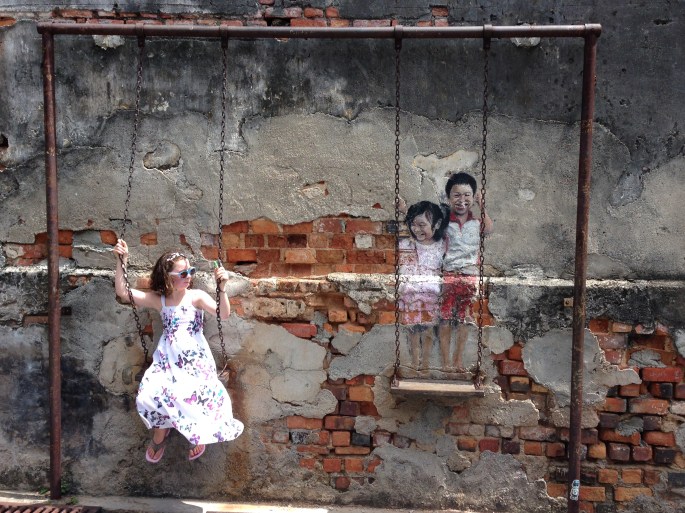 Georgetown decided in 2013 to employ many artists to paint murals on building walls within the small streets of the heritage district. They have become a very popular tourist attraction. In Montessori education there are “Going Outs” which are field trips planned and executed by the students with limited adult help. We decided that we would give Jack and Addie a map and they would find all the street art.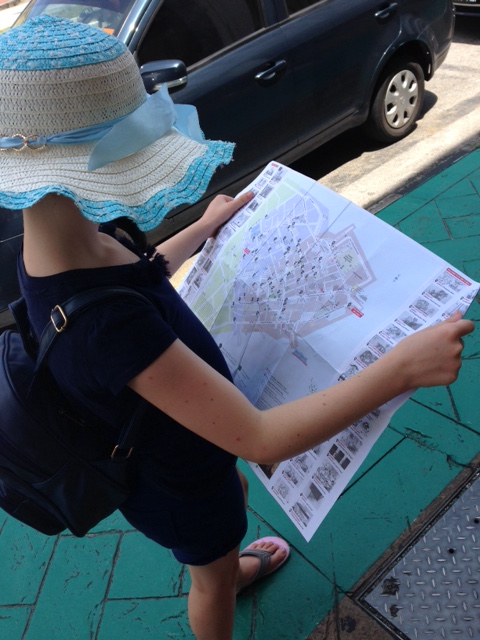
 Images










 In Melaka we decided to go to the public pool, which was this gorgeous Olympic size, 12 ft deep, outdoor pool that cost 50 cents admission. There is a strict dress code, only lycra, fully covered and our swimsuits were looking a bit ragged so we did get some looks. But we could have been stared at because I think it is a rare site to see a Western family take a dip in the local pool. Also, there were no ladders or steps for getting out, so that was tricky and awkward. But most confusing for us was that there seemed to be serious lap swimmers, both kids and adults, as well as classes and instruction, but absolutely no lane lines or demarcations as to what direction people were supposed to go. People swam length wise and width wise. Staying by the wall became the safest course for us. It was like driving in Asia, there are rules, but we do not know what they are and it seems a bit chaotic. It is hard not to observe the scene and think that simple lane lines would really make it much more enjoyable. But, I have to admonish my American propensity for organization and order and realize that there are many ways to do things, and this is how you swim in Melaka.









 Bochner Family Adventure