Road weary

We are tired.  We have been traveling for almost six months,  over five months in SE Asia.  We are ready for a new adventure.  Or at least I am.  To be honest we are feeling a bit road weary, a slight fatigue.  In Cambodia it seems that we waffle between two extremes.  On the one hand experiencing the dusty developing world in full gear.  Then we enter the protected enclaves founded by expats that serve up swimming pools, billiards and hamburgers.  These two worlds remain segregated, apart.  We hop, leapfrogging from one of these lily pads of familiar comforts to another after long hot bus rides.  In a sense creating an escape from traveling.  Cambodia is the first SE Asian country where Westerners can own 100% of a business and there are restaurants and hotels that cater exclusively to travelers.  They are still budget conscious and we are not staying in glamour and glitz.  The owner of our hotel in Kamphot was Alaskan, our Texas barbecue place hosted by a Kansan and the Thai restaurant owned by guy from Alabama.  The staff is often Dutch or French, and the kitchen and cleaning staff is often Khmer, although not always.  Kep Coffee was owned by a guy from Seattle and his family.  I had a BLT there that would rival any sandwich in Portland.  It is an odd scene.
20180212_131036-1.jpg
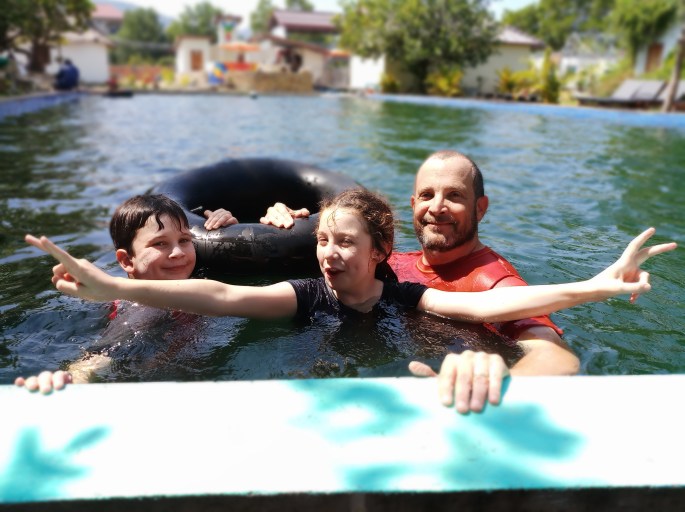
Swimming in the natural pool in Kamphot
20180214_163825.jpg
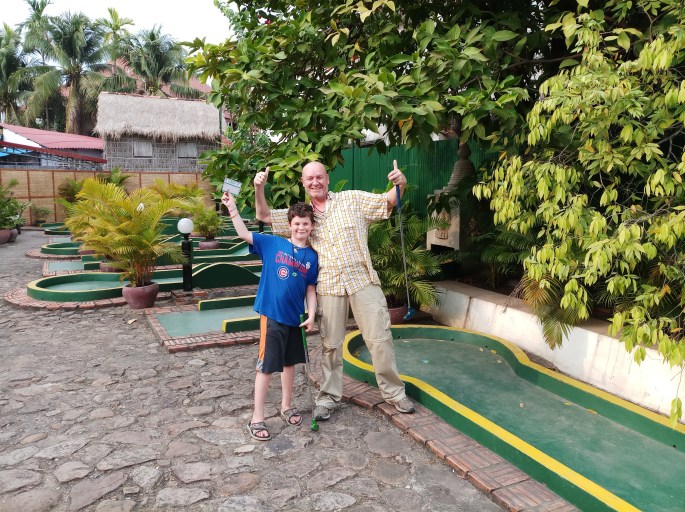
A draw with Stew in Mini Golf at our guesthouse

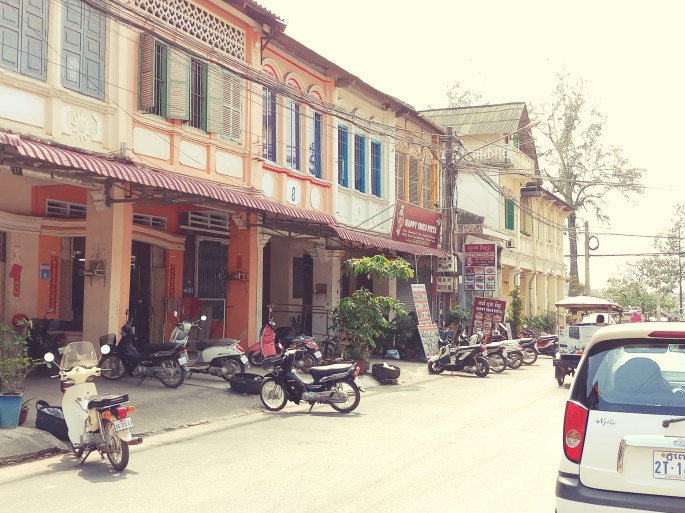
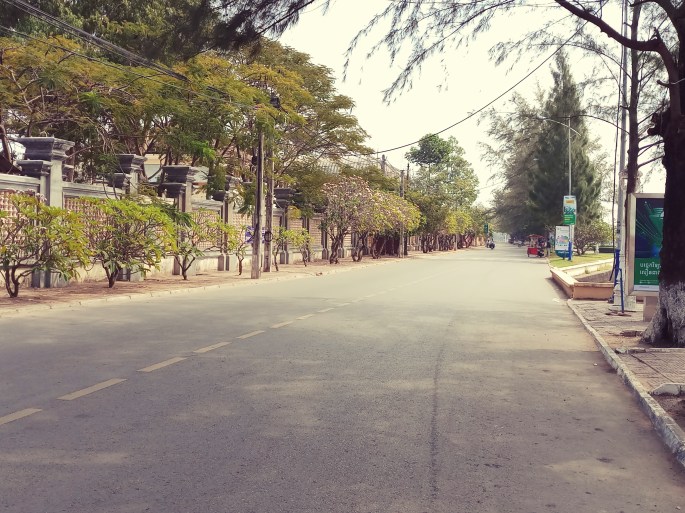
After Battambang, we explored the coast of Cambodia, Kamphot, Kep and then Rabbit Island.  These towns have wide empty roads and French colonial decay.  Kamphot province is large and 80% of Khmer live in rural areas, so the towns feel kind of empty.20180218_122943.jpg
20180218_121454.jpg
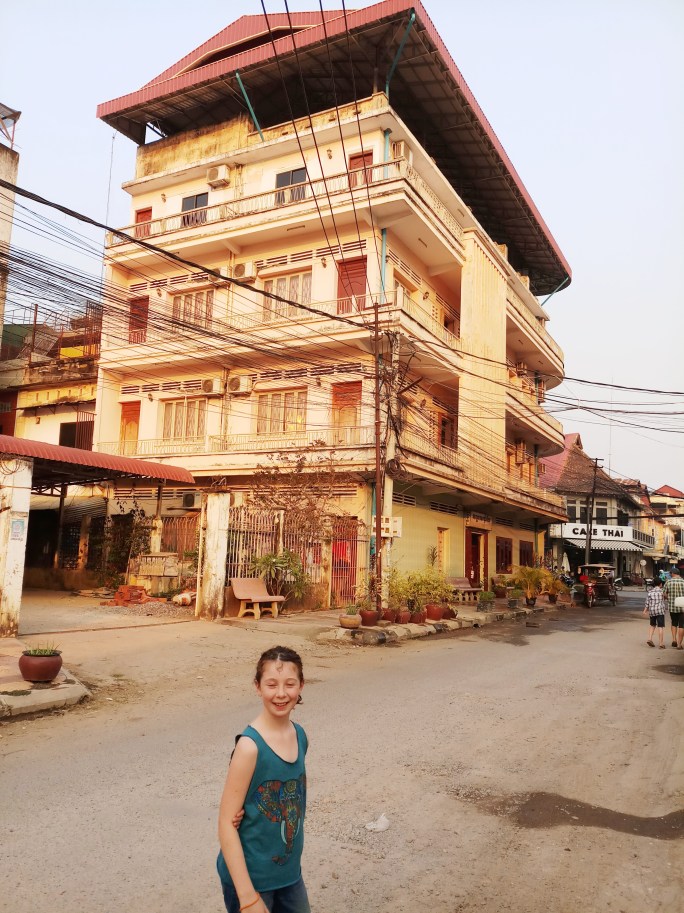
Colonial buildings of Kamphot from French rule. It seems like a large percentage of tourists in Cambodia are French. Those historical pathways are well-worn between the two countries and continue to this day.
20180218_122851.jpg
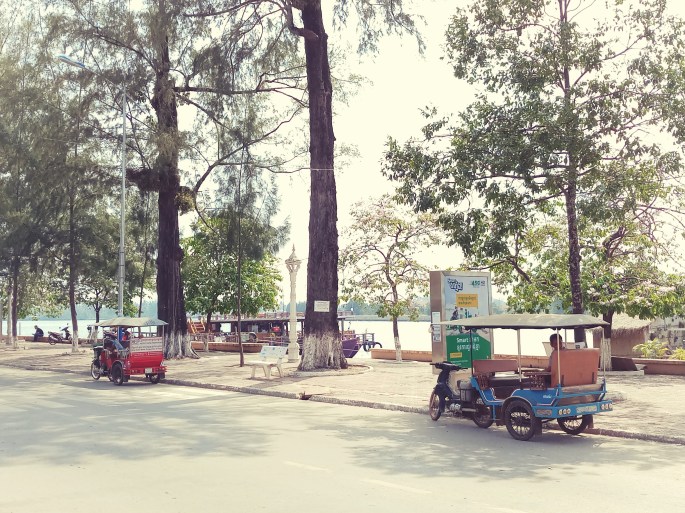
The walkway along the river in Kamphot
20180213_121539.jpg
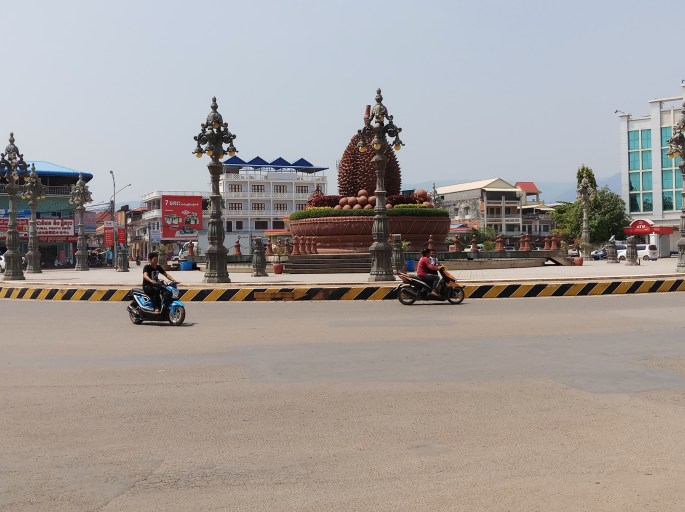
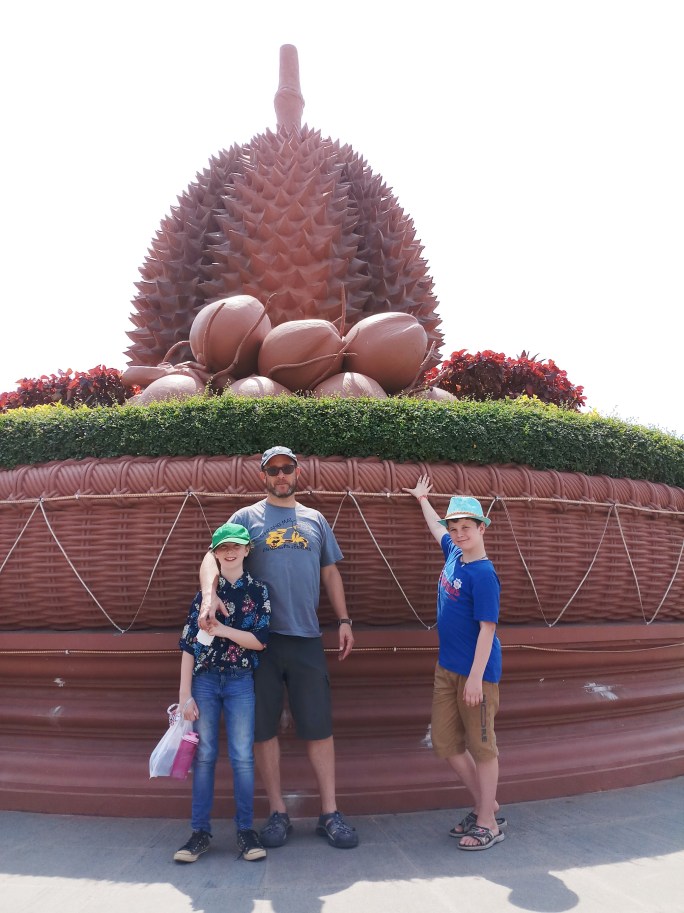
Cambodian cities seem to favor large monuments of fruit and mythical gods to mark intersections. If one cannot read a map and the streets are not numbered sequentially, a large Durian does make a good landmark for directions.

20180218_122311.jpg

20180213_130058.jpg
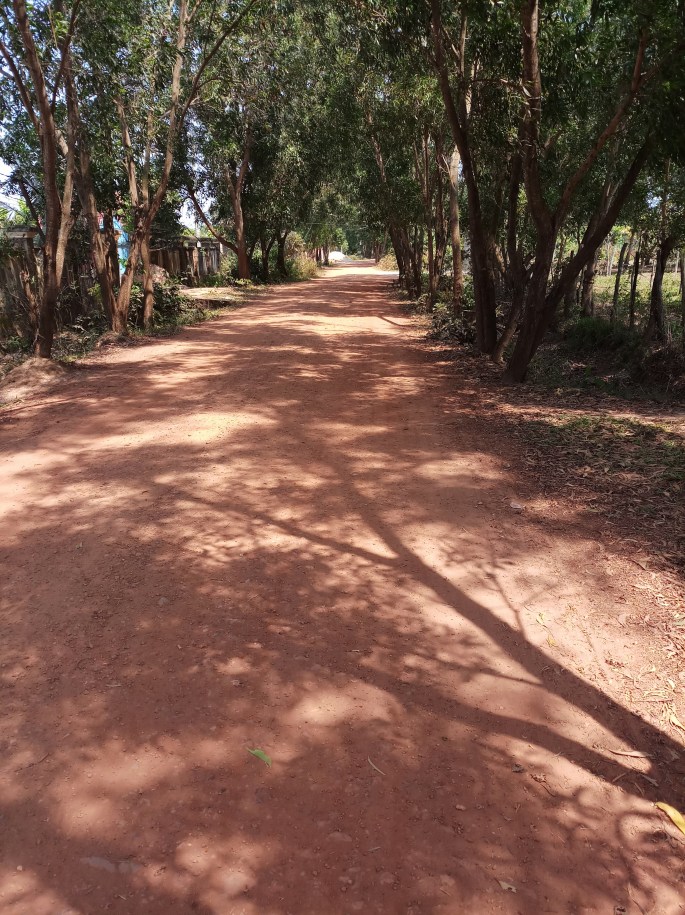
The country roads where we road bikes, encountering children on bikes and cows
20180212_095025-1.jpg
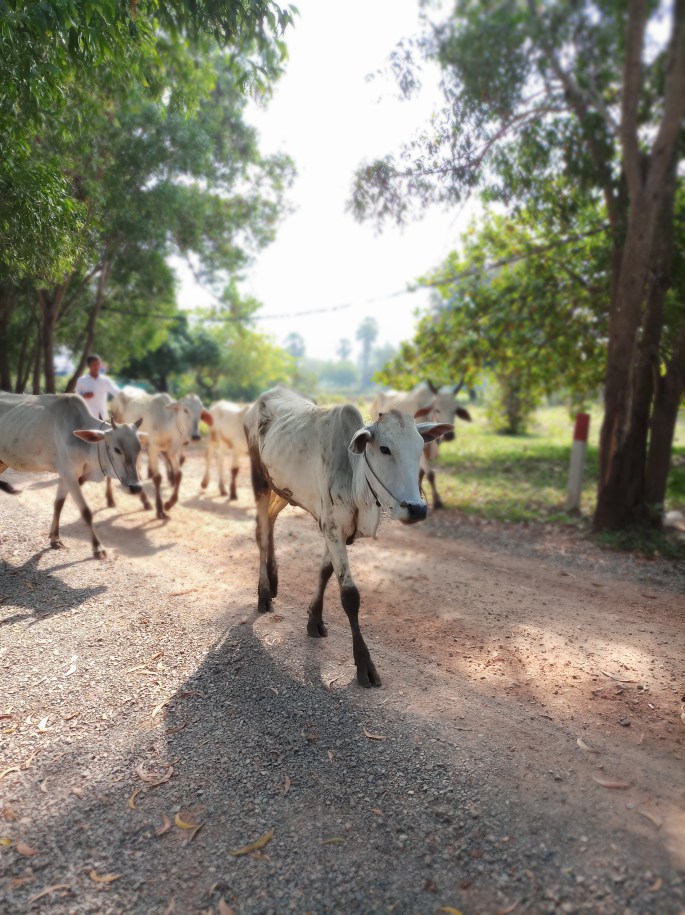
I find these scrawny animals to be so beautiful
20180218_122216.jpg
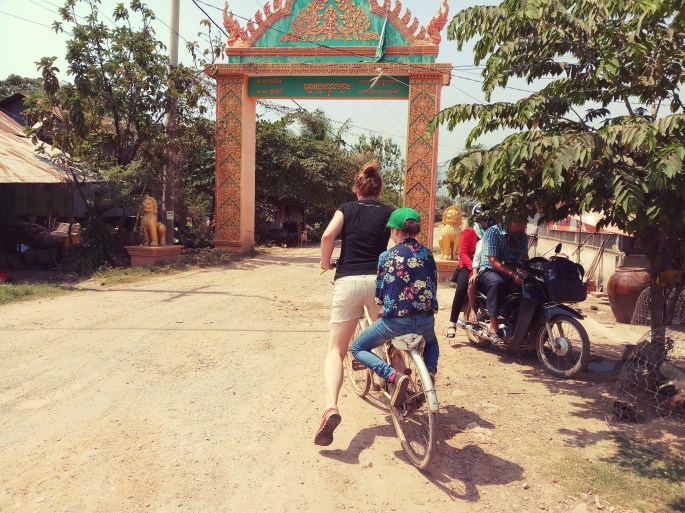
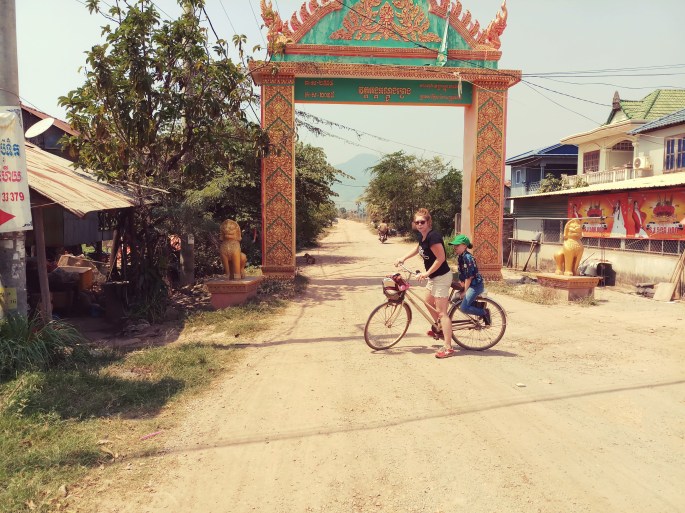
We had a great time riding bikes, even though it was hot and dusty. Being on a bike is a great way to really interact with a country.
20180218_122138.jpg
A half an hour out Jack discovered he had no brakes. It made an already dangerous ride, even more fool hardy.
20180215_121010.jpg
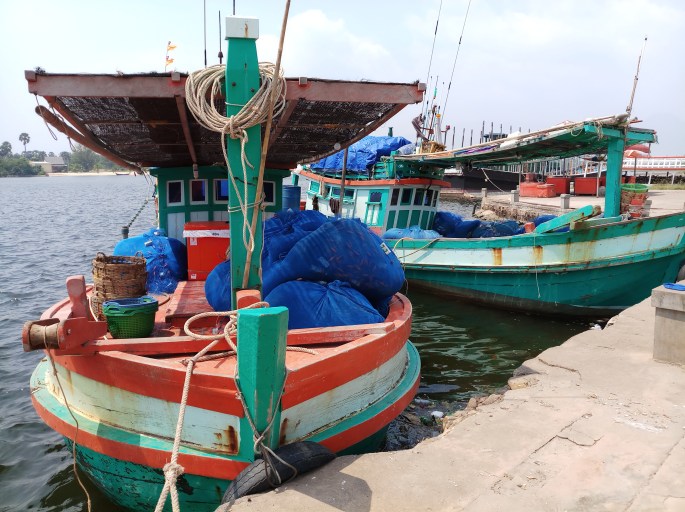
Fishing and crab boats in Kamphot
20180215_123246.jpg
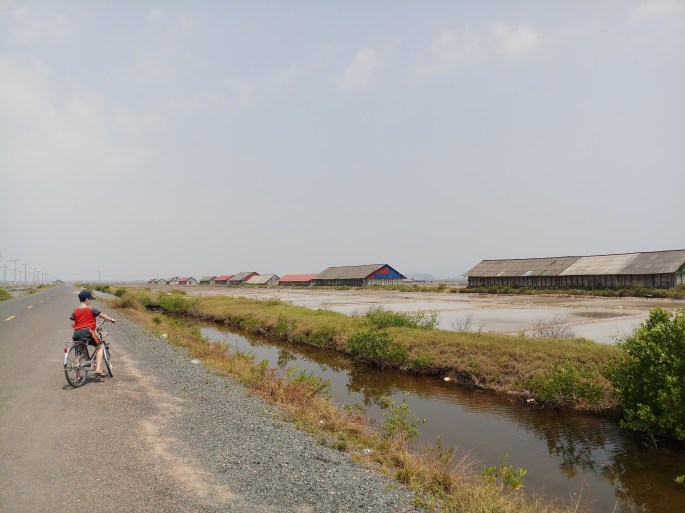
Another hot long bike ride with no destination. Salt fields on the right.
20180215_142204.jpg
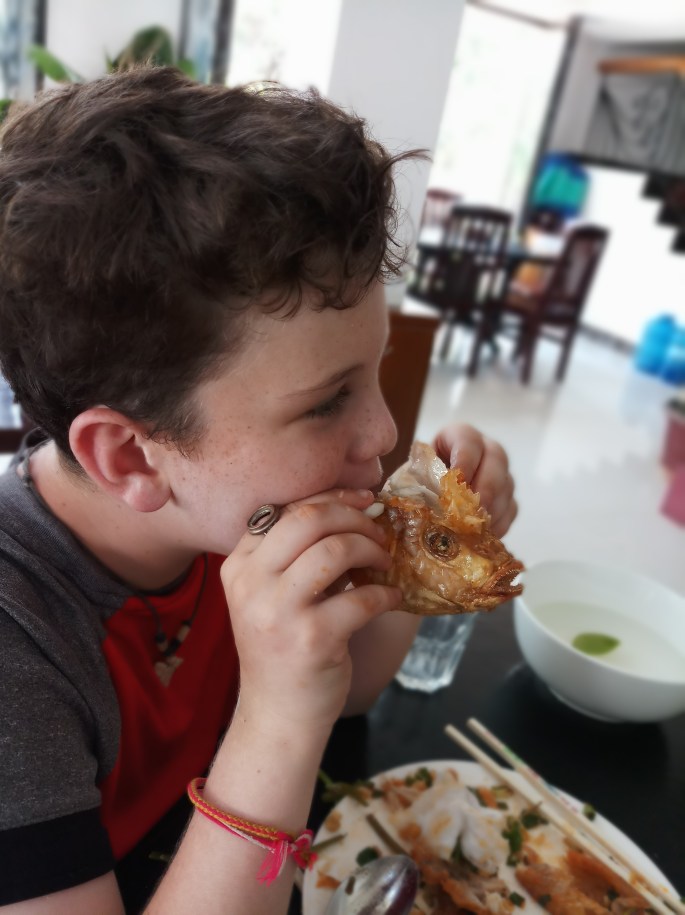
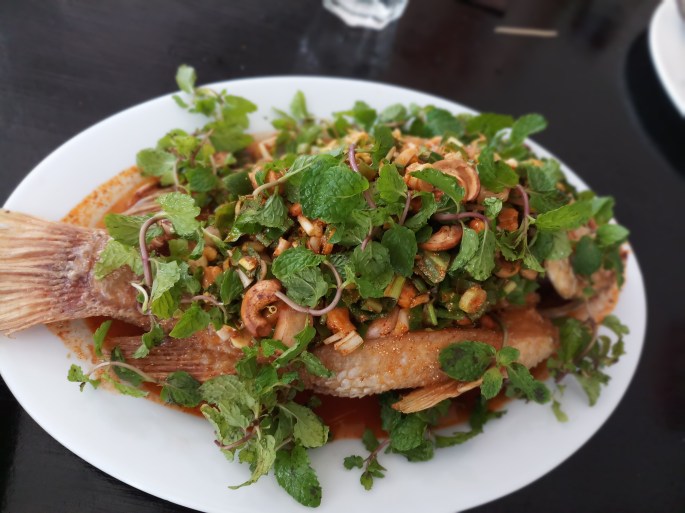
Delicious meal, the “Monstrously large fish” at a Thai restaurant
20180215_135707.jpg
The best meal we had in Cambodia. The chef was from Laos
20180218_121837.jpg
Addie taking a breather

20180214_134014.jpg

20180216_142408.jpg
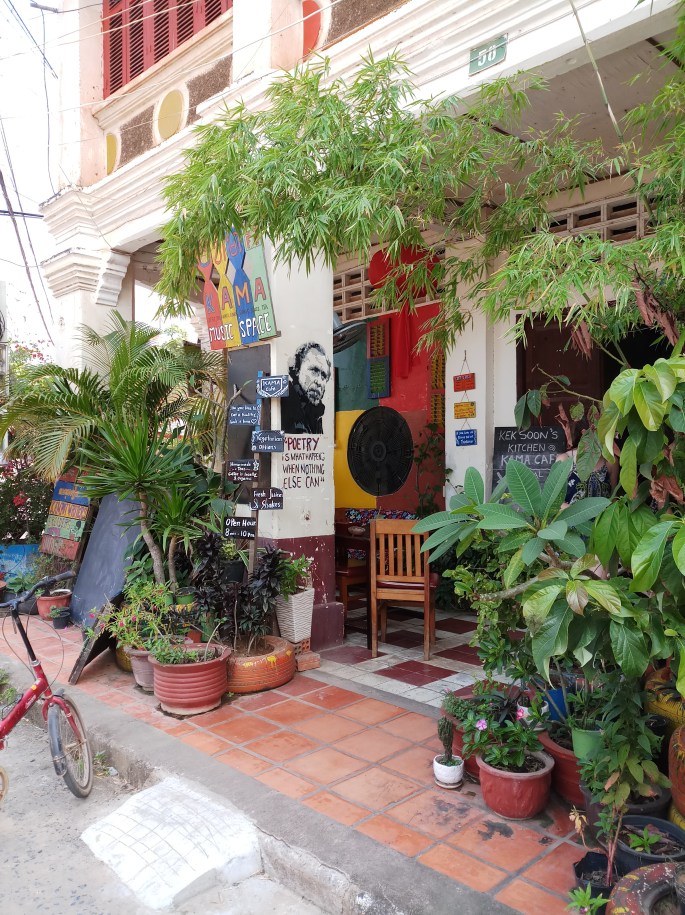
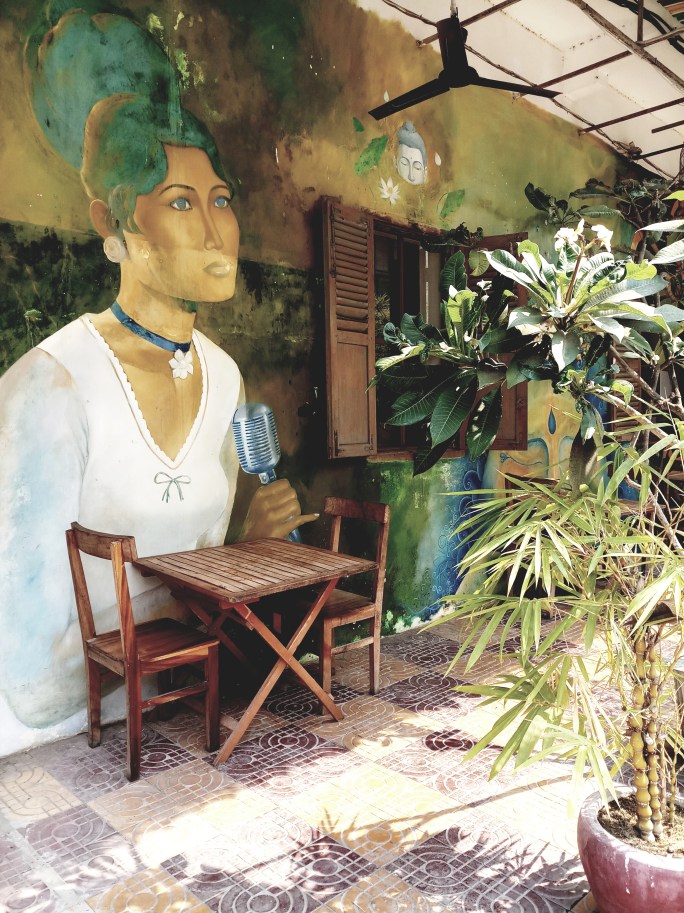
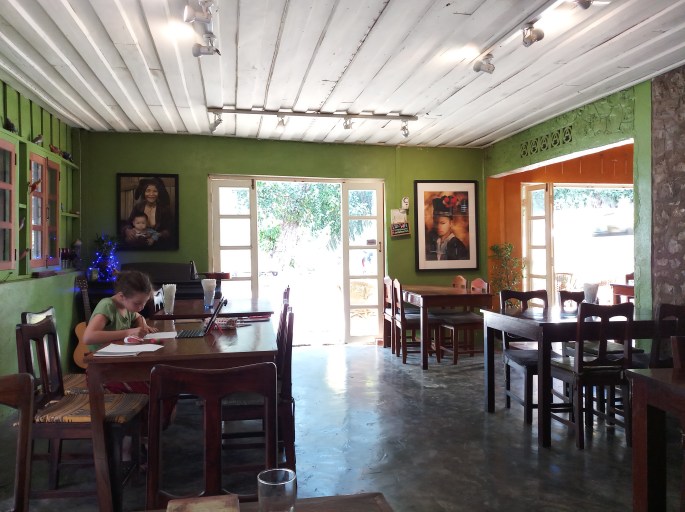
Hipster cafe Khmer style, Nina Simone playing, cool in any country

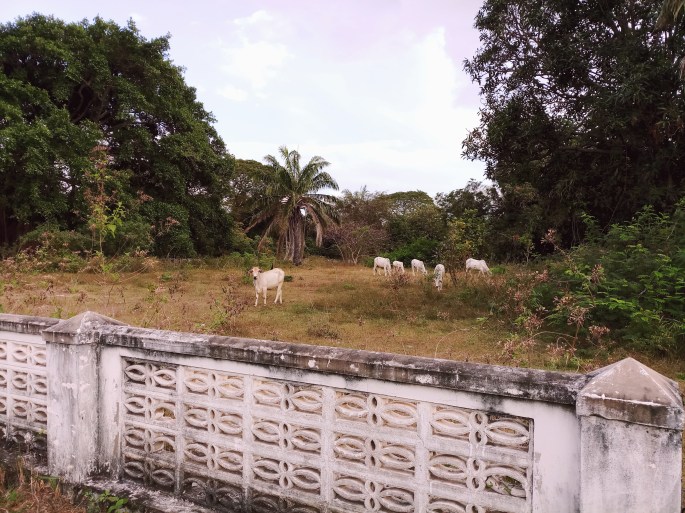
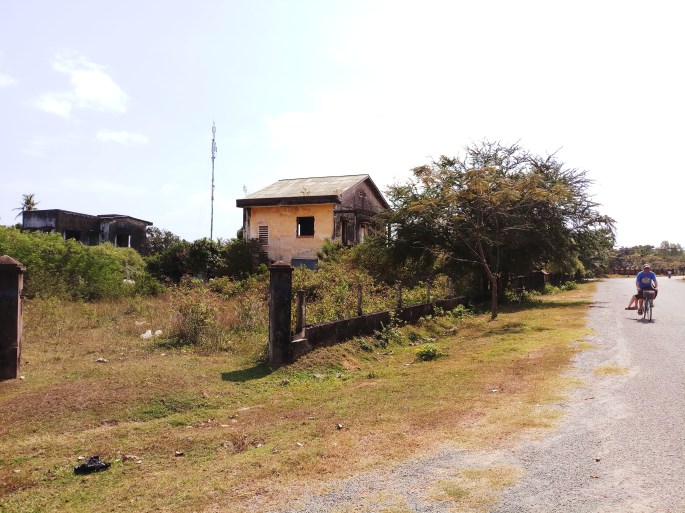
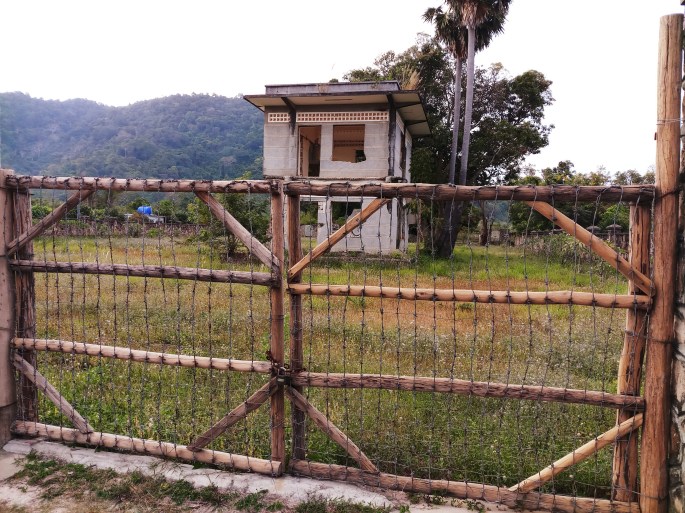
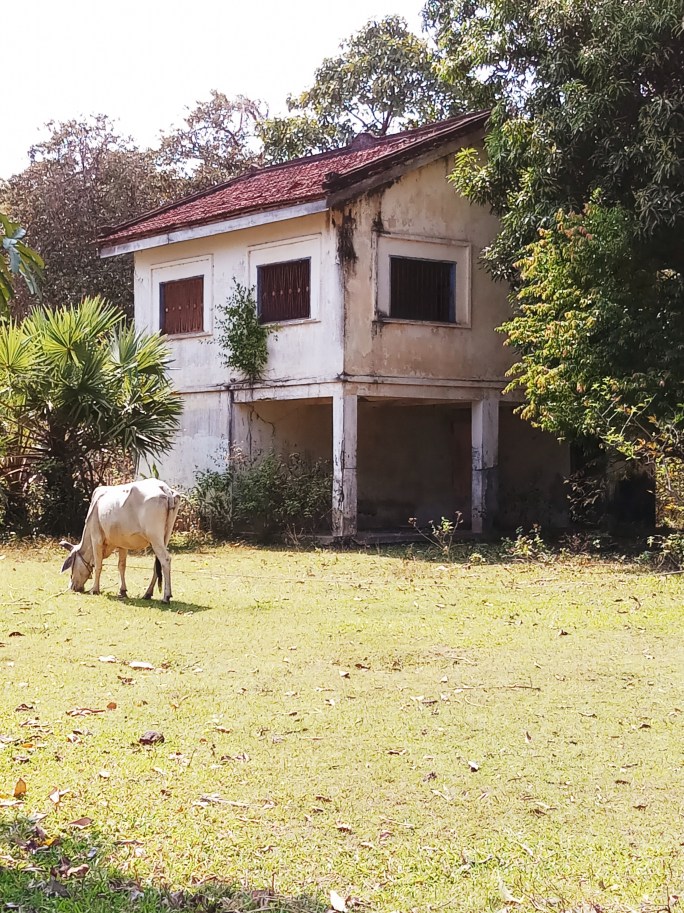
In Kep, once an escape for Phnom Pen’s elite in the 1960s, the large villas stand burned and destroyed by the Khmer Rouge, the violent legacy remaining visible and unchanged over the last four decades.  Taken back by the jungle, these once grand estates are now empty and home to cows grazing.  There is no effort to rebuild, people lack the resources and maybe communal vision of moving forward.  Kep’s hollowed out villas are largely symbolic for me of where Cambodia is emotionally.  It appears that Cambodia cannot move forward simply because it does not have the tools or vocabulary to heal and rebuild either emotionally or physically.20180221_222652.jpg20180221_222936.jpg
20180221_222844.jpg
Bike ride next to a burnt out villa

20180221_222810.jpg

20180218_182436.jpg
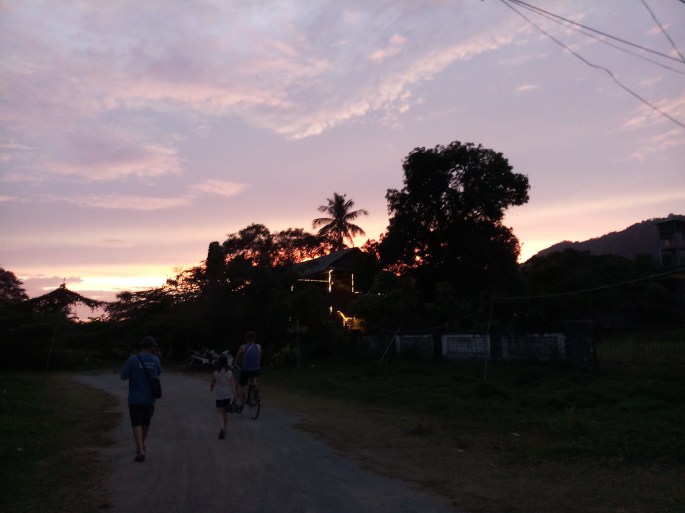
Magnificent sunset returning to our guesthouse in Kep

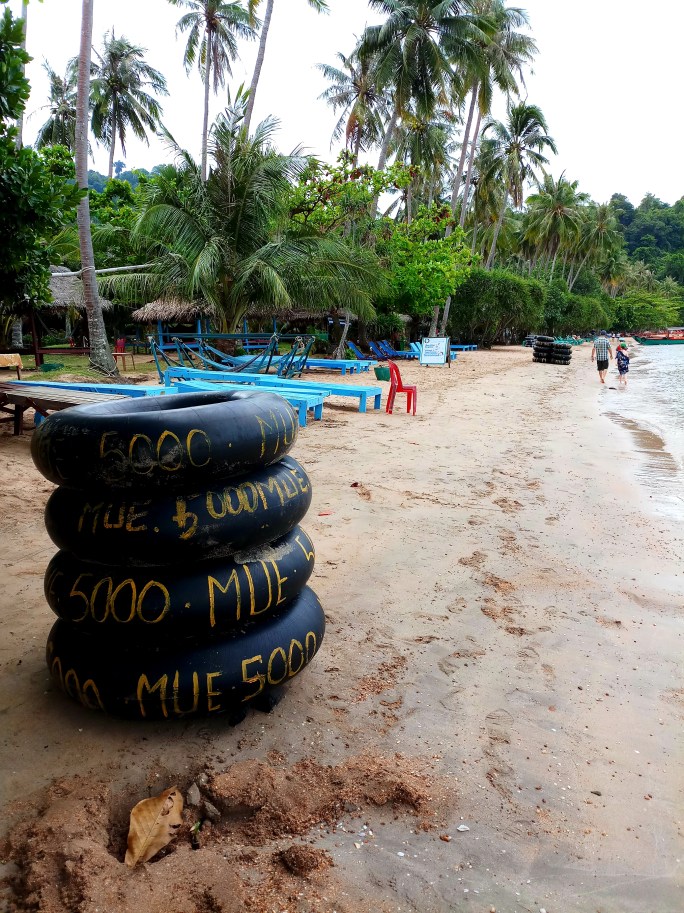
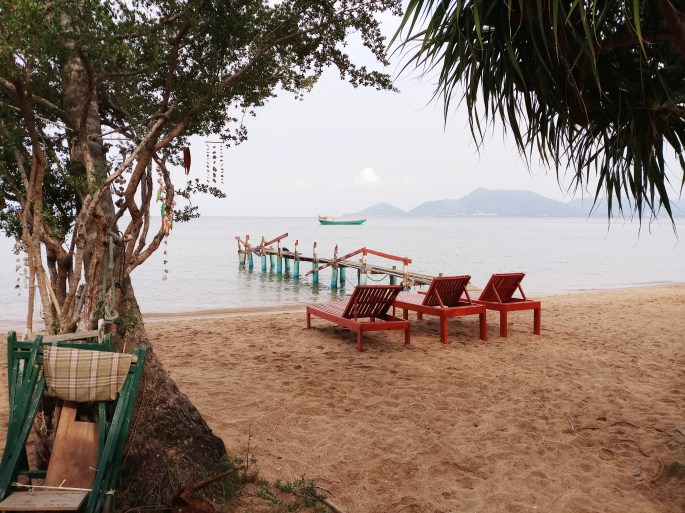
We took the boat over to Rabbit Island.  An underated small island that is not developed and offers simple accommodation and food.  It only has electricity a few hours at night.  We enjoyed the hours reading and swimming.  Knowing that it was only for a couple of days we let ourselves turn to jello.  It was the perfect salve.
20180221_134110.jpg

20180221_074854.jpg
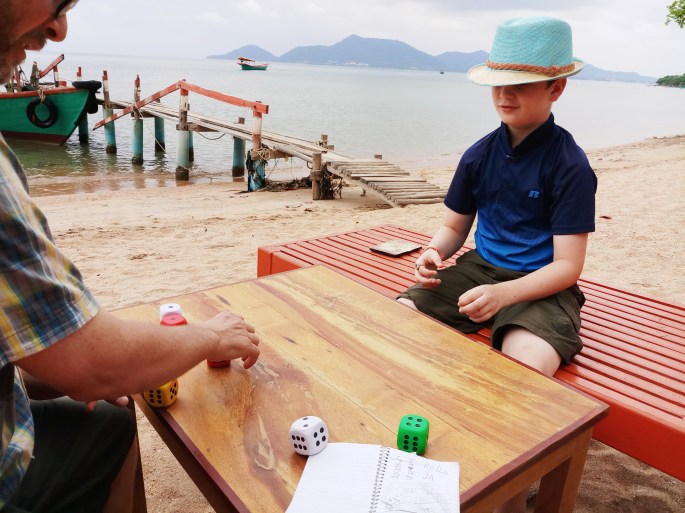
Endless games of Farkle

20180221_075104.jpg

20180219_113442.jpg
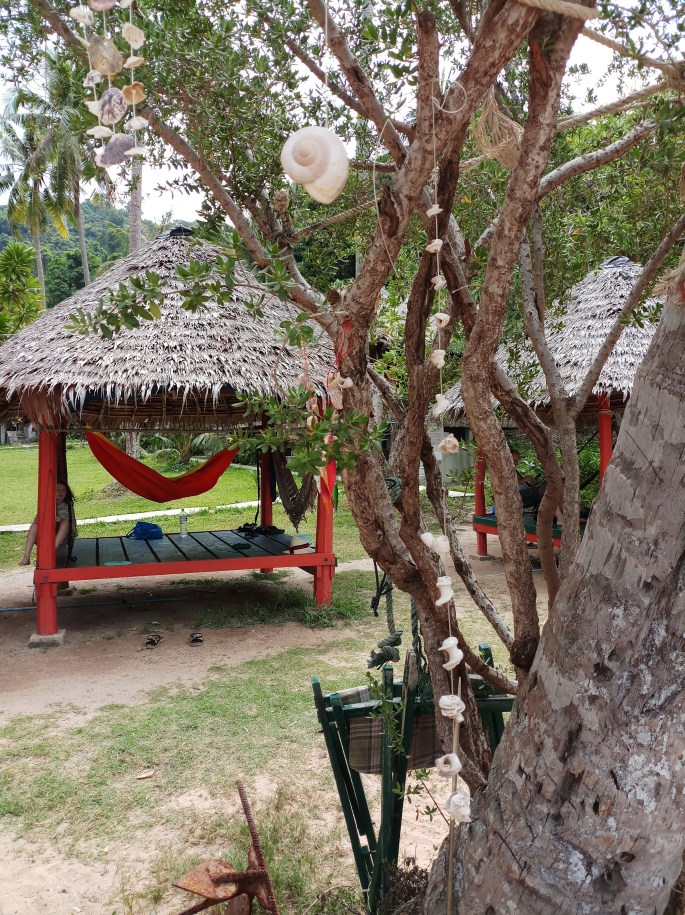
Rustic bungalow, no electricity, two beds. Our most comfortable sleep. $15 a night.
20180219_113608.jpg
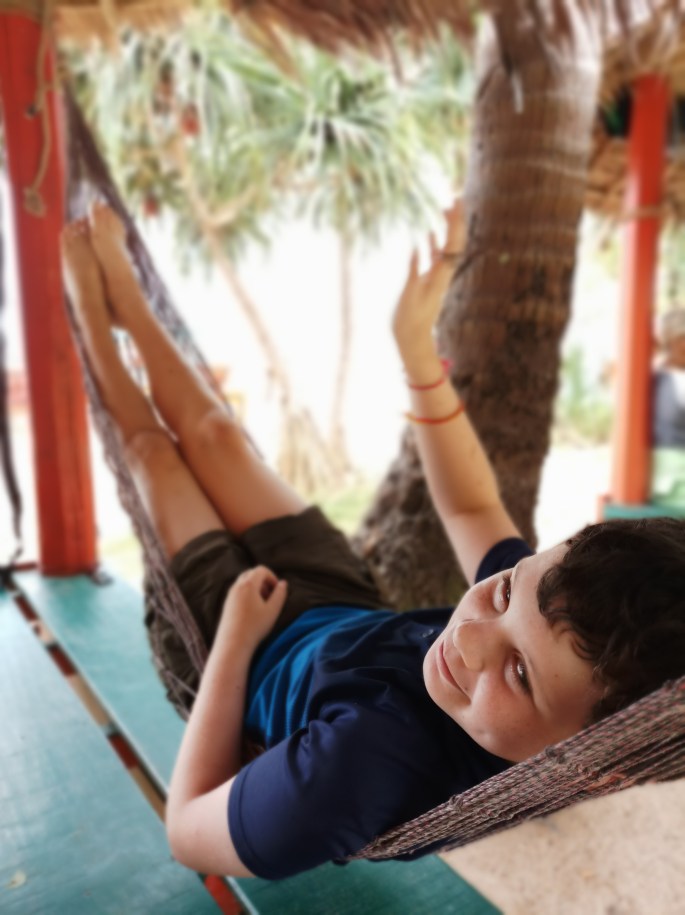
Lots of hammock time
20180221_134449.jpg
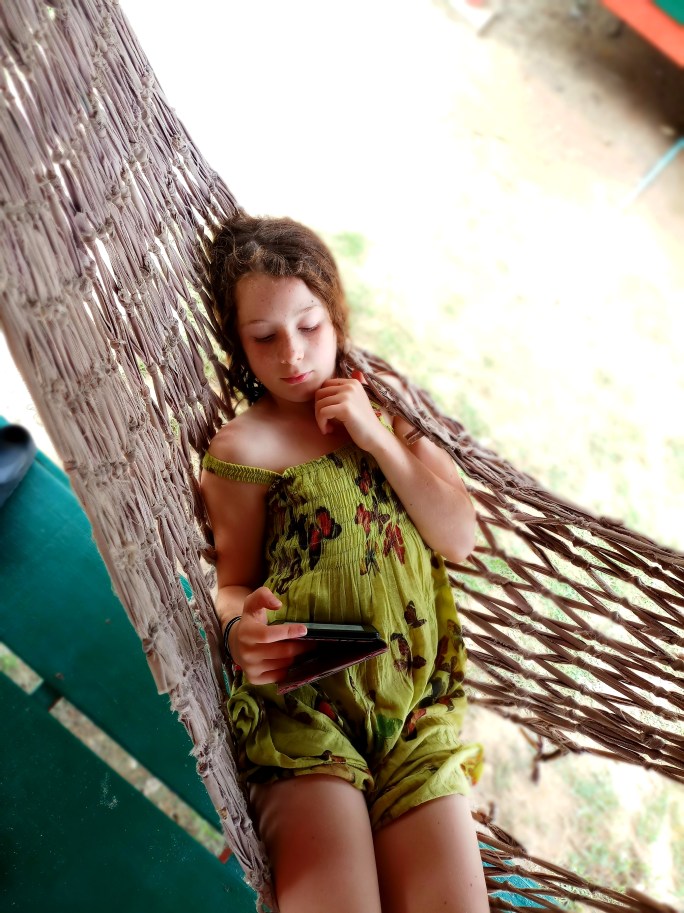
Lots of reading time

20180221_134922.jpg20180221_134338.jpg20180219_115503.jpg20180221_134025.jpg

We are ending our travels in Cambodia with a quick two days in Phnom Pen before flying to Kuala Lumpur, Malaysia.  Our long bus ride from Kep yesterday provided plenty of sights out our window.  We watched caravans of large open flatbed work trucks transporting women home from working at the garment factories.  The brain struggles with these odd images of human cargo, trucks full of women, dressed in bright colors, wearing hats and scarves, standing close together, an estimated fifty to a truck.

Image result for garment workers truck cambodiaAfter some research, I found that these trucks carry about 100 women and are perilous, often overturning.  Over 8,000 garment workers were injured last year in traffic accidents, over 100 killed.

Image result for garment workers truck cambodia

(There are some horrible photos of accidents on the internet and it is only too easy to imagine it)
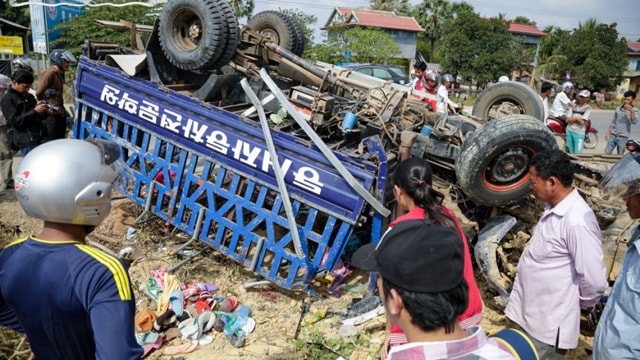
Image result for garment workers truck accidents cambodia

I learned of these socioeconomic disparities regarding international manufacturing when I was in college.  Jack and Addie are able to see in real-time how others work and live and what role the Western consumer plays.  It is not an abstract lesson.  People ask us about school and how we teach our children while traveling and I reflect on these lessons that we experience and the discussions it leads to.  Now when we see a label on our T-shirt that says “Made in Cambodia” we will have the visceral memory of watching the many women return from their shifts at the factories.  The more we travel, the smaller the world becomes.

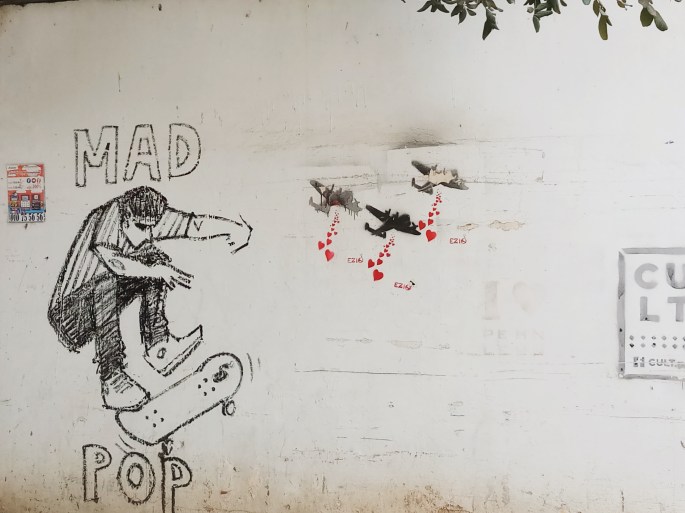
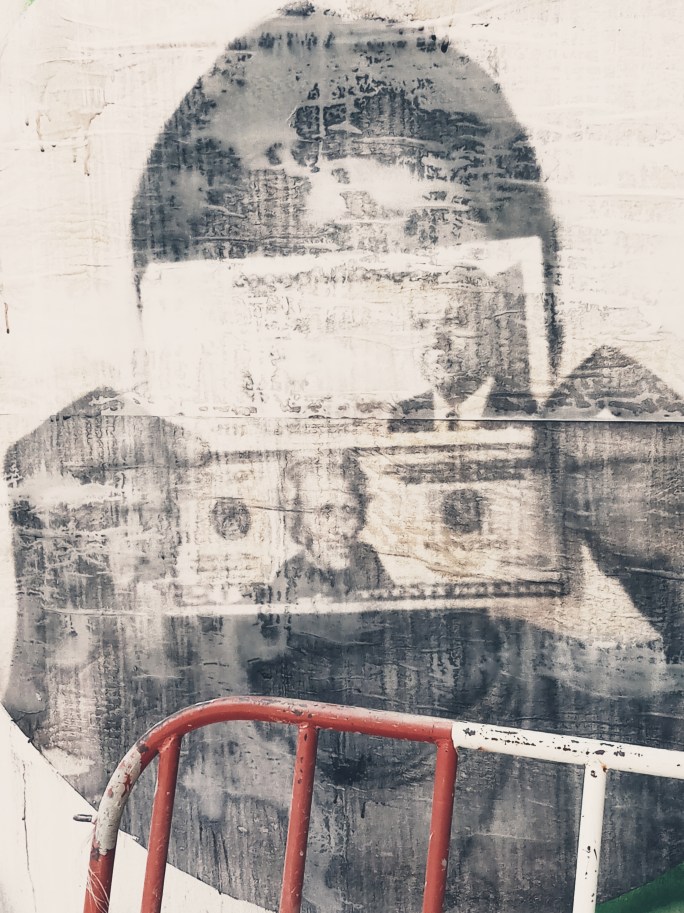
Below, photos of street art from Phnom Pen.
20180222_171812.jpg
Street art in Phnom Pen

20180222_171900.jpg

20180222_171721.jpg
Taking a short cut. Tricky when a car comes.
20180222_151157.jpg
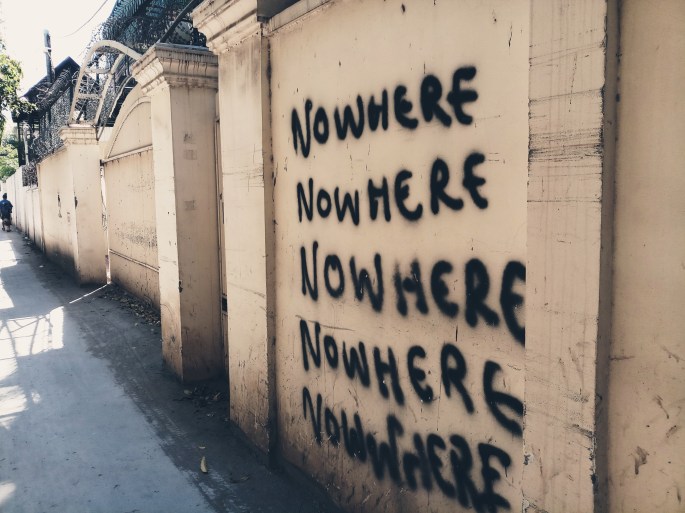
Local sentiment?
20180222_151220.jpg
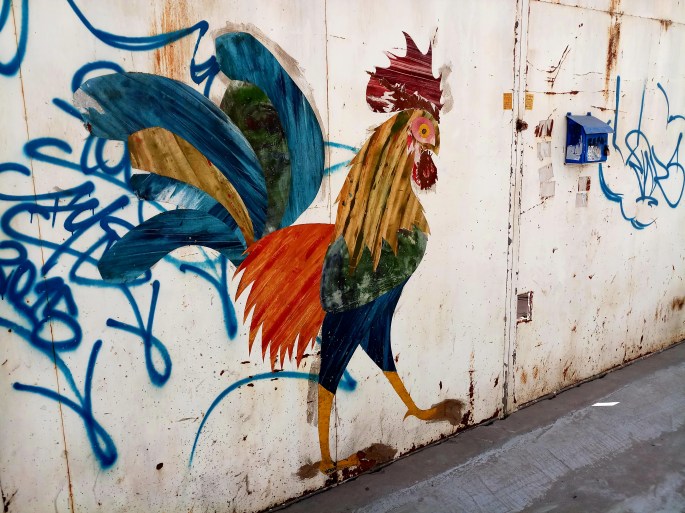
We see chickens and roosters this colorful in real life here!

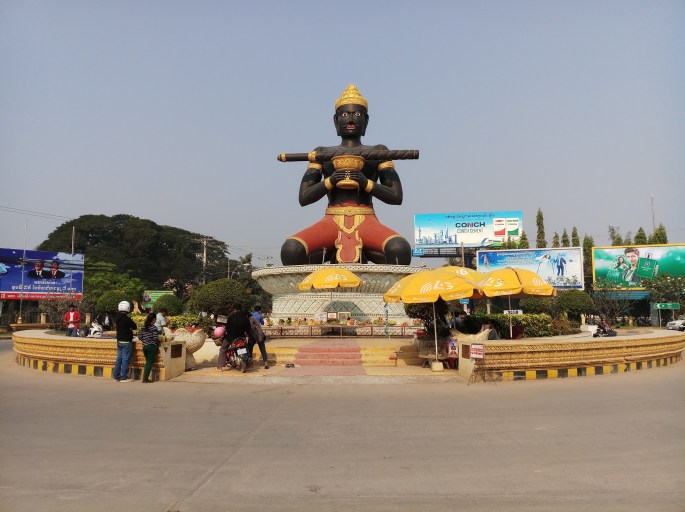
Mr. Battambang

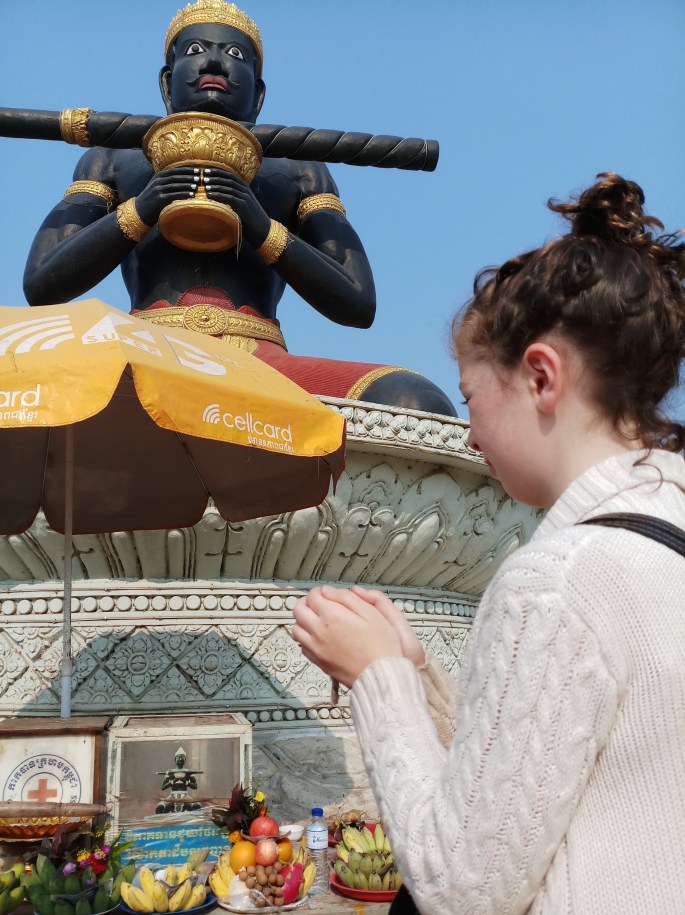
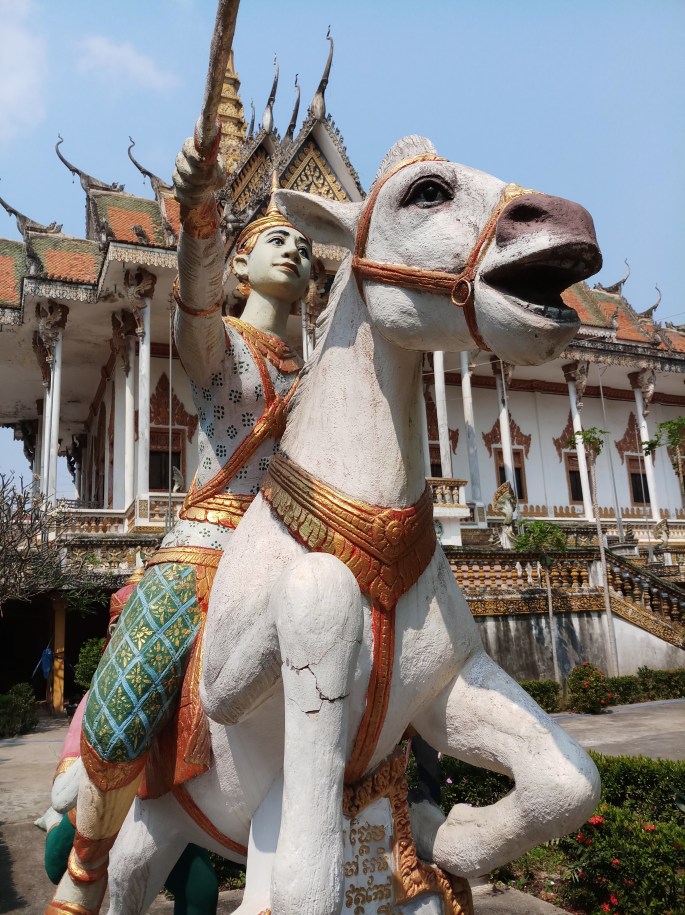
This is Mr.Battambang, where this city derives its name. The statue of Ta Dumbong looms tall in a roundabout and comes with an odd legend. According to the story he was a cowherder who found a magic stick and decided to overthrow the king with it so he could be ruler. The king’s son ran into the forest to become a monk. Ta Dambong had a dream that a holy man on a white horse would vanquish him so he had all the holy men put to death. The prince, who was a practicing monk, found a white horse who could fly and flew into town. Ta Dumbong attempted to kill the monk on the white horse, threw his stick, missed him and ran away in failure.

I am not sure what the message is in that story. Now locals place offerings at the base of the statue, fruit, a pig’s head and there are small birds one can purchase and release while sending off a prayer.

20180210_074235.jpg
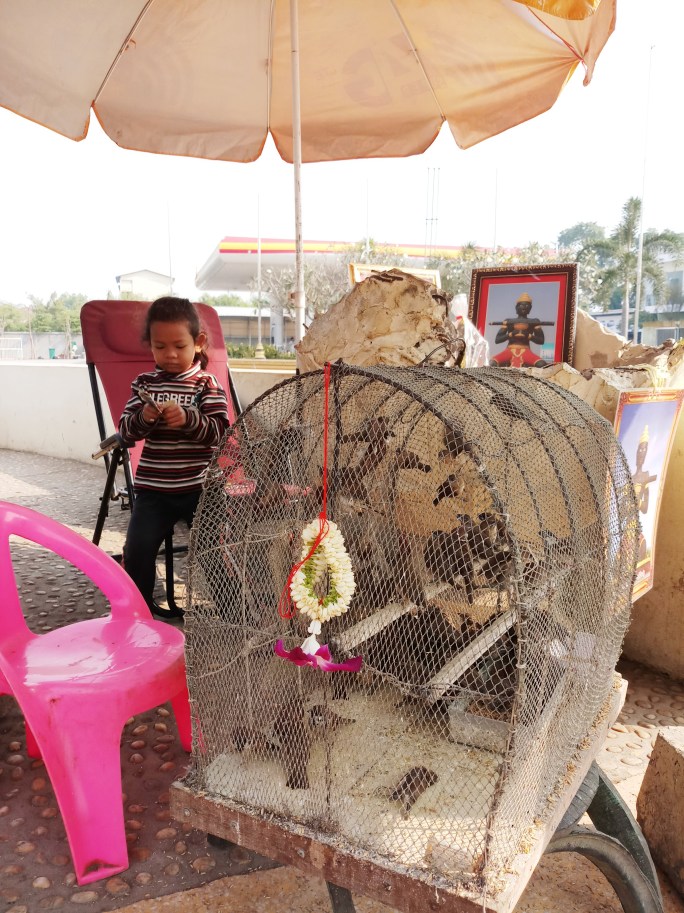
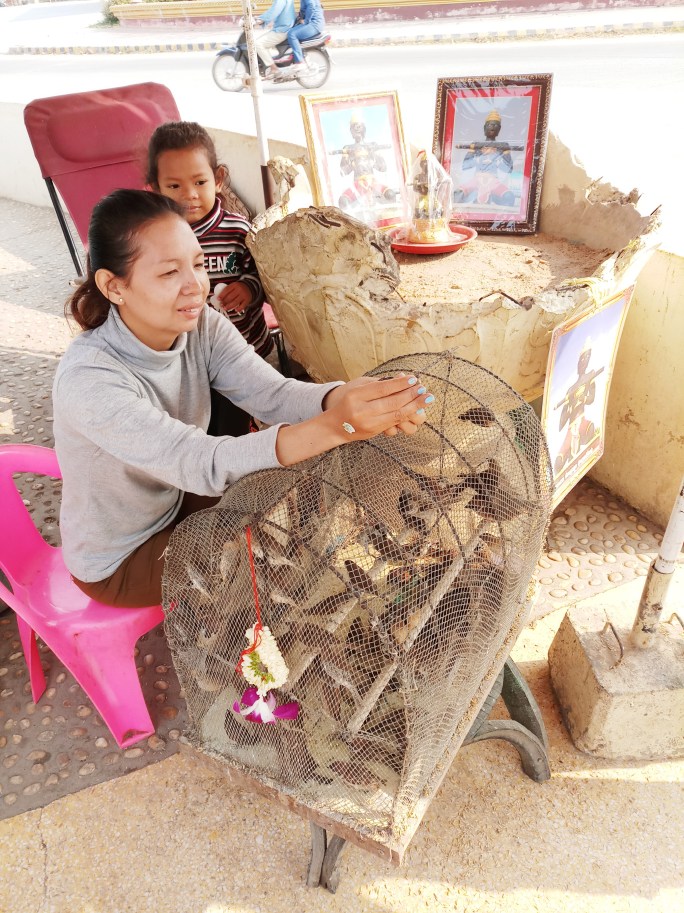
The birds awaiting their freedom
20180210_074352.jpg
Small birds captured to have locals purchase and then release. Only to be captured again at some point.
20180209_091527.jpg
Addie releasing a bird

Battambang is a cool city. A mix of dilapidated French colonial buildings and edgy Cafes. Less of a tourist destination than Siem Reap, it remains its own city. Over the centuries Battambang switched hands between Thailand and Cambodia, and was under Thai control as late as the 1940s. Like the rest of Cambodia, the city was emptied by the Khmer Rouge in 1975, forcing all the occupants to the countryside. Even though the Vietnamese liberated this city in 1979, fierce fighting continued until 1996. The city was off-limits to visitors during this time. Only recently have tourists began to visit and Battambang is experiencing growth. However, this area is considered the “rice bowl” of Cambodia and is home to farmers and traders.

20180210_074452.jpg
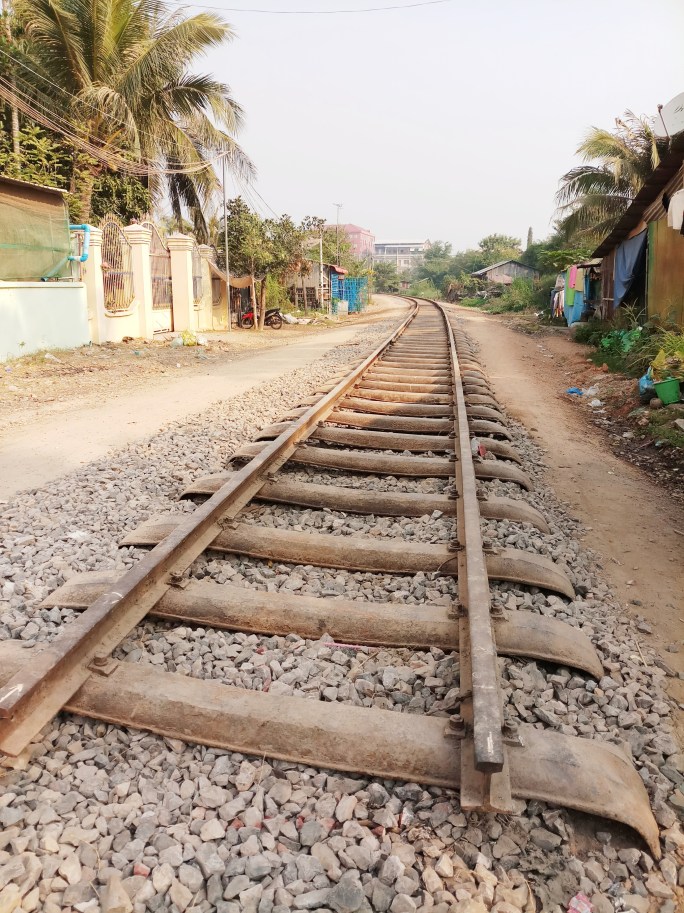
There is no train service in Battambang

20180208_172833.jpg

Our favorite sandwich sub shop run by a Dutchman, living going on 18 years in Battambang.  His wife runs the kitchen.  They were lovely and full of stories.  And the best spicy tuna I have ever had!

20180208_172703.jpg
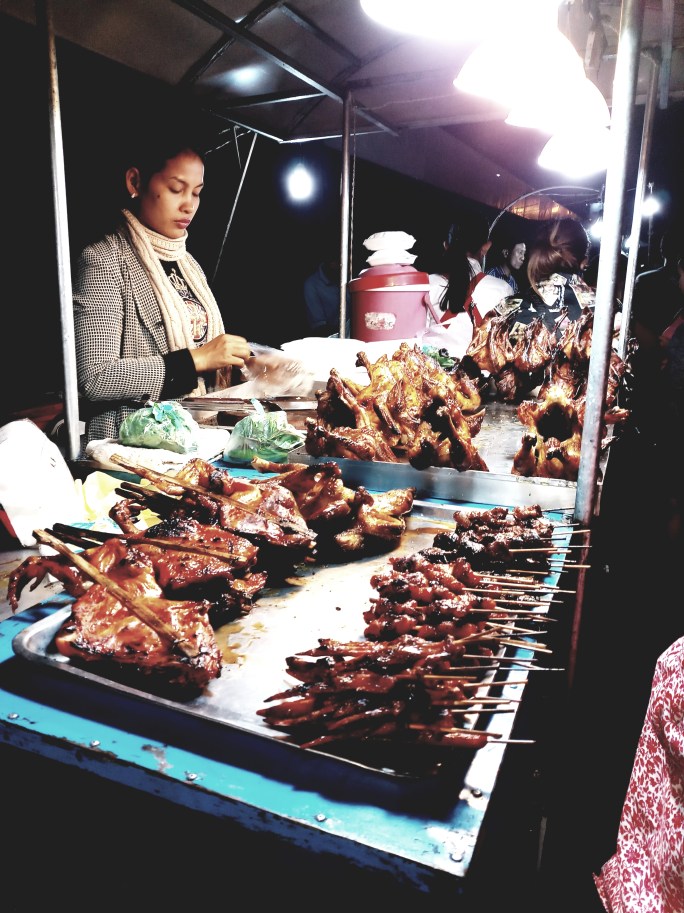
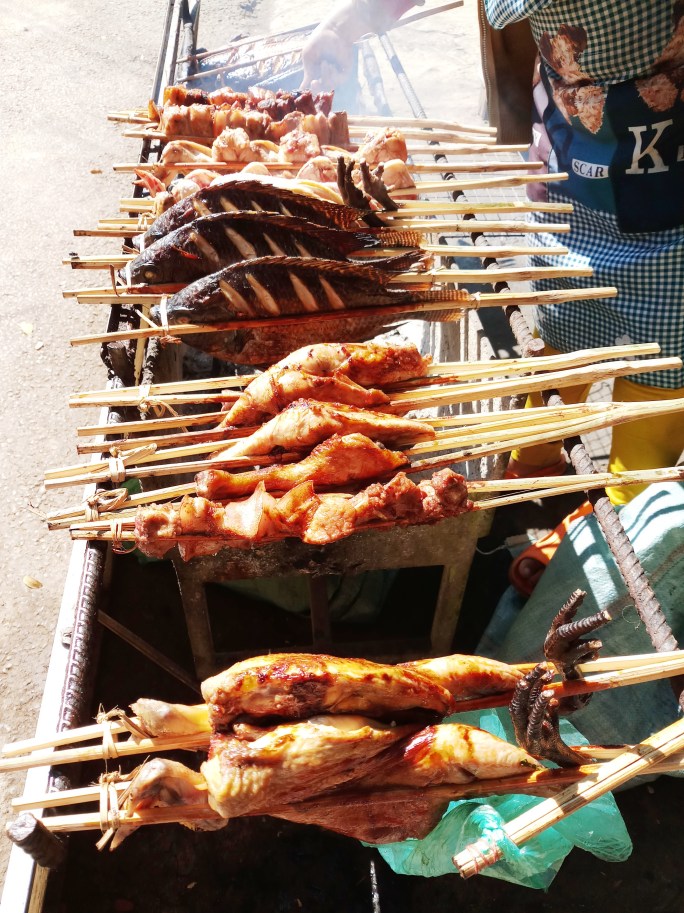
Meat on a stick anyone?

20180208_172622.jpg

20180208_104752.jpg
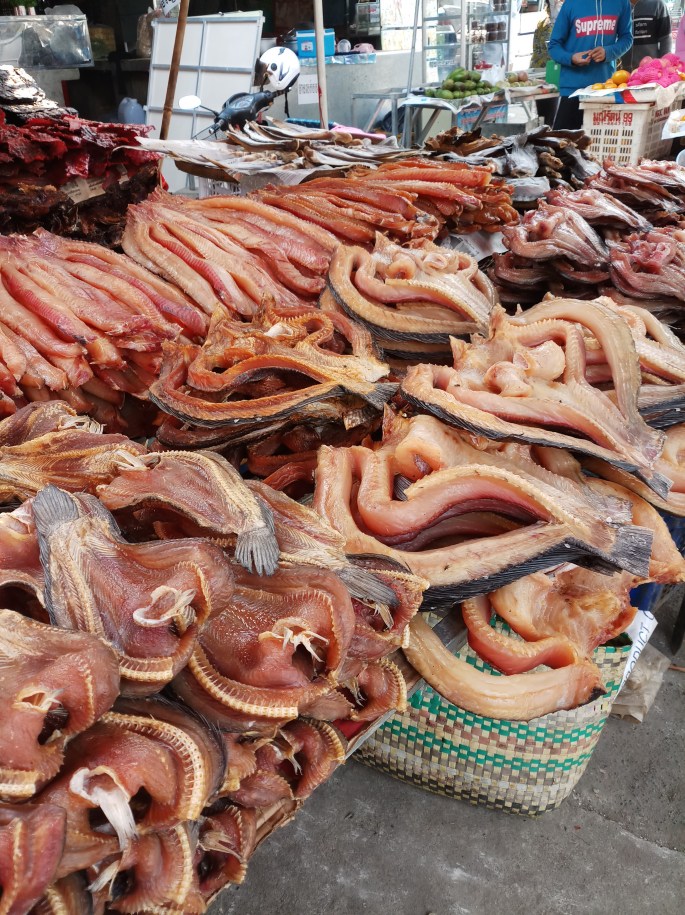
Splayed dried fish
20180208_172355.jpg
Groovy hipster Khmer coffee house
20180208_172231.jpg
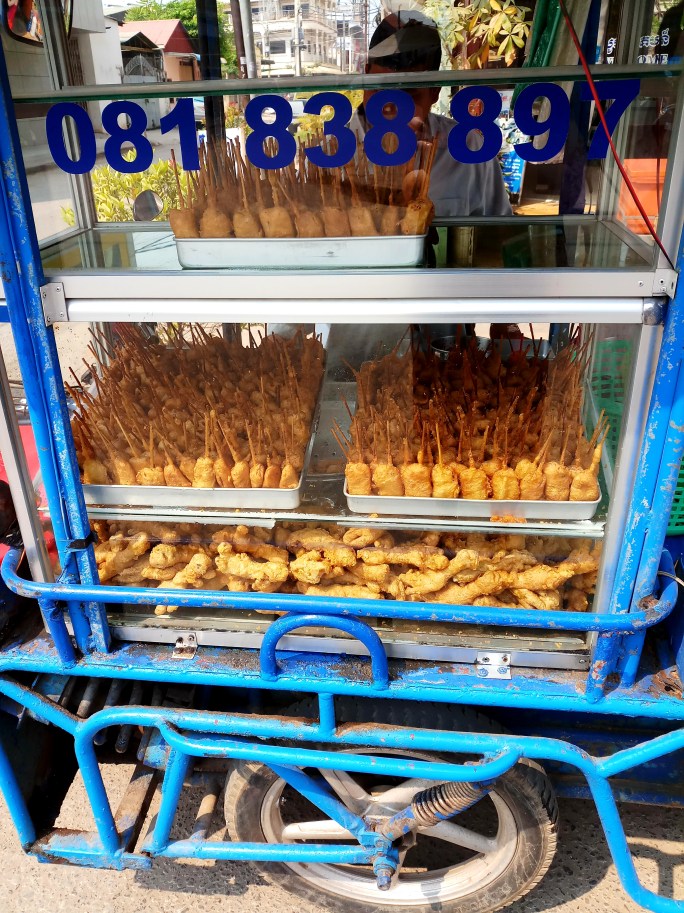
Street vendor of fried snacks
20180210_073953.jpg
A temple we visited

20180210_073919.jpg

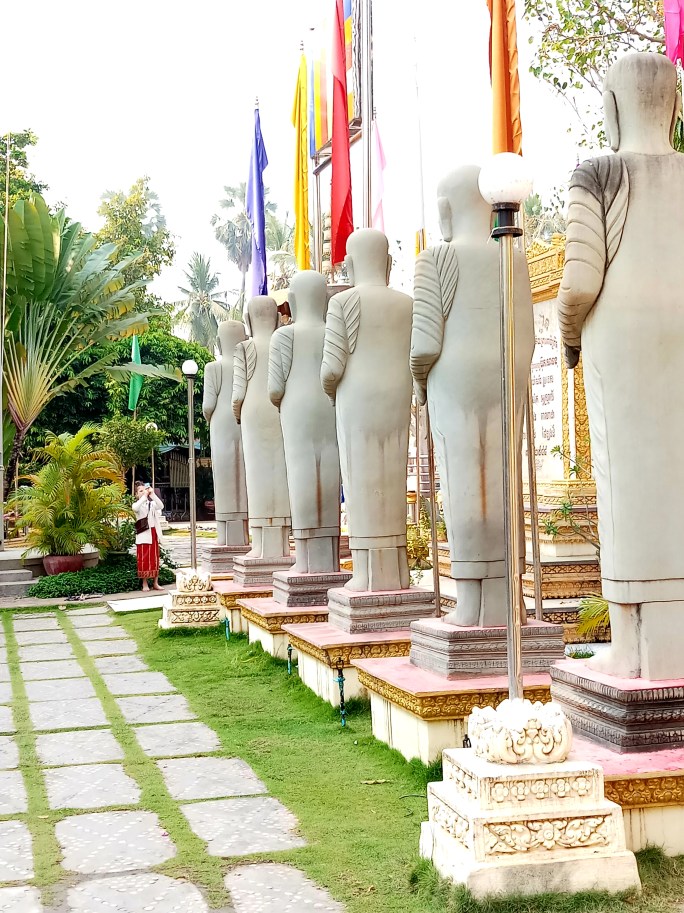
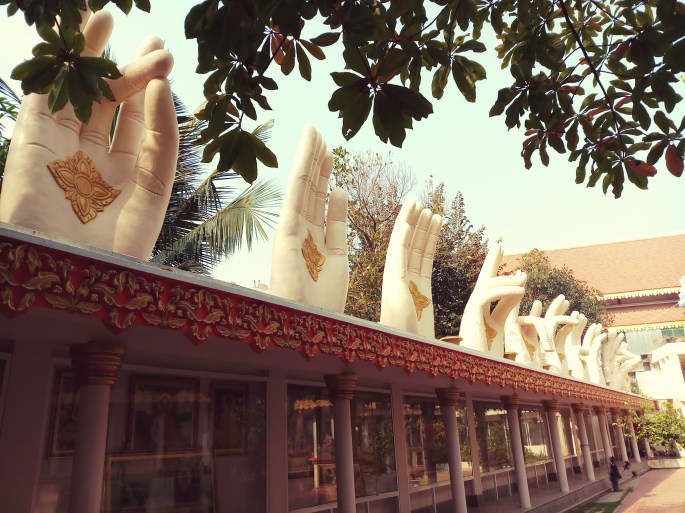
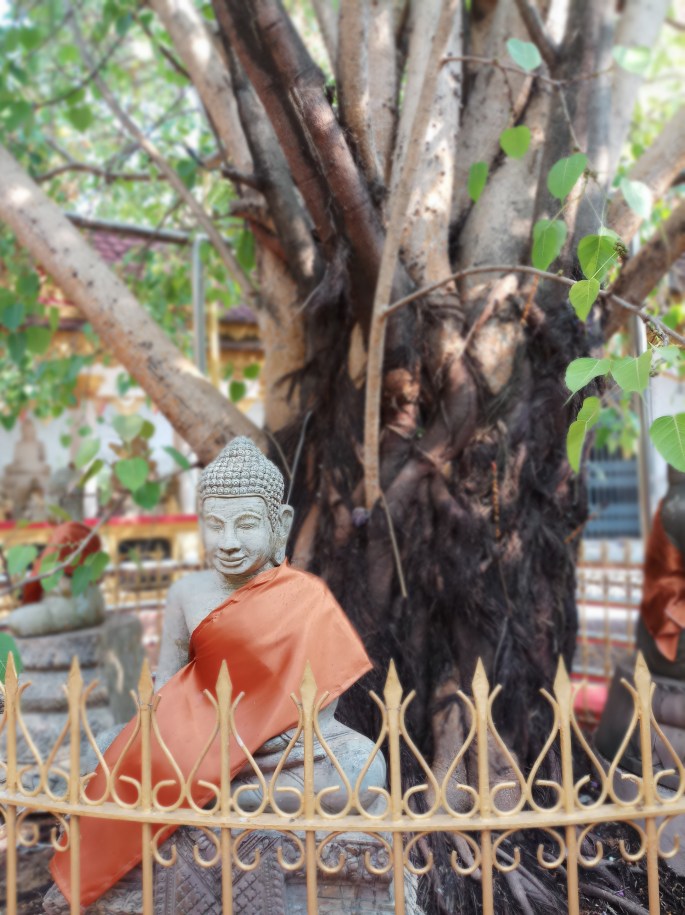
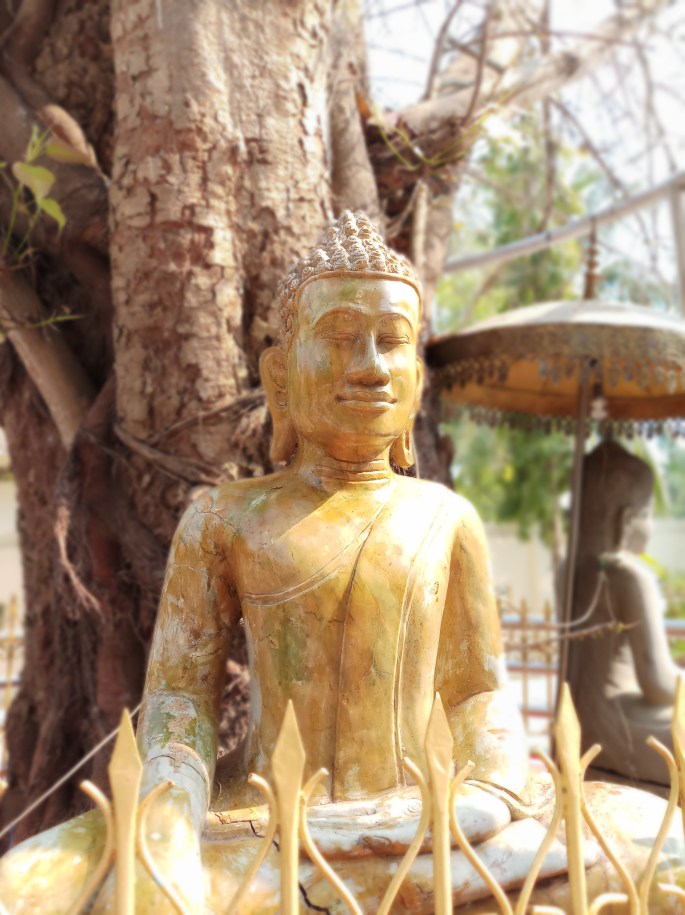
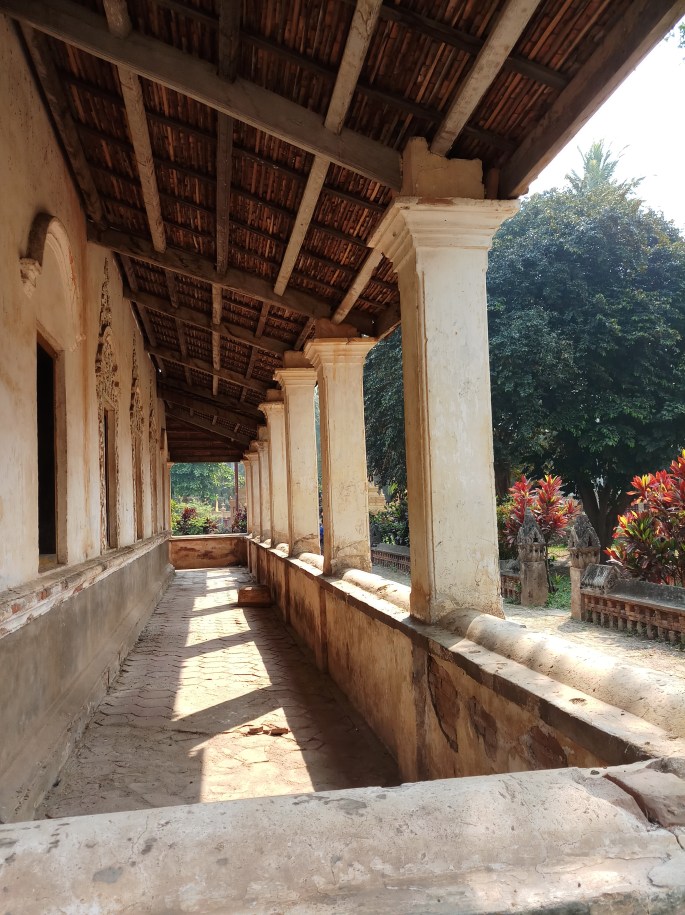
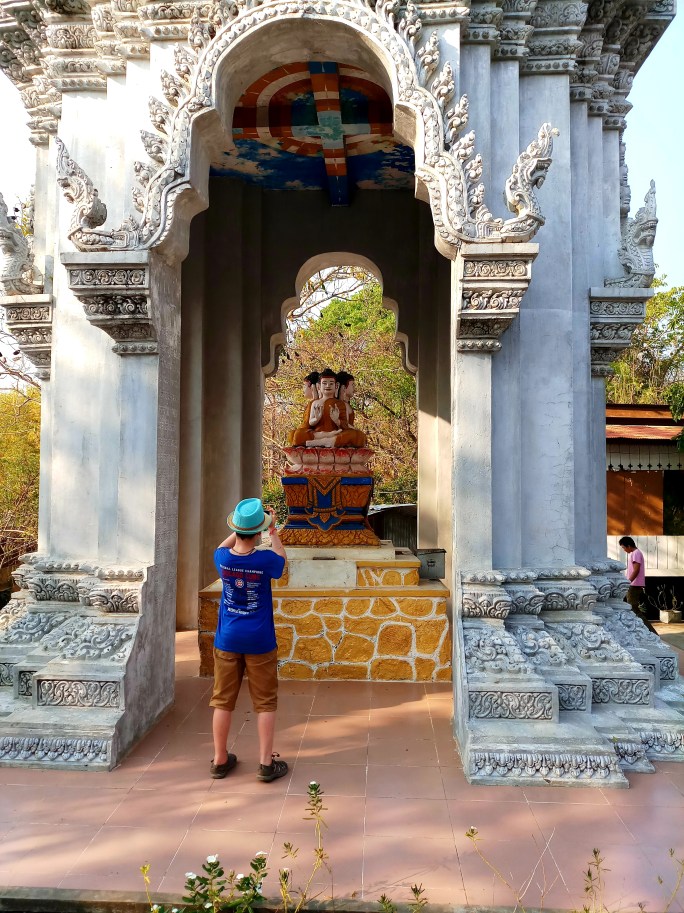
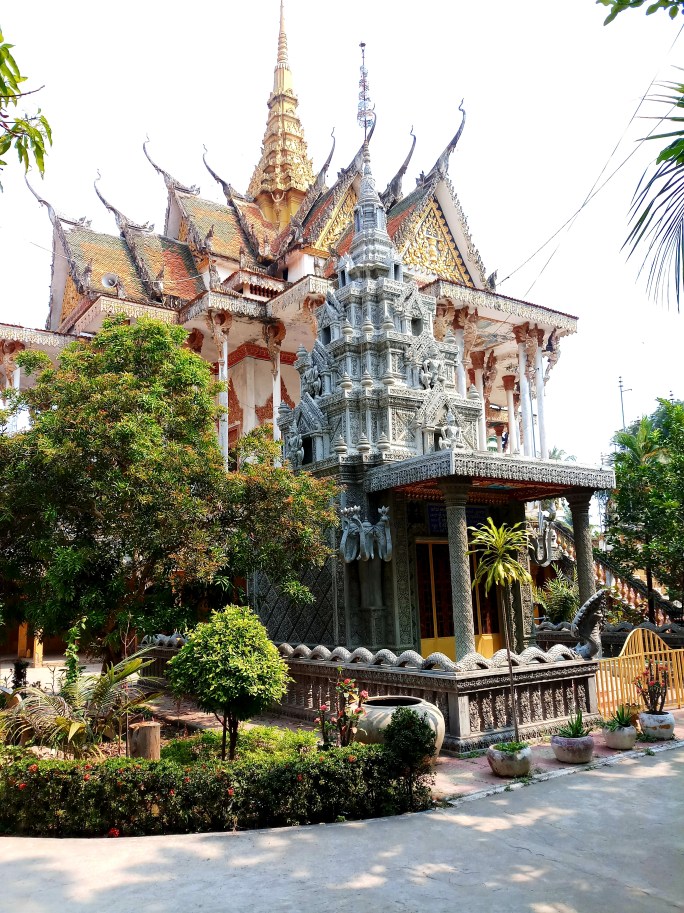
We visited many temples in the area. These temples were so peaceful, really creating a magical park like space that felt very spiritual. Not a tourist in sight. These places of worship are used daily by locals and kept neat by the monks. They are the most beautiful I have seen so far in our travels.

20180210_073738.jpg

20180210_074148.jpg

20180209_092805.jpg

20180209_093441.jpg

20180209_093540.jpg

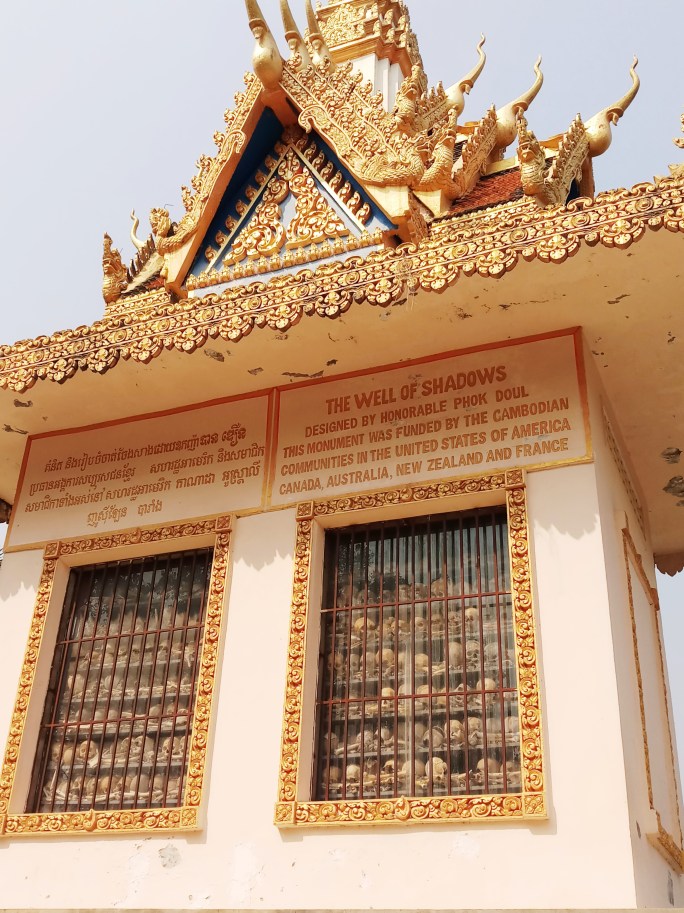
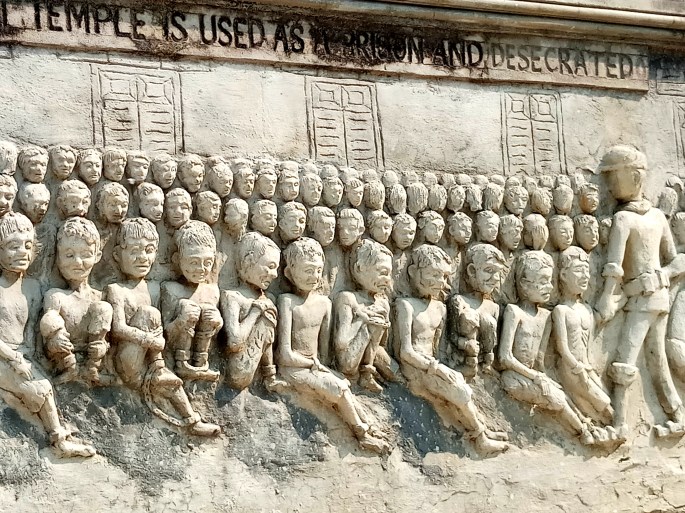
We do not seek it out, but the legacy of the Khmer Rouge is everywhere here. One temple we went to was turned into a prison and torture center. There was a “killing field” behind the temple that is now a pond. All the bones of the victims were gathered and placed in a commemorative stupa.

20180209_100715.jpg
Building where they tortured and starved women and children

20180209_100853.jpg

20180210_073449.jpg
Building of bones
20180210_071433-2.jpg
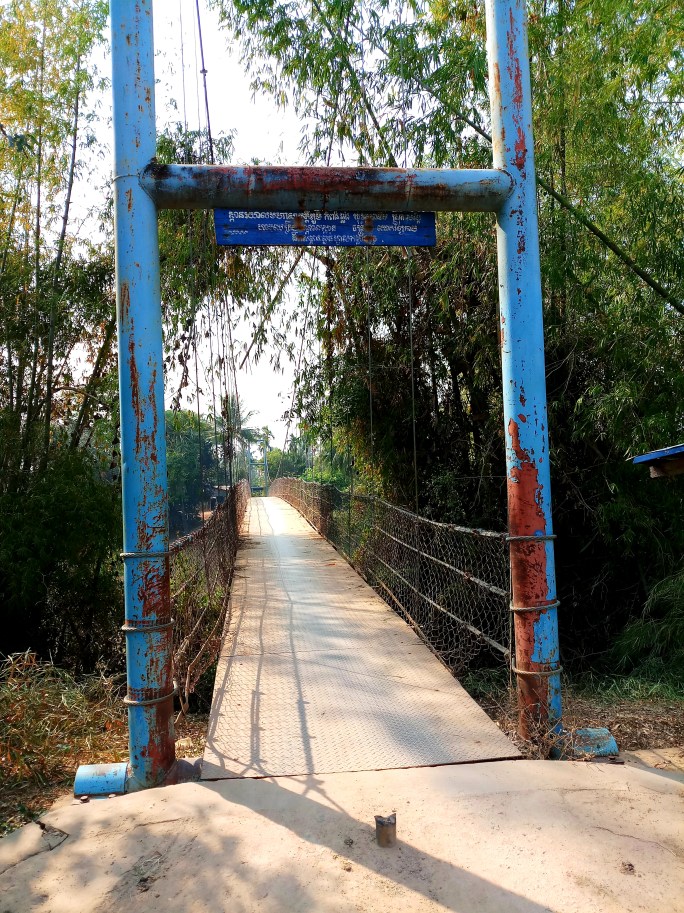
Cool super narrow bridge that barely fit our TukTuk
20180215_153652.jpg
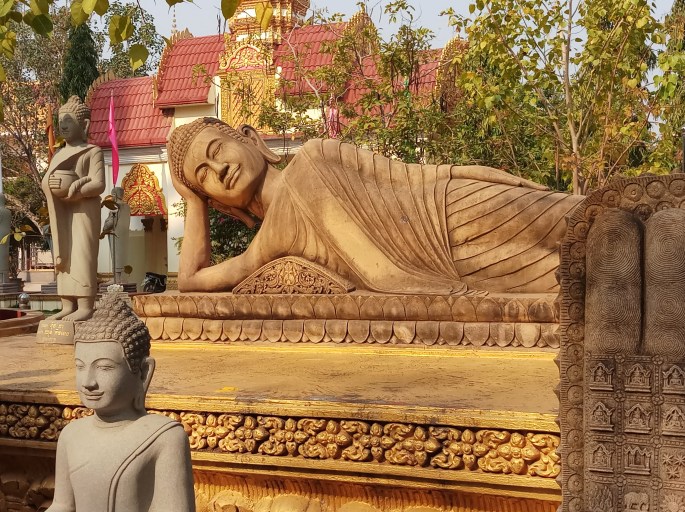
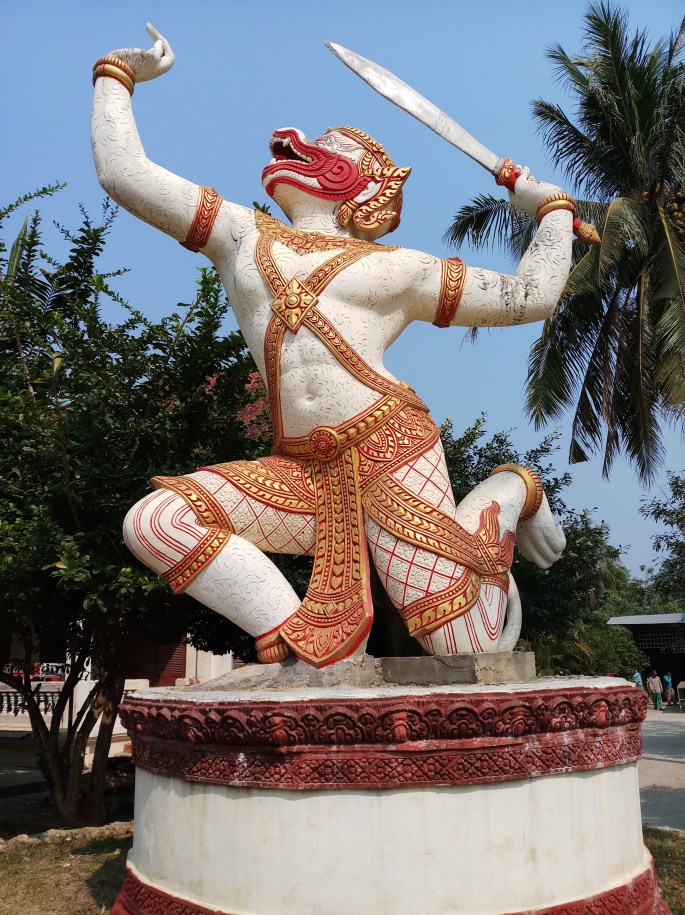
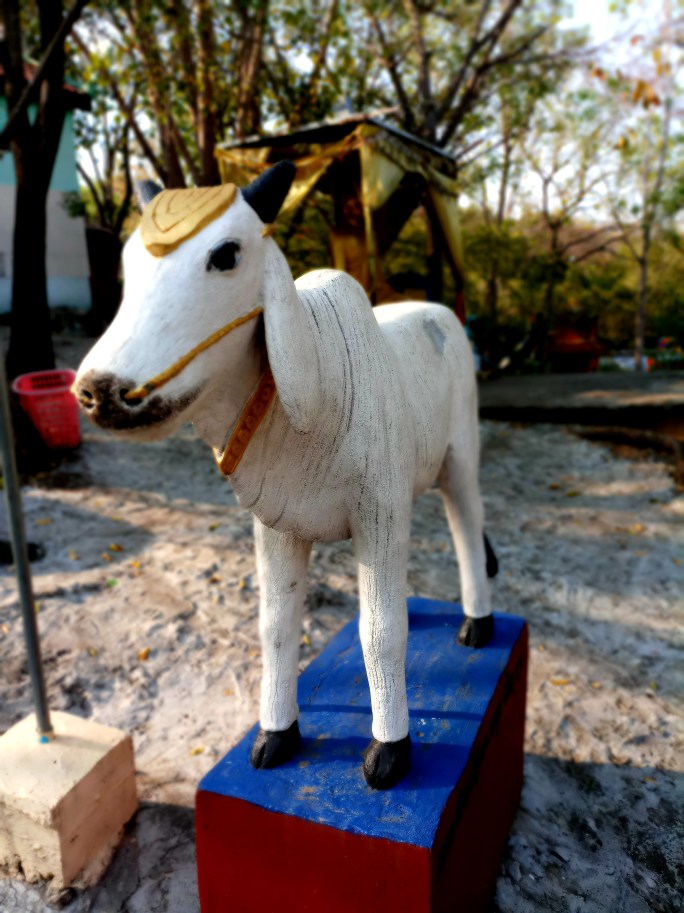
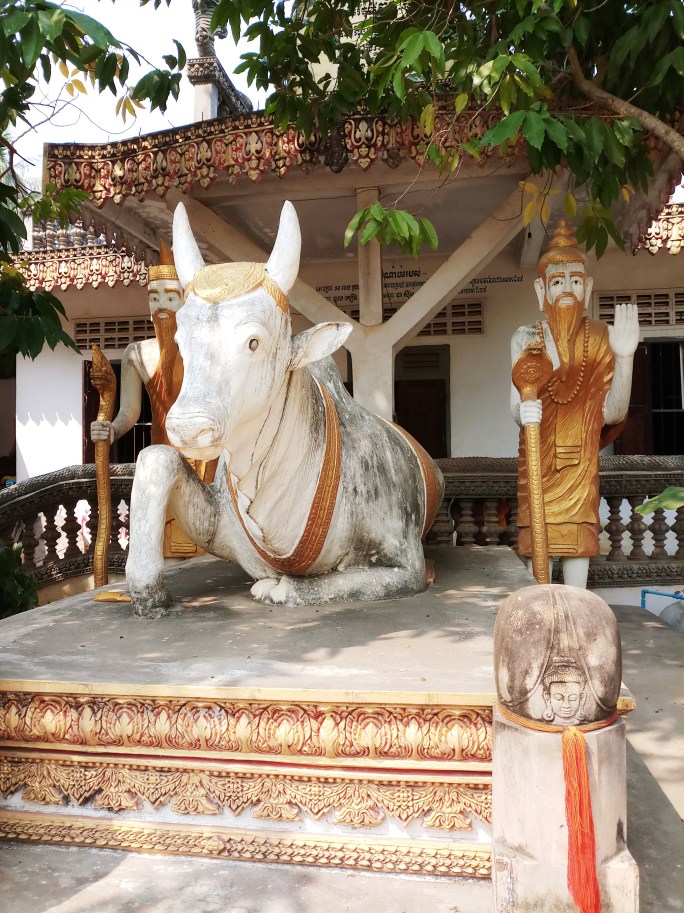
Statues worshiping cows are everywhere. But the real thing is everywhere as well, skinny, bony cows walk around grazing

20180212_095025.jpg20180210_073041.jpg20180210_073118.jpg

20180210_072927.jpg
French built, part of original temple, now a chicken house

20180210_072714.jpg

20180210_072635.jpg
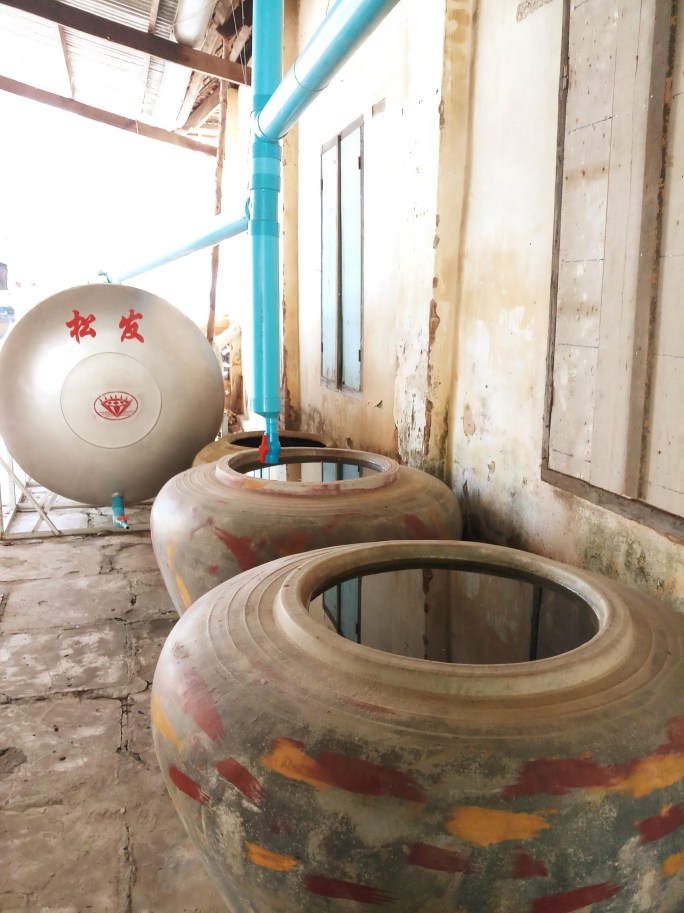
Water collection from the roof for the Monks quarters

20180209_105759.jpg

20180210_072433.jpg
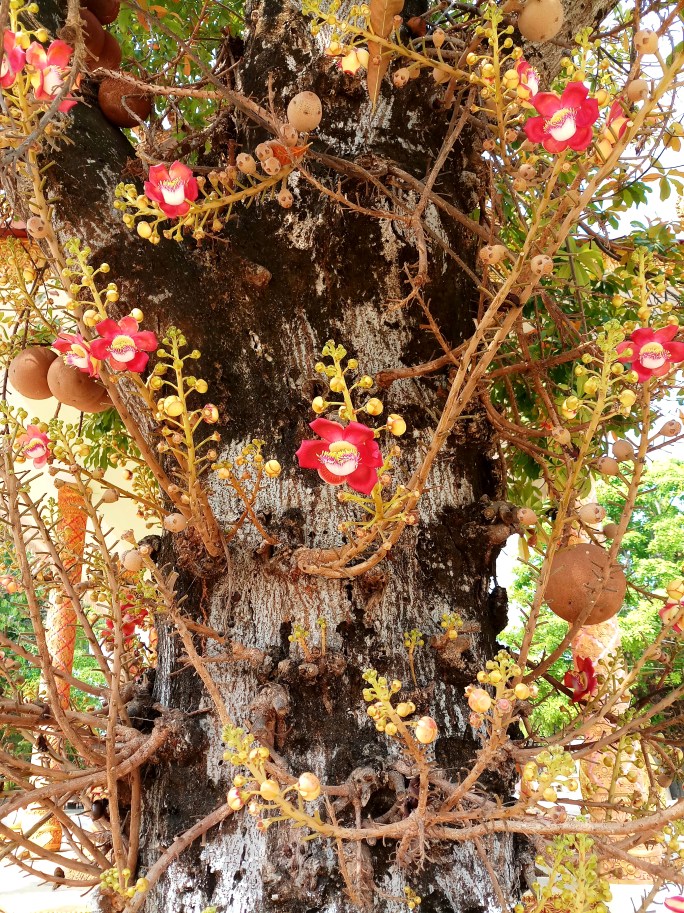
Amazing tropical flora
20180210_190659.jpg
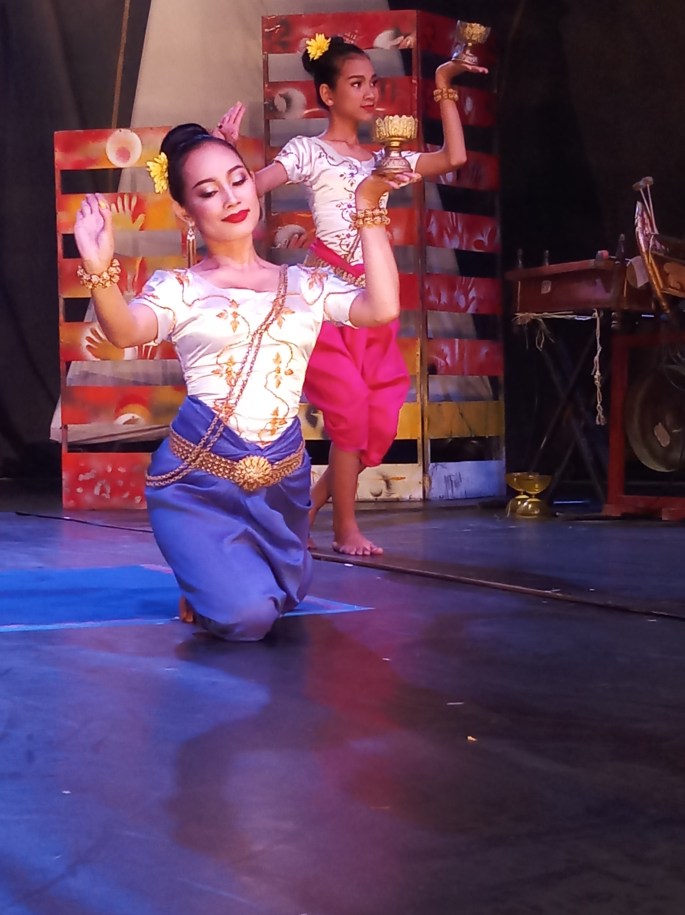
Traditional Cambodian Dance

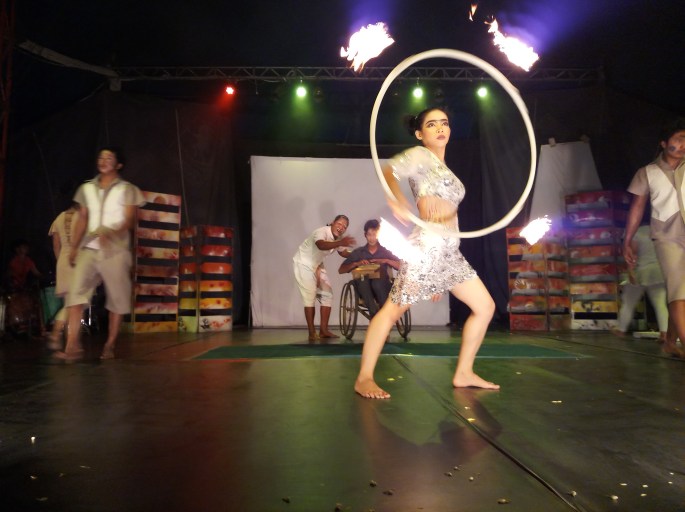
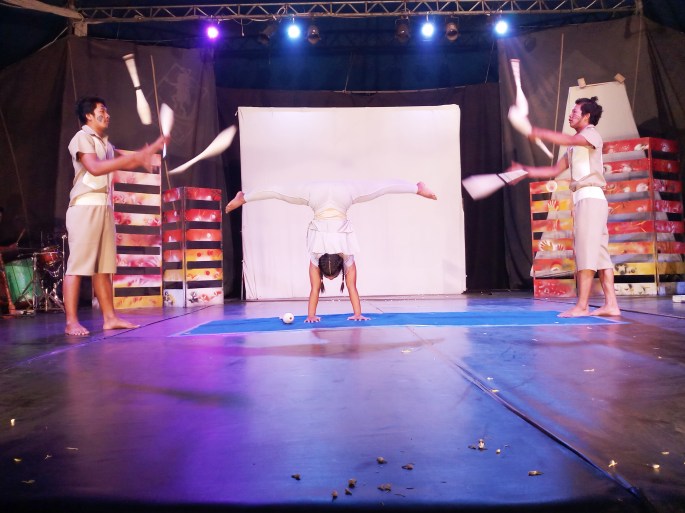
We attended the Phare Circus, a performance put on by the school for performing arts in Battambang.  It is a school that was founded in the 1990s in a refugee camp to serve as an emotional outlet for the displaced children and those that suffered the trauma of war.  It thrives today, serving over 1300 students free of charge, training them in the arts.

20180210_193000.jpg20180215_153455.jpg

20180210_071718.jpg
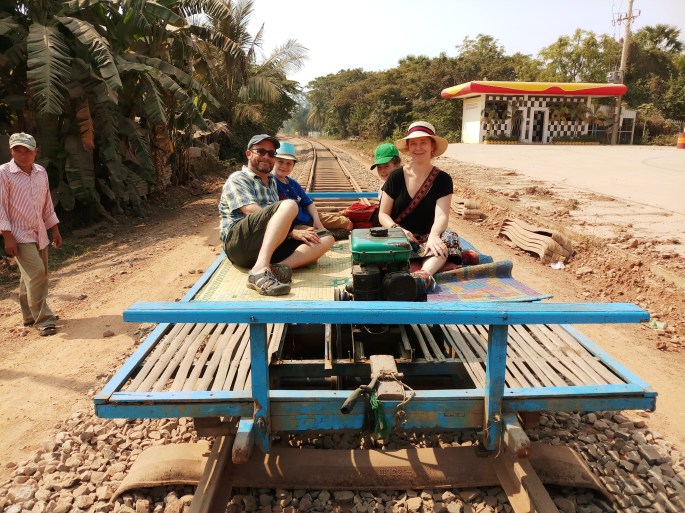
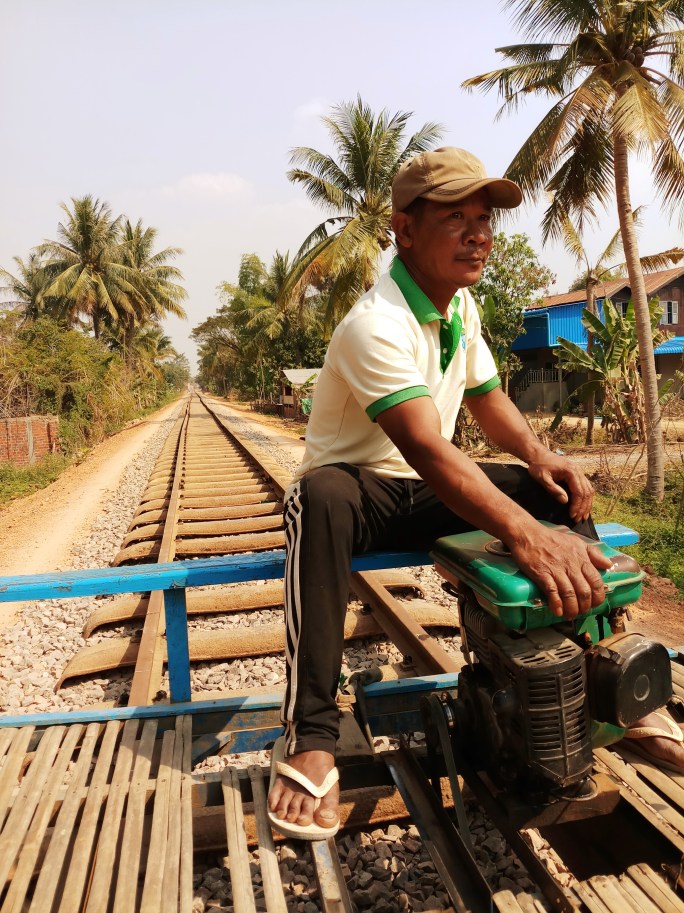
The famous Bamboo Train, once used as a practical way to get goods to market, now only tourists ride it. Still fun. The best part was the smiles and waves we got from children we passed.
20180210_071617.jpg20180210_071535.jpg

20180210_180553.jpg
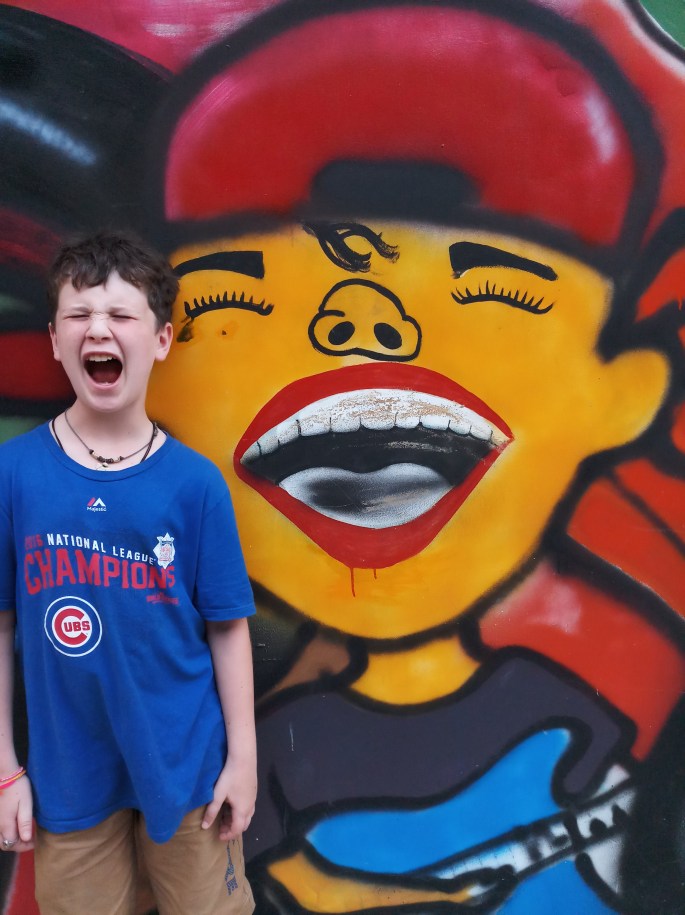
Fun graffiti wall at the Phare school
20180209_120301.jpg
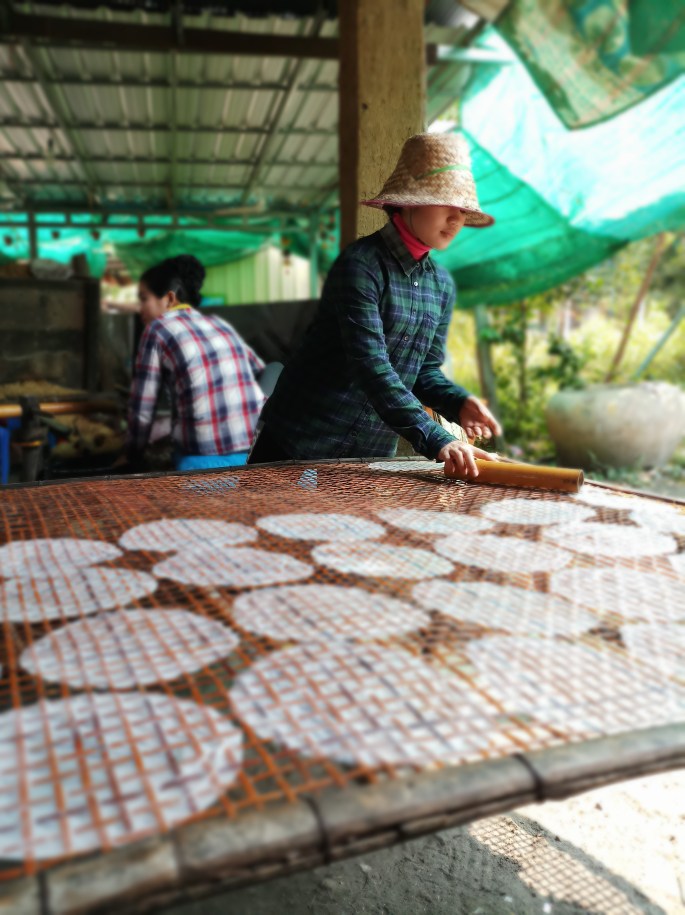
Rice paper production in the village. I love how bored the young women look who are working the machine.

20180209_120329.jpg

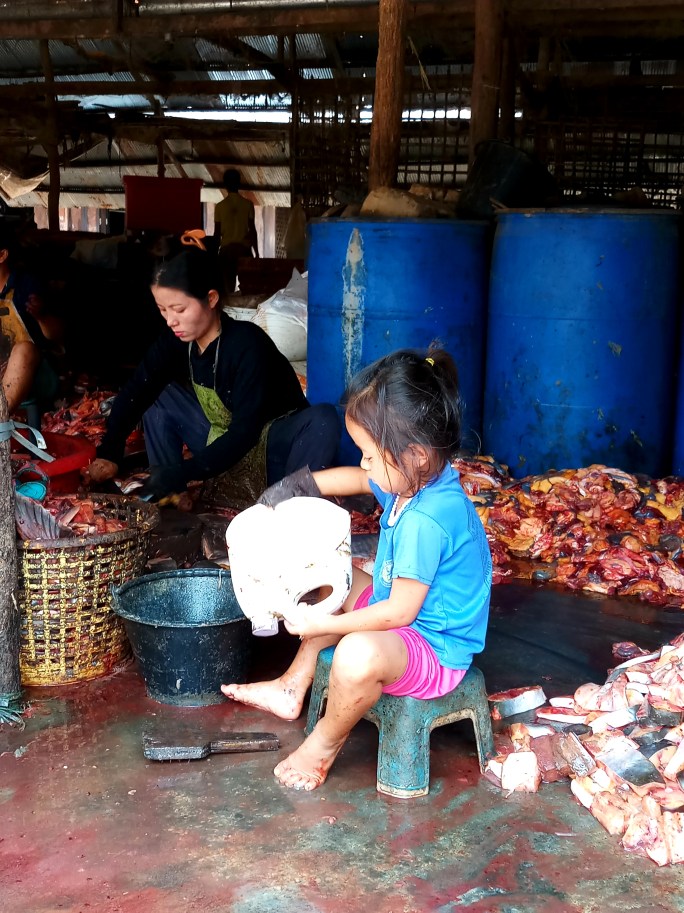
We went to the fish market, or where the fish market begins.  It was a covered space filled with women and men hacking away at fish and separating it into usable parts.  There were heaps of entrails and fish guts everywhere.  The floor ran red with blood.  The smell was so intense that Cork and the kids would not even exit the TukTuk.  I found it so interesting.  Everyone had their job and the work was all done on the concrete floor.  The small girl in the photo had to be about three years old, and she was scrubbing tools as her mother worked nearby.

20180210_072014.jpg
The fish market.
20180209_123952.jpg
Fish drying in the sun
20180209_124411.jpg
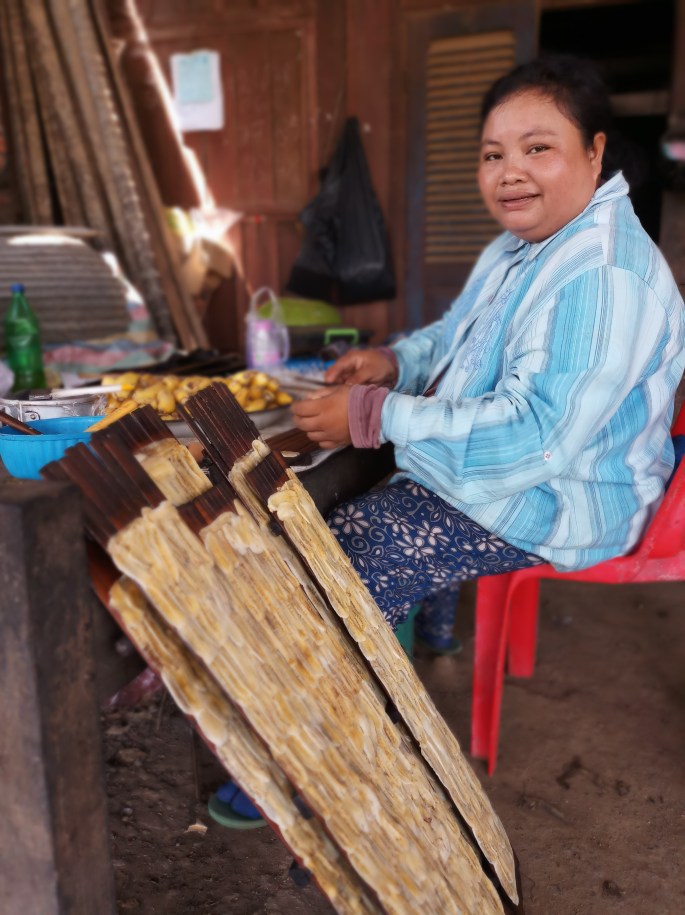
Drying banana


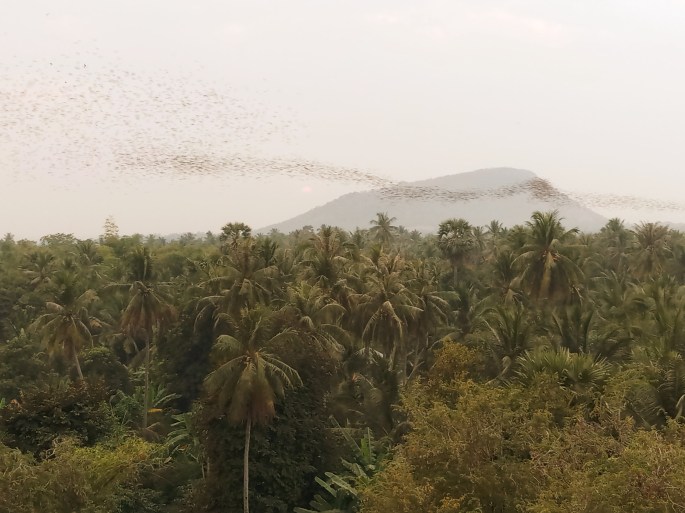
We visited Phnom Sampeu, a hill with the Killing Caves of the Khmer Rouge (which we did not visit), a few others caves adorned with Buddhist statues, and a monastery with two Buddhist Stupas on the hilltop.  The main event at sunset is the exodus of the nocturnal bats from their cave. We watched as over 1 million bats made thier evening departure from the cave.  It was hard to capture such an enormous event on film, but it was pretty cool.20180209_234750.jpg

This women made loud sounds as she scraped the concrete in order to encourage the bats to fly higher and avoid her coconut trees.20180209_181207.jpg

20180210_071333.jpg

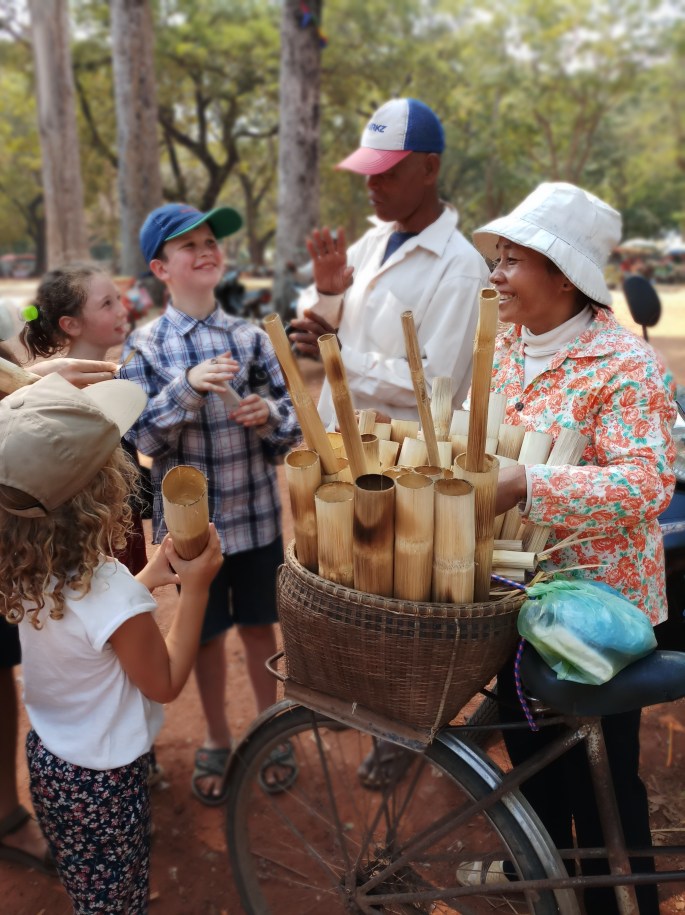
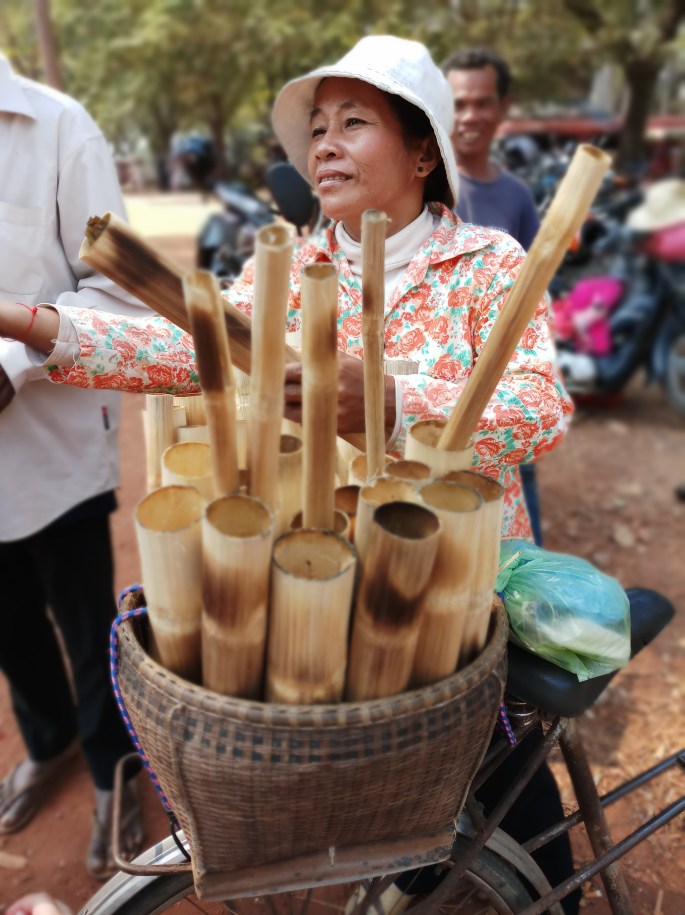
Kralan, my new favorite snack

20180205_123055.jpg

20180205_123022.jpg
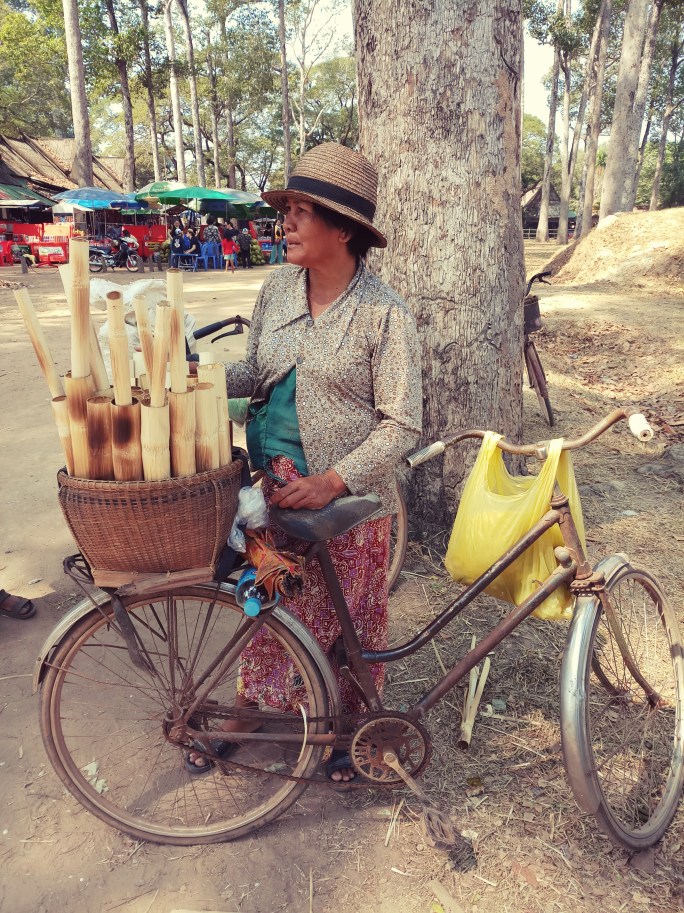
Vendor at Angkor Wat

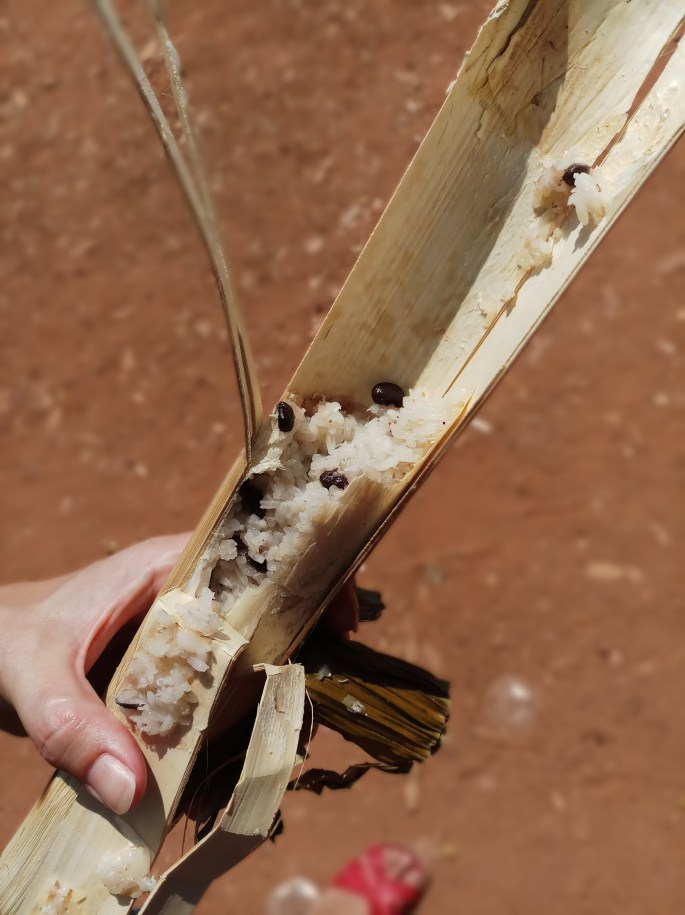
A popular and highly portable snack, a large hollowed out bamboo section filled with sticky rice steamed with coconut milk, black eyed peas and a little salt. The end is stuffed with bamboo leaves and cooked over charcoal for 70 minutes. The charred bamboo is then sliced off expertly with a large knife and it is ready to eat. You peel it like a banana to enjoy.

20180209_102835.jpg
Slicing the charred bamboo off

20180205_123404.jpg

Sold by women on their bikes, it is a savory filling snack that is easy on the stomach, recognizable and inexpensive ($1). In ancient times Angkor soldiers carried this snack with them to eat on the road as it would keep for a few days. Modern day coconut milk does not keep as long.

20180205_221035.jpg

20180205_221014.jpg

Ancient Angkor

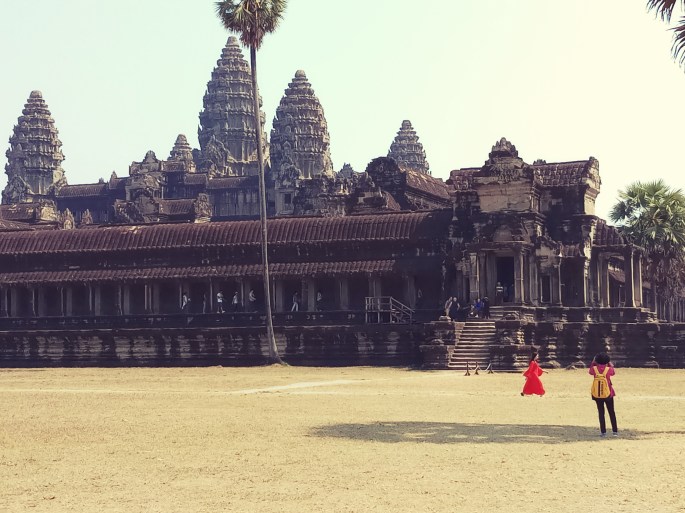
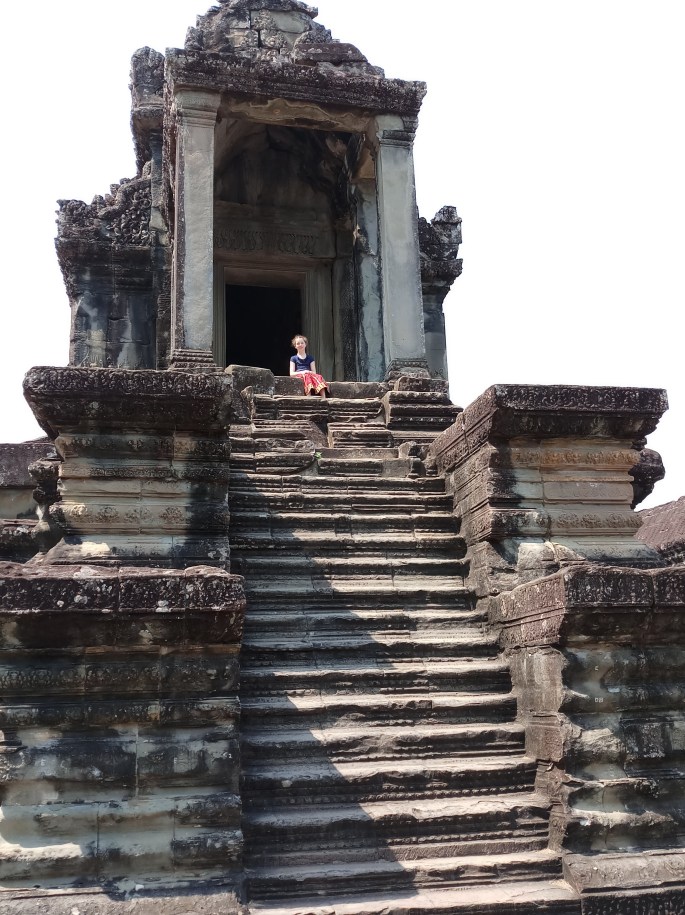
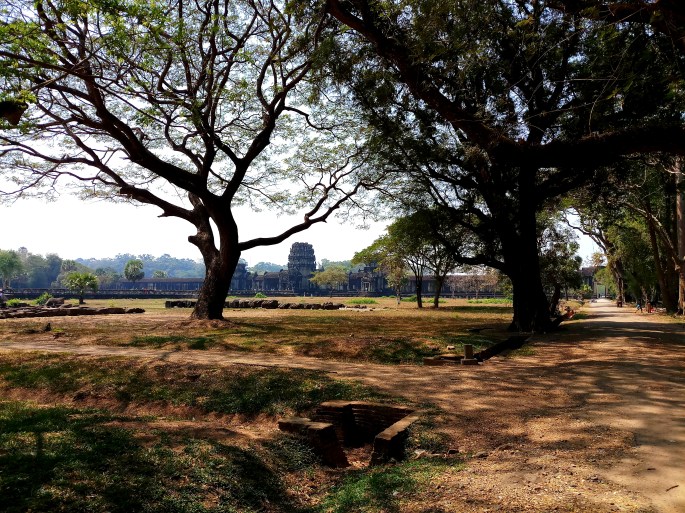
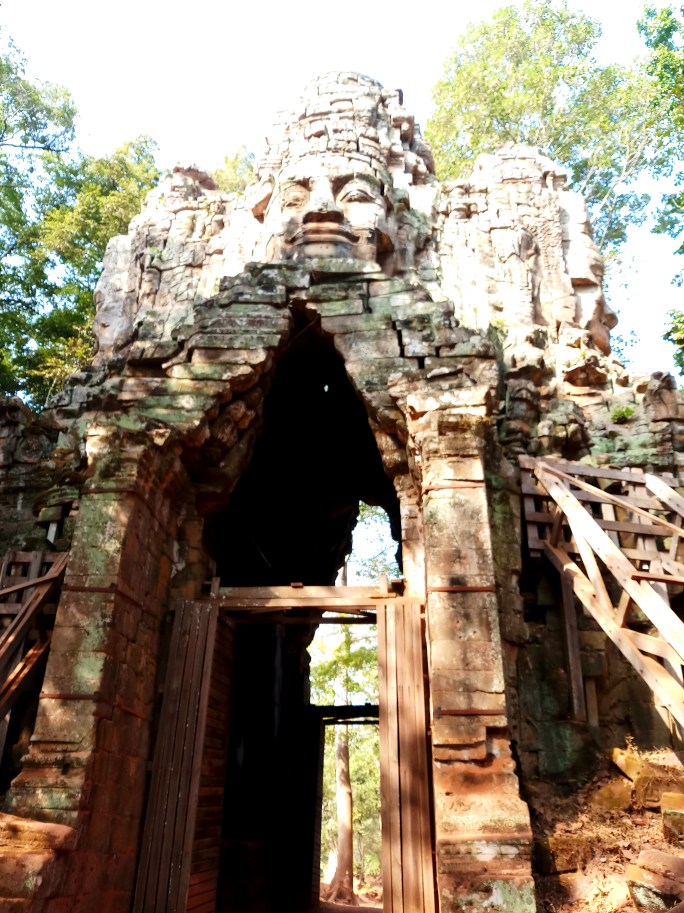
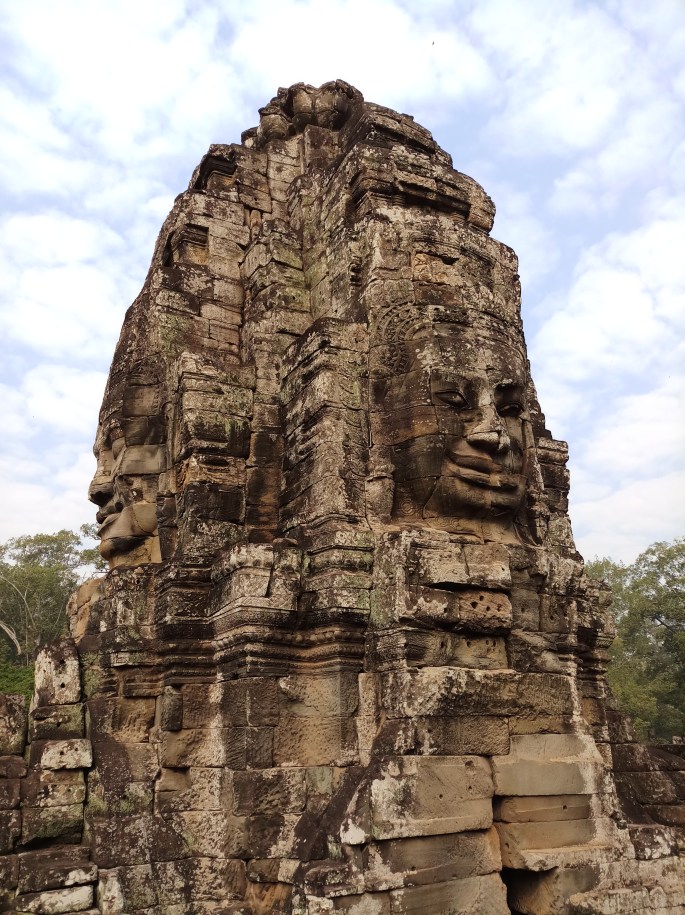
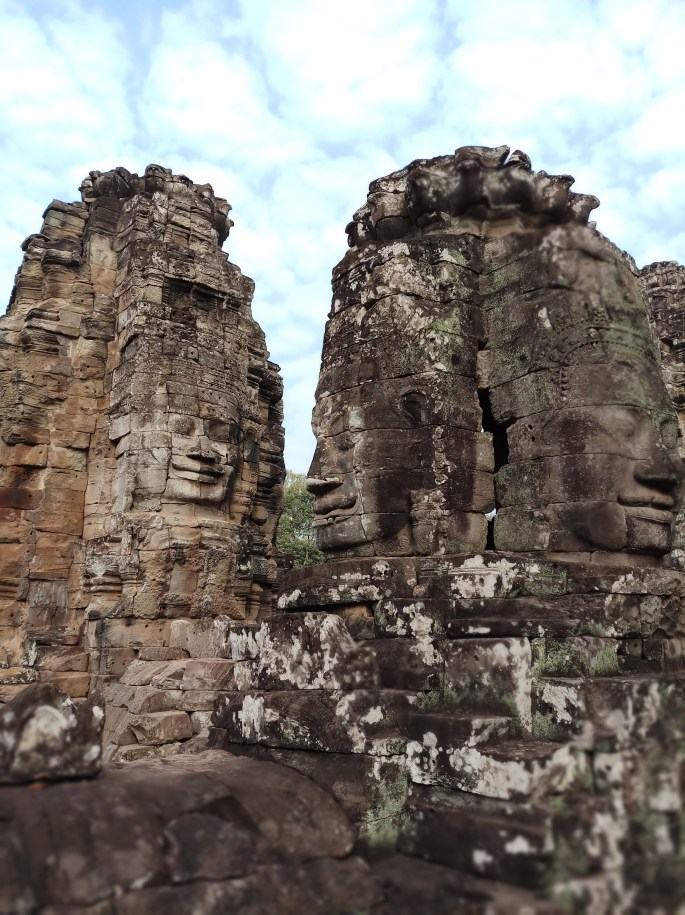
Angkor Wat is the reason that most people visit Cambodia. They come to walk around the largest religious temple built in the world. It covers 400 acres. Built at the behest of a succession of kings as a palace and place of worship during the 12th century, it is really a feat of architectural genius. At a hefty $37 entry fee per person for one day, this tourist attraction is a huge revenue source for the government. At 0830 in the morning, the large temple Bayon, the temple famous for its 215 towering Buddha faces was so packed with tourists taking selfies, that I felt claustrophobic. Considering what a huge money-making attraction Angkor Wat is, there is a slim chance that the Cambodian government will limit visitors. As a result, the experience loses a bit of its magic due to the sheer number of chatty, flower hat donning, mainly Chinese who arrive in large tour groups in a steady stream of buses.

20180205_113513.jpg
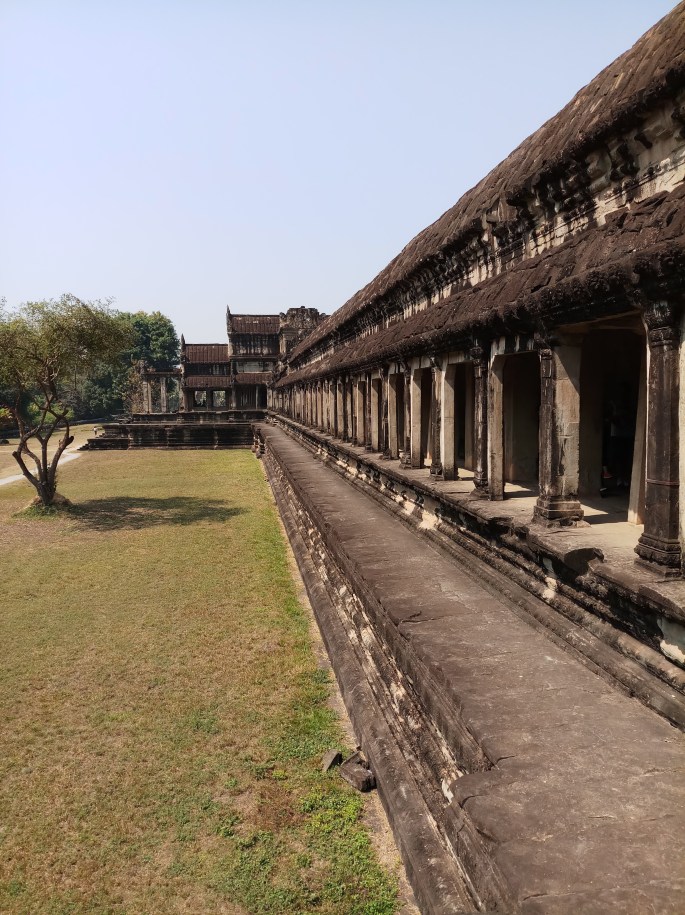
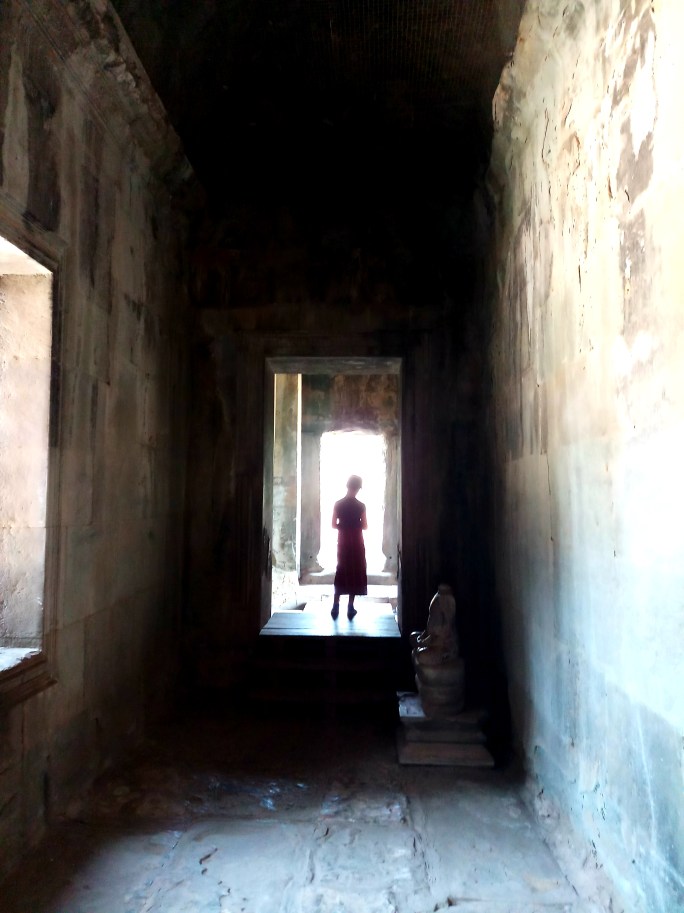
The vast corridors of Angkor Wat
20180205_180630.jpg
Silouette of Addie at Angkor Wat

20180205_220852.jpg

The enormity of this temple complex is symbolic of the level of world leadership that Cambodia held at one point in history. The Angkor Kings were considered Gods, the king of kings, thought to be capable of anything.  The massive structures of Angkor Wat, sophisticated irrigation canals and advanced trade relationships are hallmarks of this great empire. The Khmer Empire, a Hindu-Buddhist power, dominated over most of Southeast Asia from 802 until 1431. Angkor, during its peak in the 11th to 13th centuries, was the largest pre-industrial urban center in the world.  The Khmer empire fell in the 15th century to the Ayutthaya (Thai) armies.  It is thought that climate change, long drought and plague weakened the empire before it was conquered. However, it is still a mystery exactly how this great society fell.

20180205_120030.jpg

20180205_220044.jpg
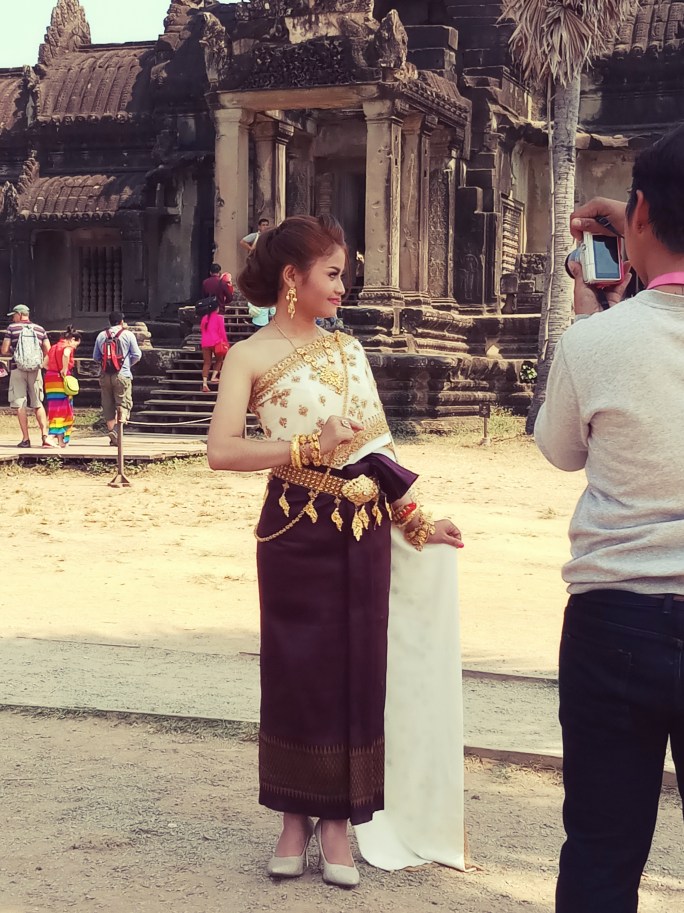
Wedding photos

20180205_220018.jpg

After 1500, Cambodia entered a dark age.  Increasingly controlled by Thailand, and then dominated by Vietnam in the 17th century, Cambodia accepted French Protectorate status in 1863 as to not be absorbed by Vietnam or Thailand.  Controlled and colonized by the French, Cambodia languished.  It was bombed extensively during the Vietnam war, and then overtaken by the Khmer Rouge that promised an egalitarian agrarian society but delivered a sadistic genocide.  Subsequent years of fighting, violence and starvation followed into the early 1990s.  After the UN experiment failed to bring about real democracy, Hun Sen remains the prime minister.  He fought for the Khmer Rouge for seven years, only switching to the Vietnamese side when it was clear the Khmer Rouge was losing.  Through corruption, intimidation and violence he has maintained power for thirty years.  His family is estimated to be worth 500 billion dollars.  The average  annual household income is $1,093.  20180205_220250.jpg

20180205_220110.jpg
The largess is appreciated from afar
20180205_221657.jpg
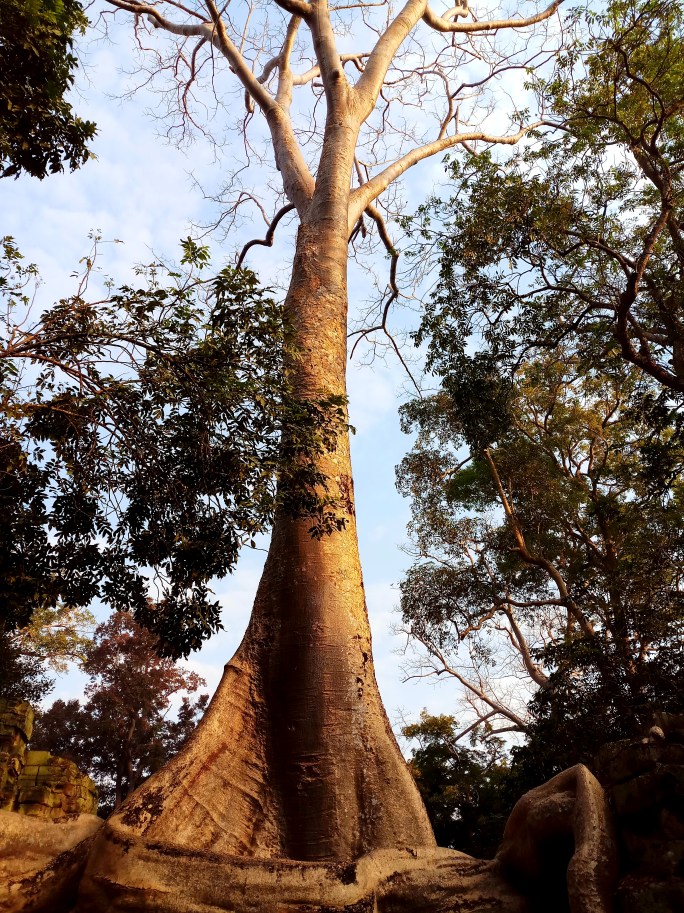
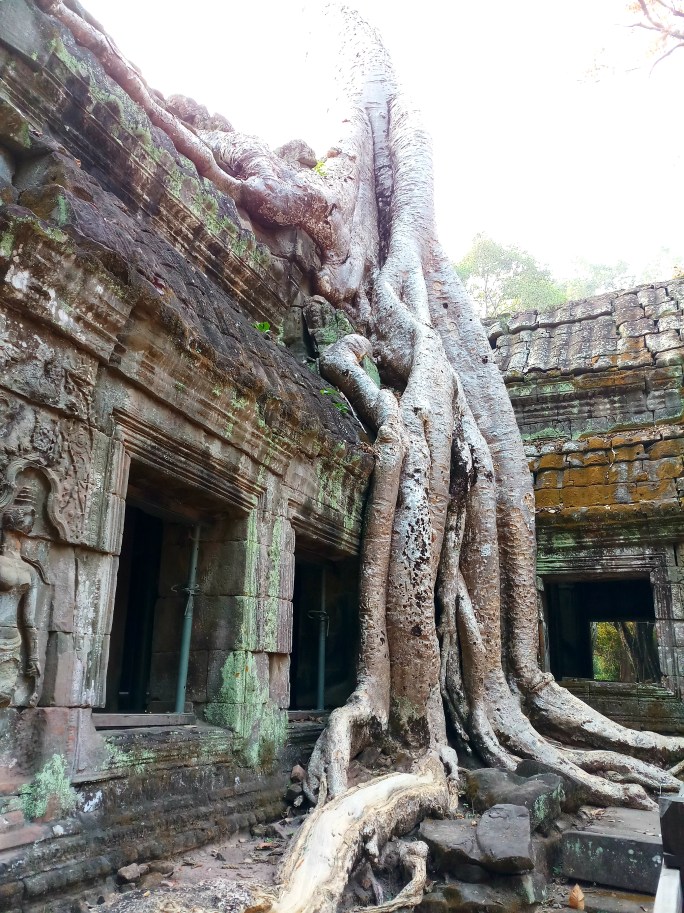
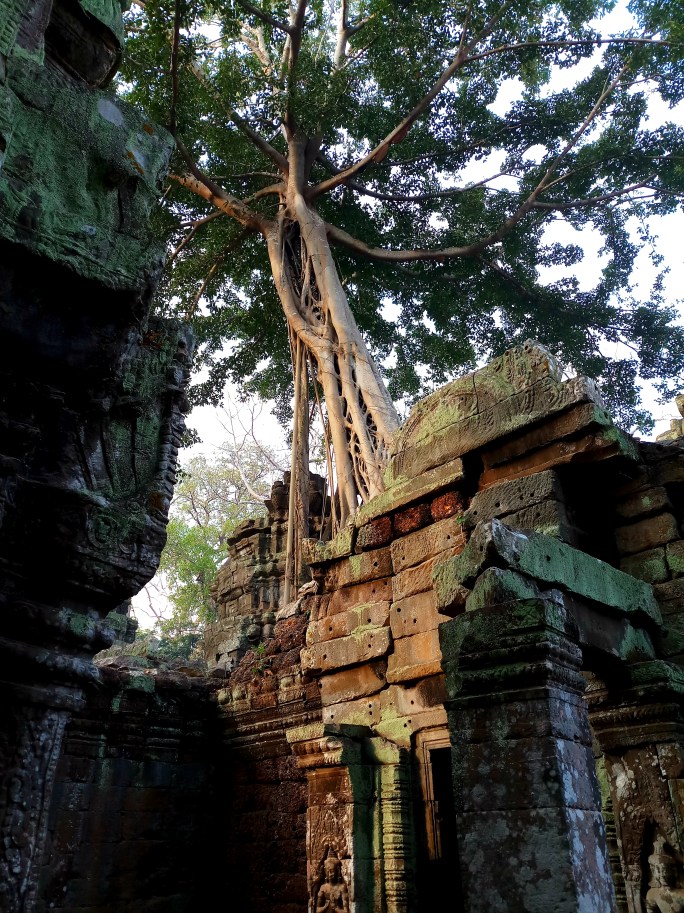
Ta Prohm
20180205_221745.jpg
Tomb Raider

20180205_221610.jpg

20180205_221151.jpg
Simple back road in the temple complex

The people of this country have been to hell and back.  The reason that I discuss the history of this region is that you can see how these missteps and decisions affect Cambodia today. Before traveling here my knowledge of these historical events was rather superficial.  I am learning in real time what these events mean today.  Shelled and burned out French homes in Battanbang and Kamphot remain standing and empty.  Our TukTuk driver grew up in a refugee camp in Thailand when his family fled Cambodia.  The woman who makes our lunch buried her mother and sister when she was nine years old and lived in the jungle for three years hiding from the Khmer Rouge.  It is real and unescapable.

20180205_085445.jpg
Banyon

20180205_085221.jpg20180205_221512.jpg

20180205_221251.jpg
Exploring the temples with friends made it so much fun

Lifelong friends

We have become good friends with a family from Brighton, England.  We first met them in Chiang Mai and planned to meet again in Siem Reap, Cambodia.  Vicki and Mike, a fellow nurse and teacher, along with their smart and enthusiastic daughters Amy (12) and Izzy (7).  It eases the overwhelming prospect of exploring a new city if you have a friends along for the ride.  It is especially great for the kids as they get to play Legos, watch movies and splash in the pool together while their parents relax and contemplate the next move.  Our families are talking about overlapping houseswapping in the future so that we can stay in touch and continue traveling!20180204_142830.jpg20180204_110010.jpg20180204_095847.jpg

20180204_105836.jpg

I will be so curious for our children to meet in ten years, as young adults, and see how they remember this time.  It is such a unique experience to travel the world at such a young age and I know that it will forever shape their life’s direction.  It is my hope that they leap forward into life, leaving fear behind and embrace the adventure.  Life is too short.

20180204_104717.jpg
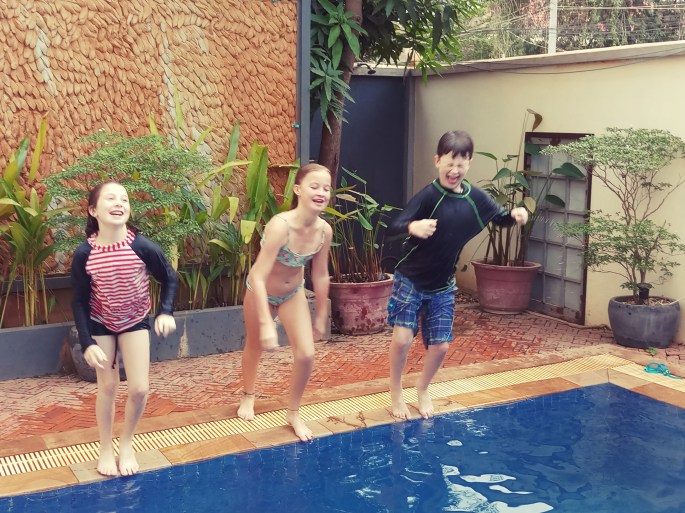
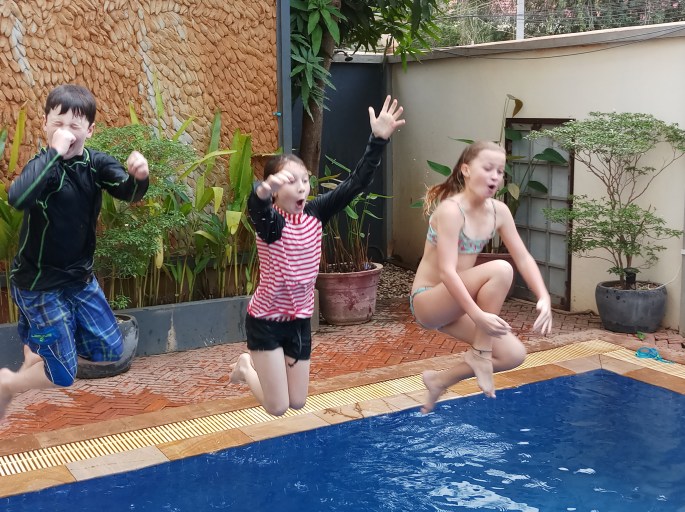
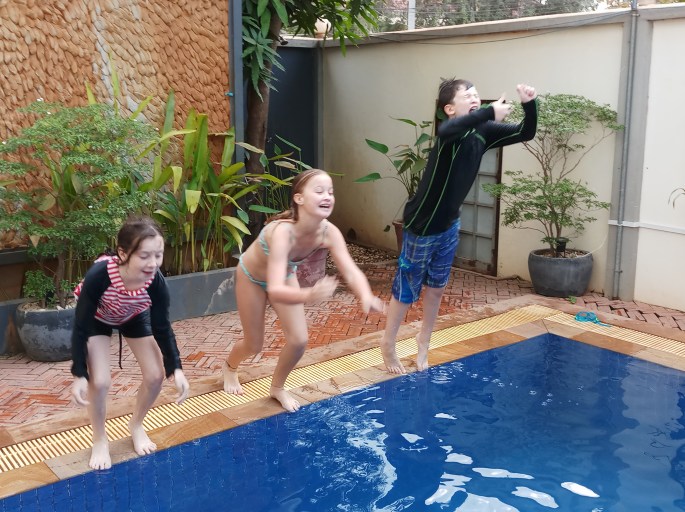
I love seeing the joy on their faces as they jump

20180202_154714(0).jpg20180202_154626.jpg

Kampuchea

Kampuchea, officially known in English as the “Kingdom of Cambodia”,  is the country that we are travelling through now.  The more I read and learn about this country, the more confused and conflicted I feel.  In preparation for visiting this country, we learned about the Vietnam war and the Khmer Rouge genocide.  I read political and historical accounts that gave me a general idea of the challenges this country faces.  On paper this country is mired in problems and, from afar,  it appears broken and irreparable.  Political corruption is endemic, child exploitation and poverty pervasive, vast environmental degradation and a failing education system are among the largest hurdles to development.

A generation of educated Cambodians were murdered or fled in fear during the Khmer Rouge takeover in 1975. Two million murdered, another million died from disease and starvation after the conflict.  The survivors and perpetrators go about their daily lives in the present, all suffering amazing loss, largely unspoken.  When I look into the faces of those that are older than 42, I know they experienced the unthinkable.  Imagine a whole country carrying that type of trauma and grief in their souls.  Although, the Khmer Rouge reigned from 1975-1979, the fighting and violence continued until the early 1990s.
20180210_073402.jpg

We experience the educational deficits as our TukTuk drivers struggle with maps and illiteracy is rampant, as school is costly (bribes needed to help pay the teachers) and not mandatory.  It is a miracle that anything works here.  Described by Human Rights Watch, Cambodia is a “vaguely communist free-market state with a relatively authoritarian coalition ruling over a superficial democracy.”  Currently, Hun Sen has been in power for 30 years and recently the opposition party has been ruled illegal.  However, despite these plaguing problems, the Khmer greet us with the largest, easiest smiles, real “light up the room” grins.

20180204_105149.jpg
Jack quickly became best friends with 2yr old Sata

20180204_105353.jpg

Kampuchea, as the Khmers refer to their country, is a largely flat country smaller than Oregon with three times the population. The city of Siem Reap is a two-story town with only a few taller buildings.  Most of the roads are dirt and the red clay dust coats everything.  Although the dust and dirt makes for a gritty experience, it lends the evenings an eery magical glow that is unique to this land.
20180204_105322.jpg

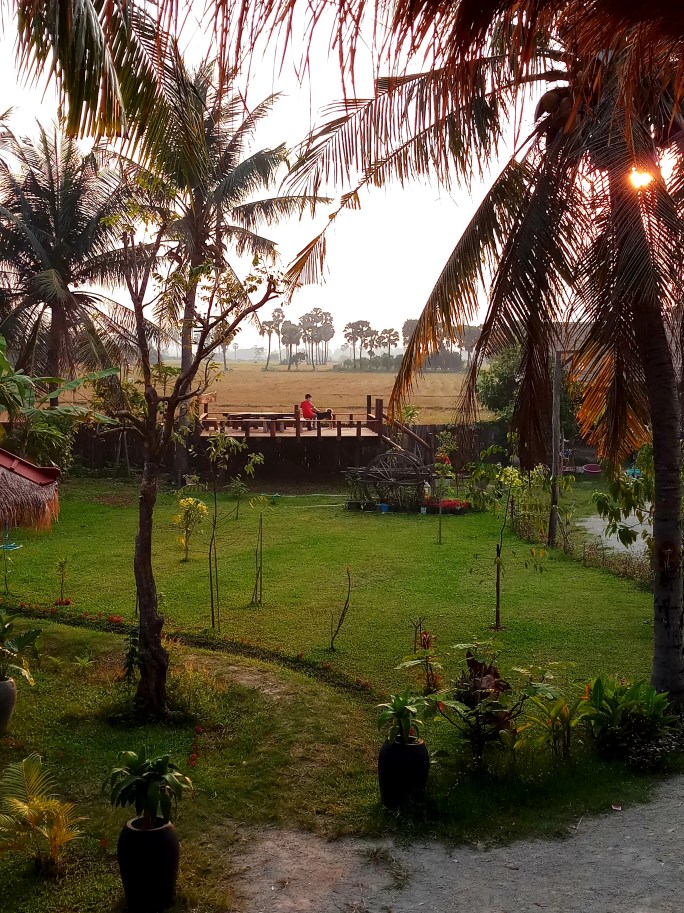
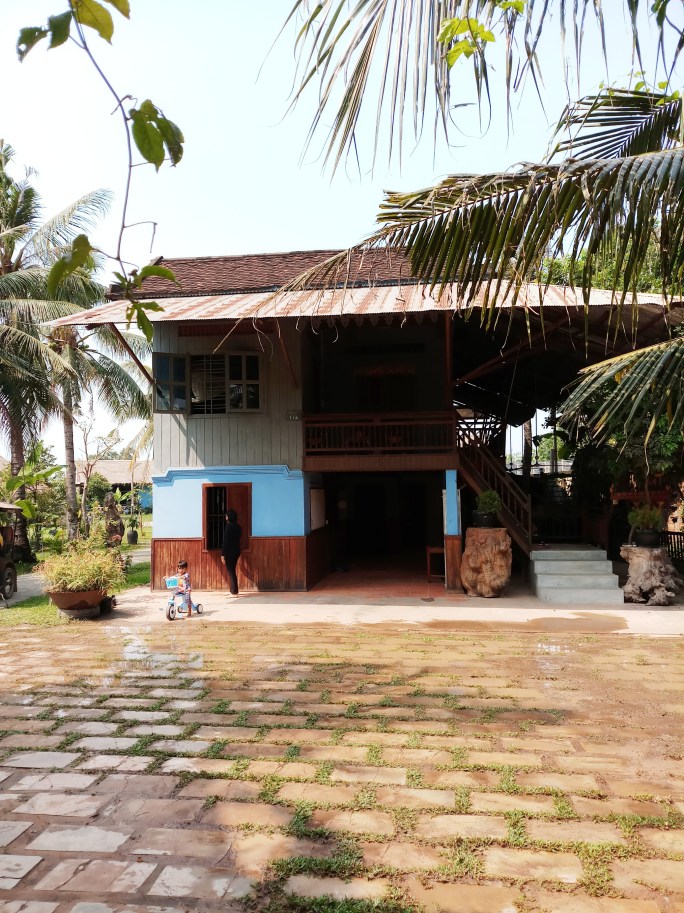
For our first three days in Siem Reap we stayed in the country side, sleeping at a homestay.  We had rooms in the main house, all hard wood, and shared meals in the family kitchen. It is simple, inexpensive and a good way to experience Khmer life away from the tour groups. The family is very welcoming, the food fresh and although far from town, the grounds are beautiful.

20180204_104545.jpg
The front of the main house
20180204_105018.jpg
Steep stairs to kitchen
20180204_105054.jpg
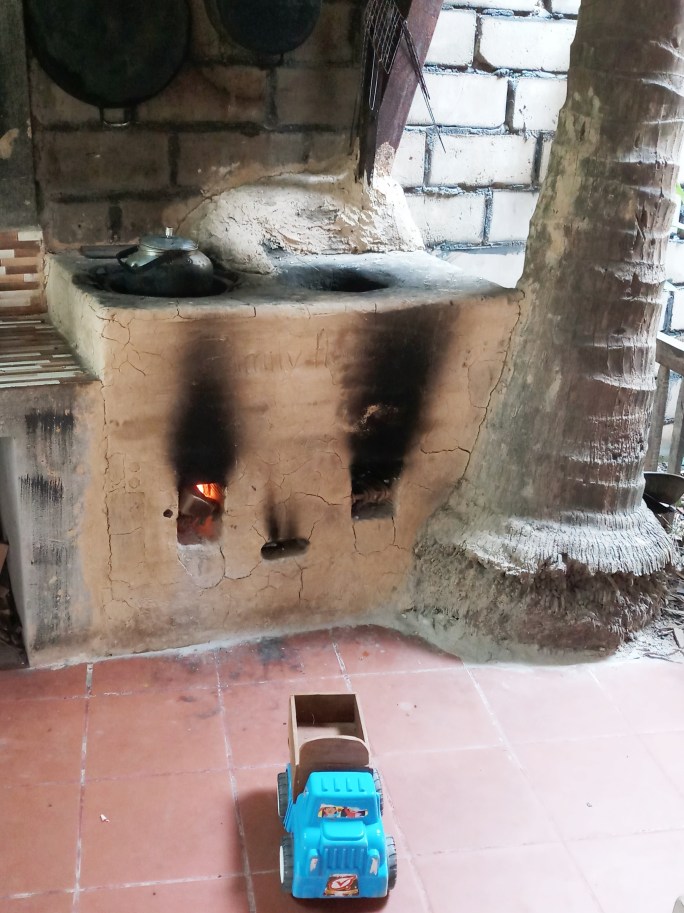
Original oven and stove. And a tree.
20180204_105122.jpg
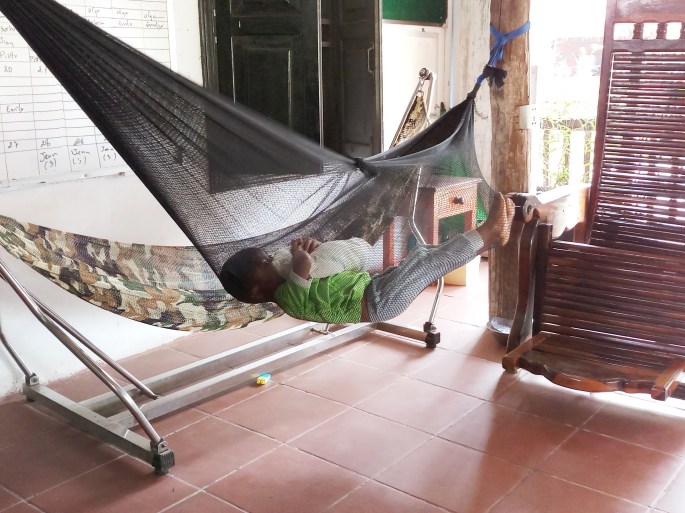
When Sata, the toddler gets too rambunctious, the grandma just puts him in the hammock and ties it at the top
20180201_174836.jpg
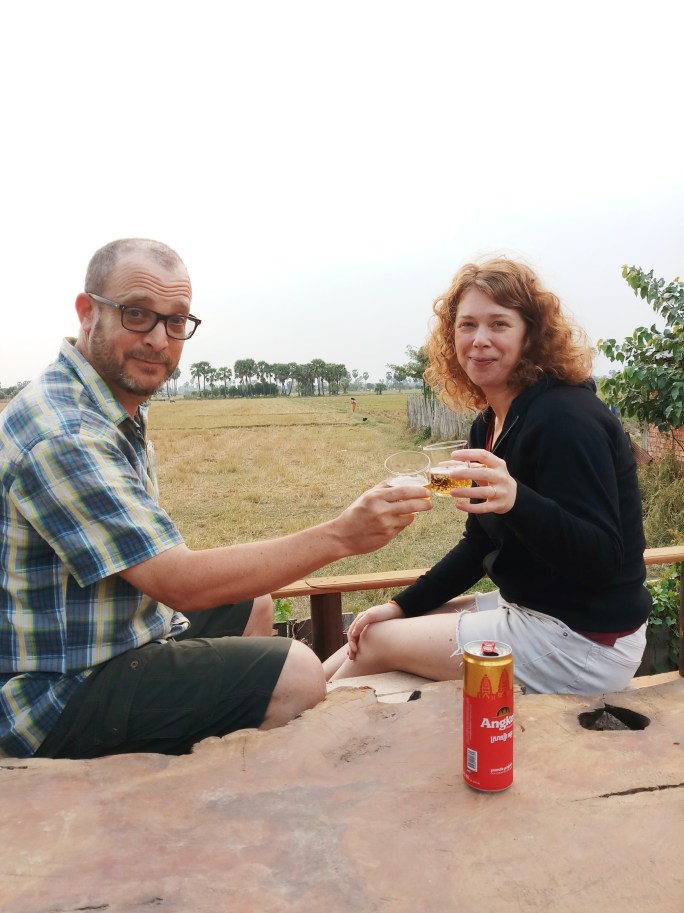
Sunset and beer
20180204_104952.jpg
Addie

The common mode of transport for us is a TukTuk.  The Khmer style are carts with seats behind a motorbike.  Originally these were Cyclos, the same style, although more basic behind a bicycle.  The locals get around on motorbikes and bicycles.  Traffic here is crazier than Laos, tamer than Vietnam.  Apparently the Khmers believe that what they do not see, is not there.  Instead of a blind spot, an invisible spot.  Also, as with all of Asia, the biggest car wins,  so we are often side lined by the honks of large trucks that roar past.  The TukTuk trips are bumpy, loud and often harrowing rides, although since we survived, exhilarating.  The open aired transport also facilitates smiles and waves as car glass does not keep us hidden.  Unlike other countries, most Khmers do wear helmets, or “hats” as there is a hefty $6 fine.20180204_104630.jpg20180204_105542.jpg

Arriving from Laos, where we had such a cozy experience, Cambodia shoved us out of our idyllic dream into the dusty reality of the developing world.  At first, to be honest, I did not like it.  Overwhelmed by the story of trauma that this whole country experienced, I wanted to turn away, walk away.  In fact, in this emotional place we made the decision to go to Nepal next, move on from SE Asia.  However, in the ensuing days, Cambodia is unfolding and expanding.  Its complex history and recent atrocities are a true testament to the resilience of humans to move on, do more than survive, live on and continue to smile at strangers.

Will work for Bo Bun!

After repeatedly offering our help to Khaek, she relented and we arrived for our shift at the restaurant wearing our Lao skirts and ready to work. Addie and I spent the next four hours taking meal orders, clearing tables, cleaning, running food and interacting with tourists. Khaek normaly works alone and rarely has a day off. It seemed like a win-win-win, which are the best scenerios!

We had a great time and it was nice to be useful. Only in Asia will Addie have the chance to wait tables and serve alcohol at the tender age of 10. Now she thinks she wants to be a waitress. Since it is only Khaek who runs the front of the house, we were able to be really helpful during the busy hours. My waitressing and nursing experience always help in these customer service situations. Addie was able to eat fried rice during her break, on the house, which was a huge perk.

Khaek’s family kept looking at us and smiling, clearly bemused. Khaek said we were the first travelers to ever work for her. I do believe that if we stayed in Laos, these opportunities would present themselves, and as long as we are willing and able to walk through these doors, along these paths, we will be granted insight into culture beyond the tourist view point.

We enjoyed our shift so much that we worked an additional evening at the restaurant. I was able to meet Khaek’s friends, talk to other travelers and just be apart of things, which I miss when traveling.

We talk about wanting to participate in volunteer opportunities, but we are finding that if you find a place, or people or organization that inspires you and you offer your help and services, it is possible to create one’s own volunteer experience. We will continue to find these places and dive in.

Adventures with Louis and Amelie

We have met another traveling family, Sophie and Mark and thier children Louise and Amelie. With them we shared many meals, played games, explored waterfalls, fed bufaloes and exchanged travel stories and tips. It was great fun.

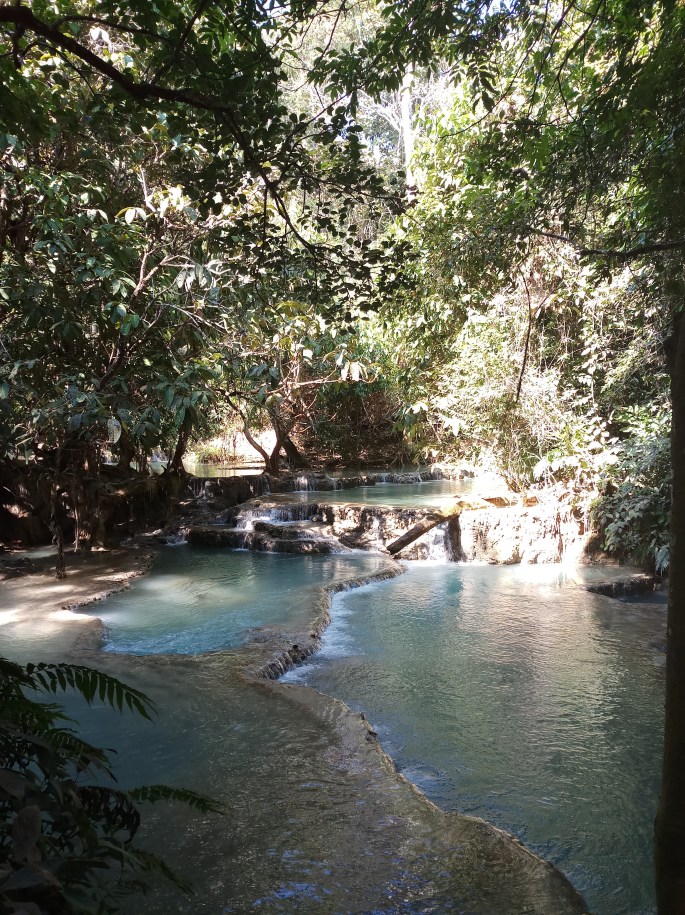
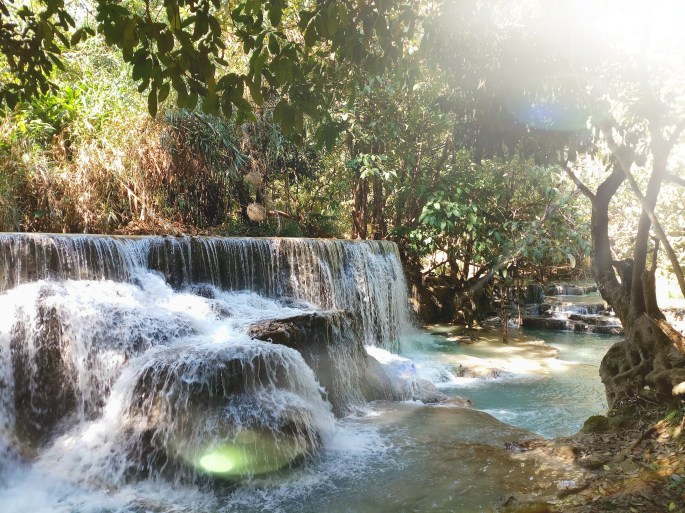
We spent to day exploring the Kuang Si waterfalls, swam in aqua blue pools and hiked through beautiful forest. The waters were full of small fish that in theory I welcomed as they nibble on the dead skin on my feet. But in reality my psyche could not handle the fish the size of a small banana snacking on my feet.

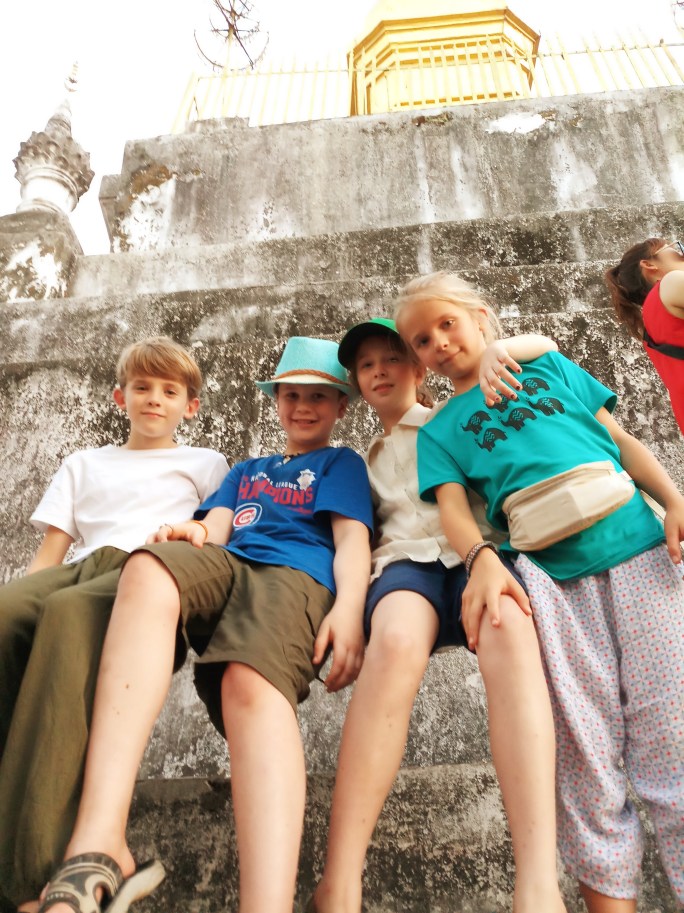
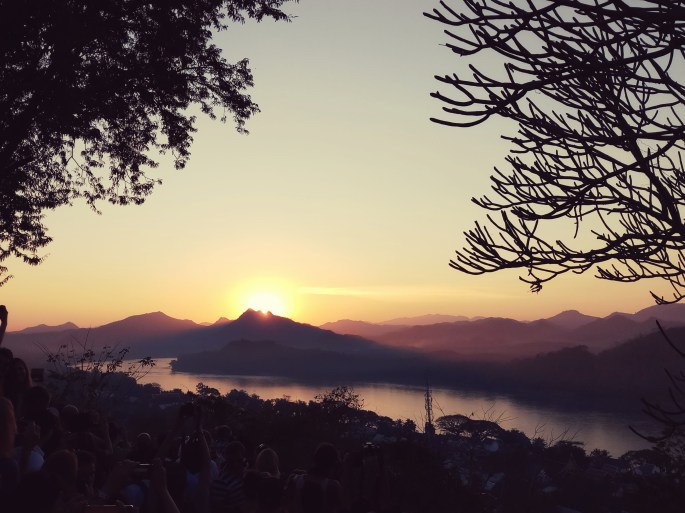
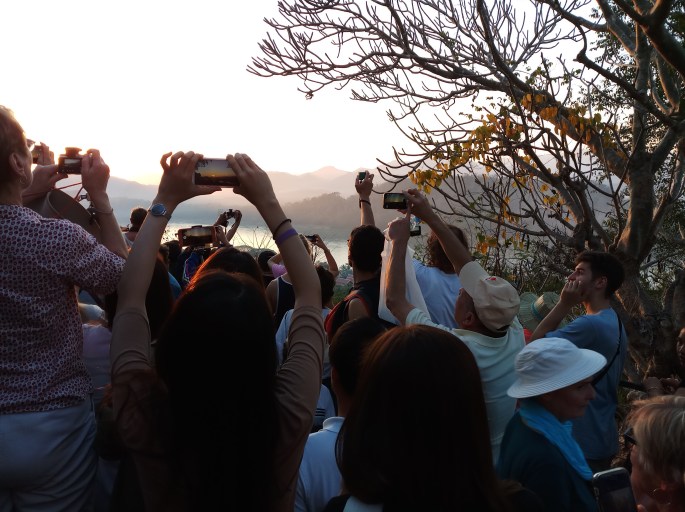
Another afternoon, we had the grand idea to hike to the top of the temple and watch the sunset. We failed to realize that this in one of must do activities listed on TripAdvisor. The hoards of tourists vying for a spot and raising thier cameras high above thier heads did take away from the ambience a little. However, it is wholesome and refreshing that so many gather daily to witness this natural beauty.

20180123_174432.jpg
Packed tourist trying to get that

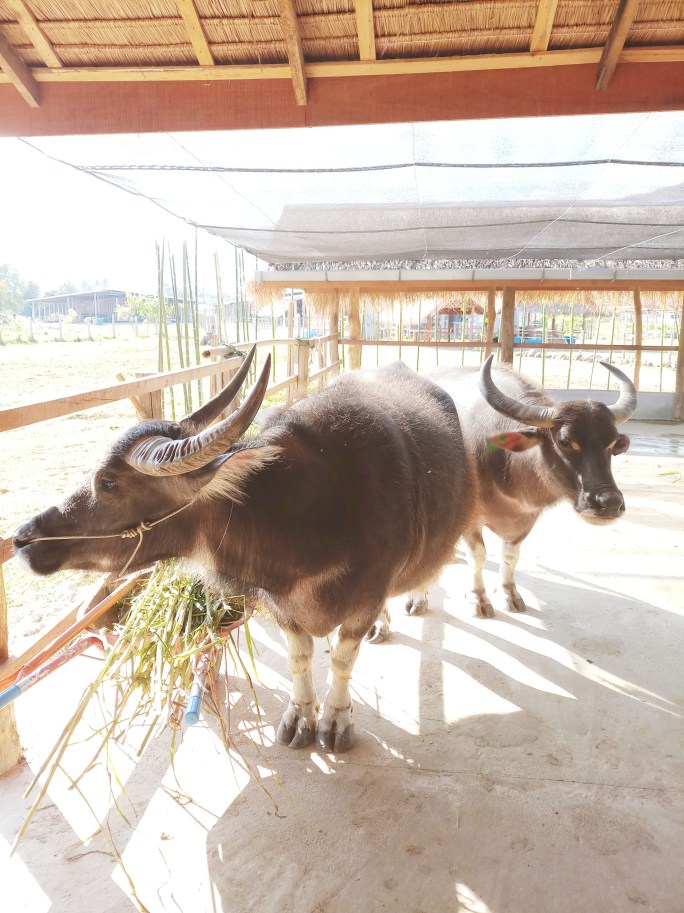
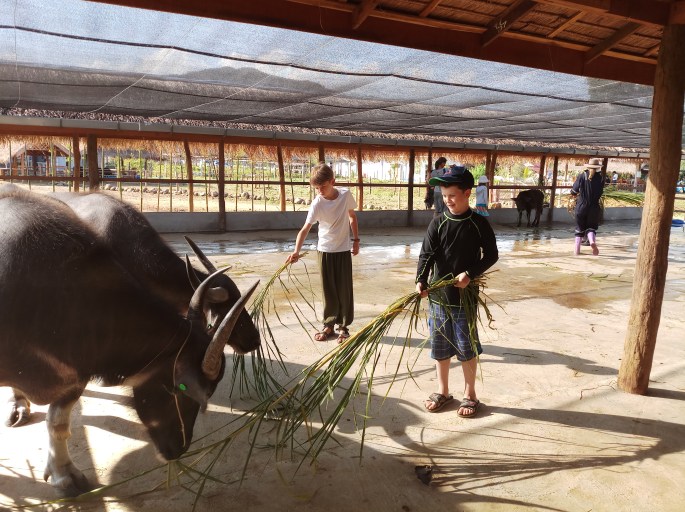
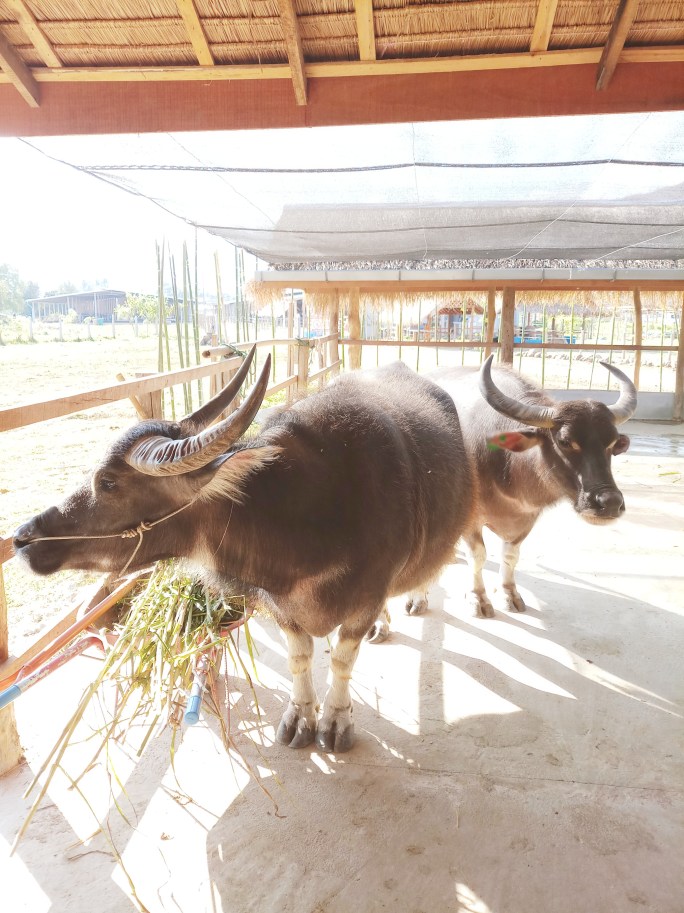
On our way back from the Kuang Si waterfalls we visited a Water Buffalo farm. It is a project started by an Australian family.

Many Lao families own water buffalo, but the animals often roam freely and forage on thier own. Thus, disease, death and inbreeding plague these herds.  Also the water levels of the rivers are unpredictable due to the new dams and ironically water buffalo are poor swimmers, so they get swept away and drown. This project rents the female buffaloes from the farmers, vaccinates, feeds, breeds and cares for the new calves and then returns these healthier animals to the farmers. In return, the farm milks the female water buffalo and creates yummy desserts and cheese to sell to Luang Prabang restaurants. In addition, the farm raises chickens, pigs and rabbits and is heavily engaged in a educational program with Lao villages about the benefits of Buffalo milk as a lactose free protien source. Many Lao children are malnourished and protein deficient. We learned a lot about farming and animals, and the cheese and ice cream were delicious.

20180124_151748.jpg
Feeding grass to hungry buffaloes
20180124_183415.jpg
Stately creatures
20180124_153850.jpg
Failing to teach piglets manners
20180124_184133.jpg
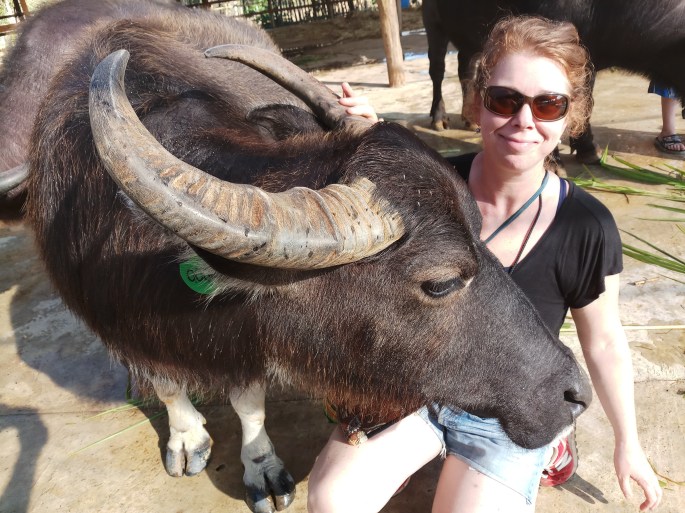
Selfie with a water buffalo

Games with friends Eating Bo Bun with friends
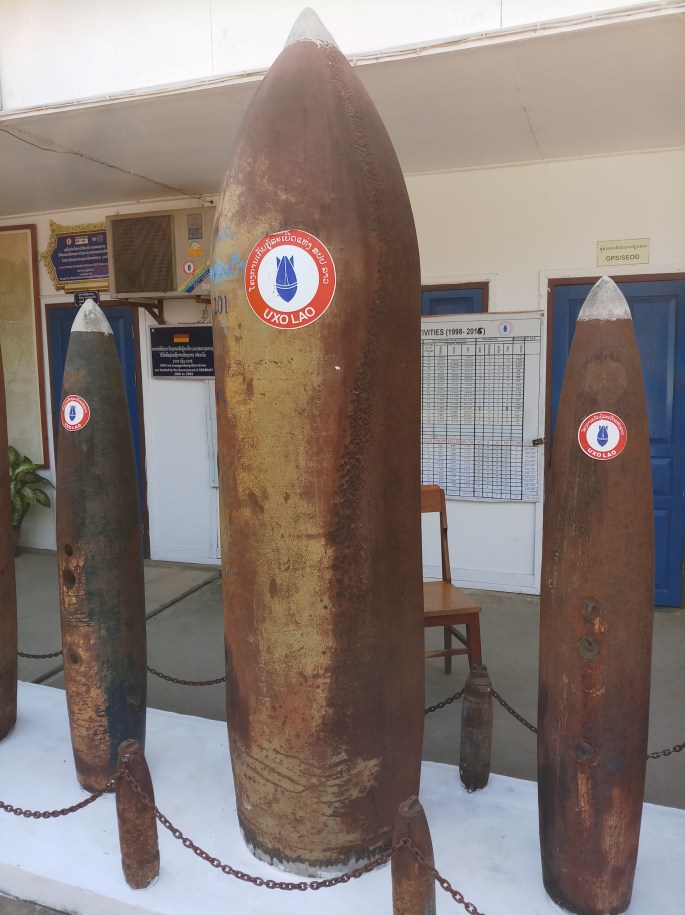
The not so secret bombing of Laos

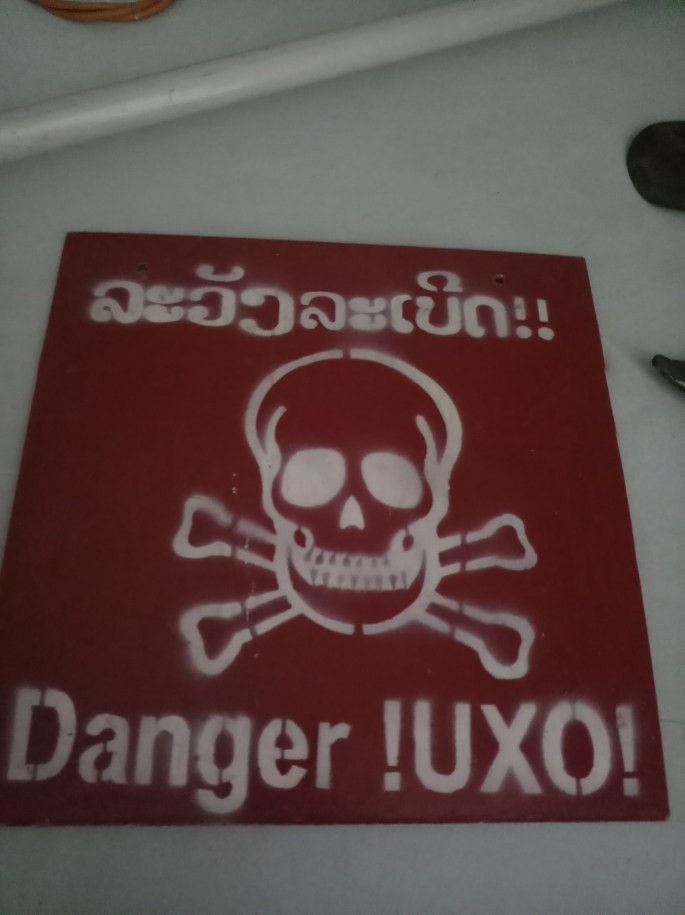
Sometimes when we are eating or walking around Luang Prabang there is the loud noise of a plane flying low and we imagine what it must have been like for the people of this country during the US bombing of Laos during the Vietnam War. How terrifying it must have been. The deafening sound and death literally raining from the sky. Suddenly everything you know and love, blown up. Gone. Unimaginable, and yet the horror of these bombs linger as unexploded ordinances litter the country and kill and maim daily. Mostly poor families who gather scrap metal and kids attracted to shiny balls are the victims. I am not surprised by the powerful’s propensity towards blind cruelty, just dumbfounded. History just keeps repeating. As we travel and learn more, there are no good sides in war. Just uneven sides.

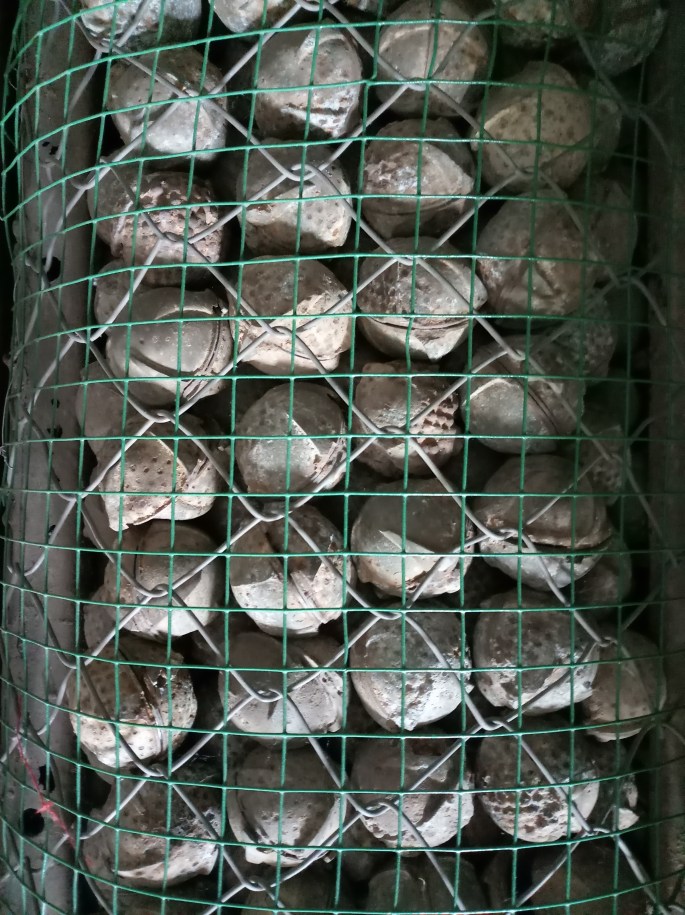
Large missile filled with Bombies, small balls of explosives–designed to send shrapnel over a large area. Otherwise known as cluster bombs.

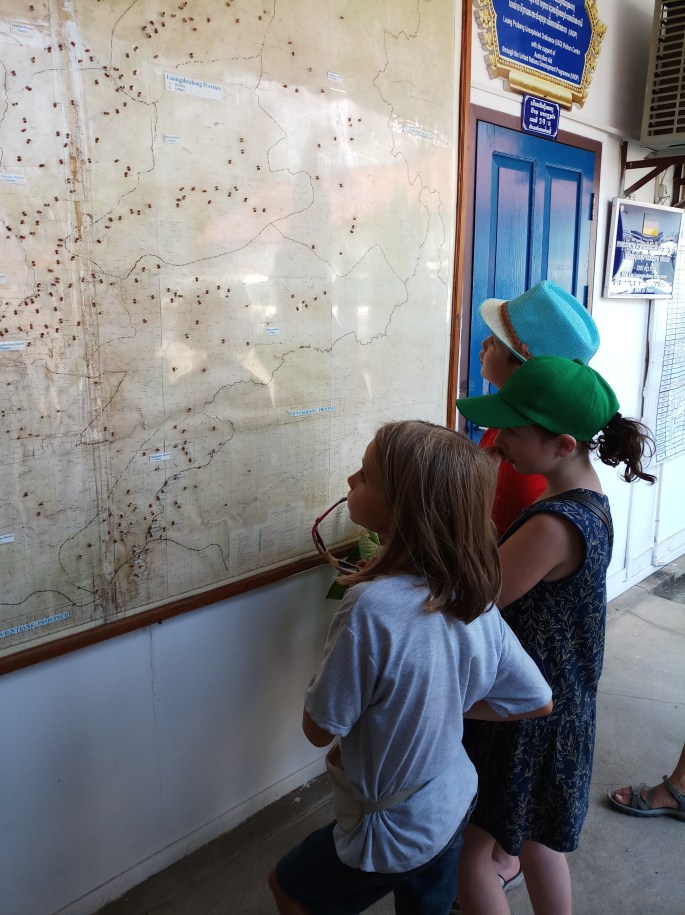
Looking at a map of Laos that is labeled with pins indicating unexploded ordinance projects

From 1964 to 1973, as part of the Secret War operation conducted during the Vietnam War, the US military dropped 260 million cluster bombs – about 2.5 million tons of munitions – on Laos over the course of 580,000 bombing missions. This is equivalent to a plane load of bombs being unloaded every eight minutes. Laos was not even in the war!
In 2016 under Barak Obama (oh do I miss him), we increased our aid to Laos to 30 million to clear unexploded ordinances. Previously we were giving 5 million dollars a year in aid from 1993 to 2016.  I am sure the current administration will reduce the aid again. We are learning in real time and real life the effects of our country’s actions. Our knowledge regarding this part of the world will be a part of us forever, not just a lesson from a history book.
20180129_160518.jpg
Working on school work
We have found that reading personal memoirs written from a child’s perspective is a great way of learning about a country. As a family we are almost done with “First the Killed My Father” a story narrated by Loung Ung who was five years old when the Khmer Rouge changed her life forever. We go to Cambodia this week, so knowing the history (which is hugely) complicated is helpful. We have also made maps of the country we are going to visit and the kids research about language, religion, currency…the categories are up to them. After a year we will have this world schooling down!

“the worst bike ride ever”

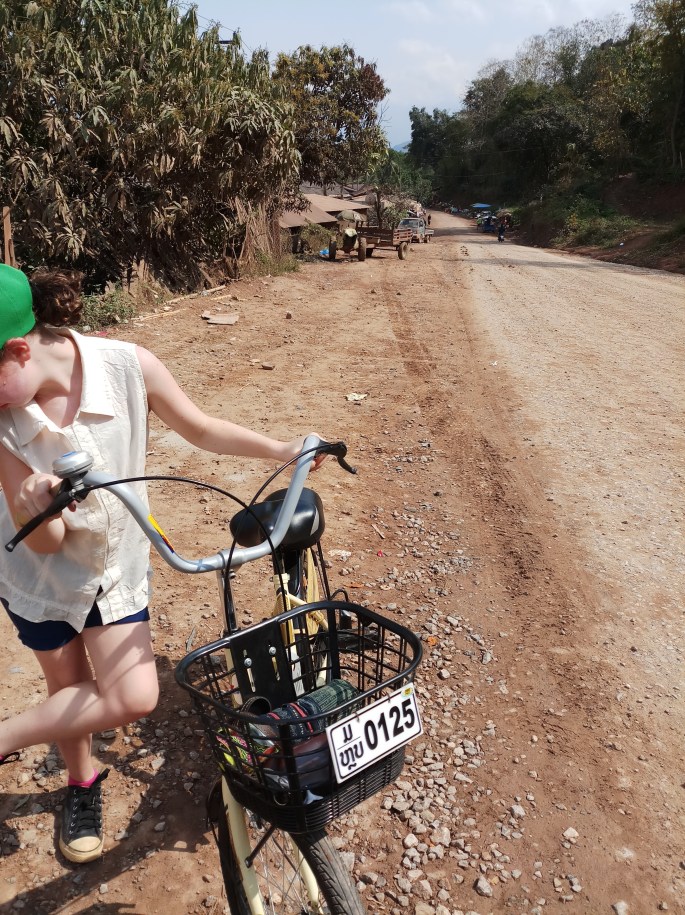
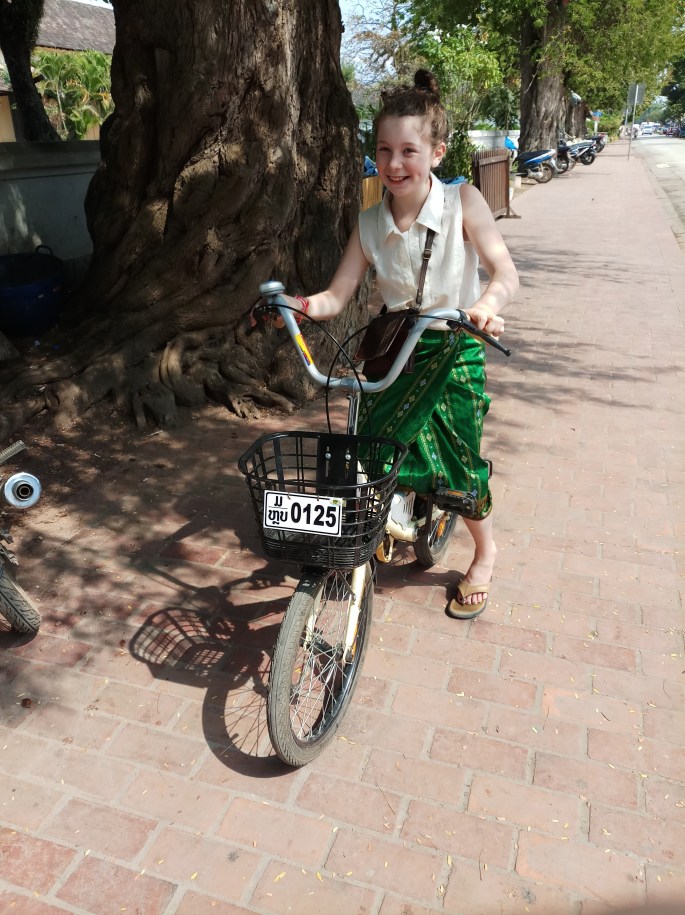
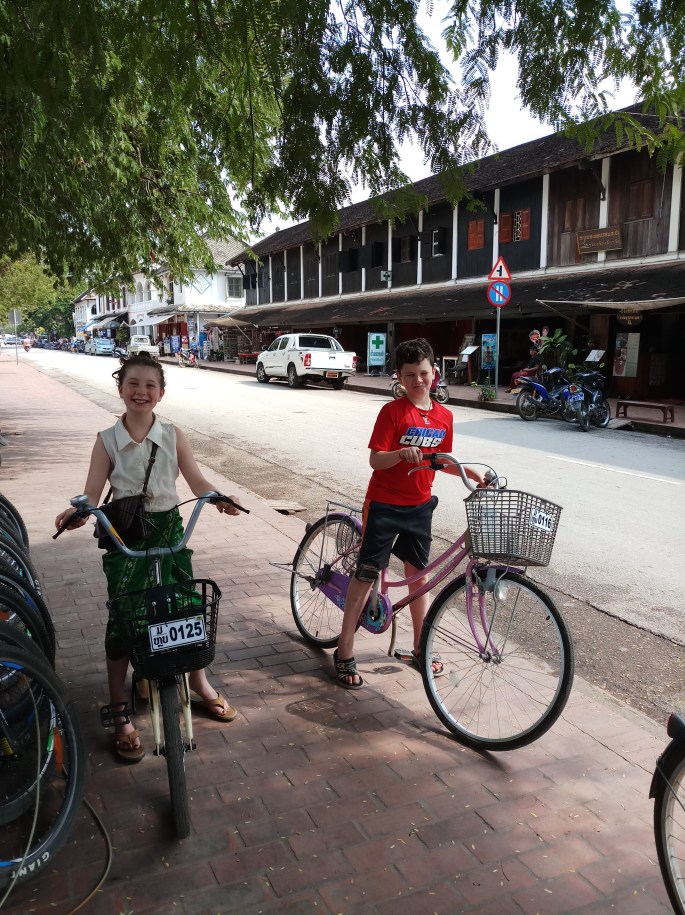
The worst bike ride ever? Well not really. We rented bicycles, which turned out to be great fun in the city, amongst the cars and motorbikes. It is amazing how my safety parameters have changed. I no longer feel that helmets and seatbelts are a necessity for ground travel. No life jackets on the boat, kayak, ferry…no problem! I have not seen a car seat in five months. Booster seats, funny. Kids are on laps, on motorbikes… I am more than happy when we are in a car and are surrounded by steel, protecting us from other cars. Now we ride bicycles in busy traffic, weave into traffic, ease into roundabouts and work on our confidence. Because deliberatness, confidence and awareness will keep you safe here, not helmets (which there are none). Our confidence with bikes is leading us towards renting scooters…maybe an island in Cambodia?

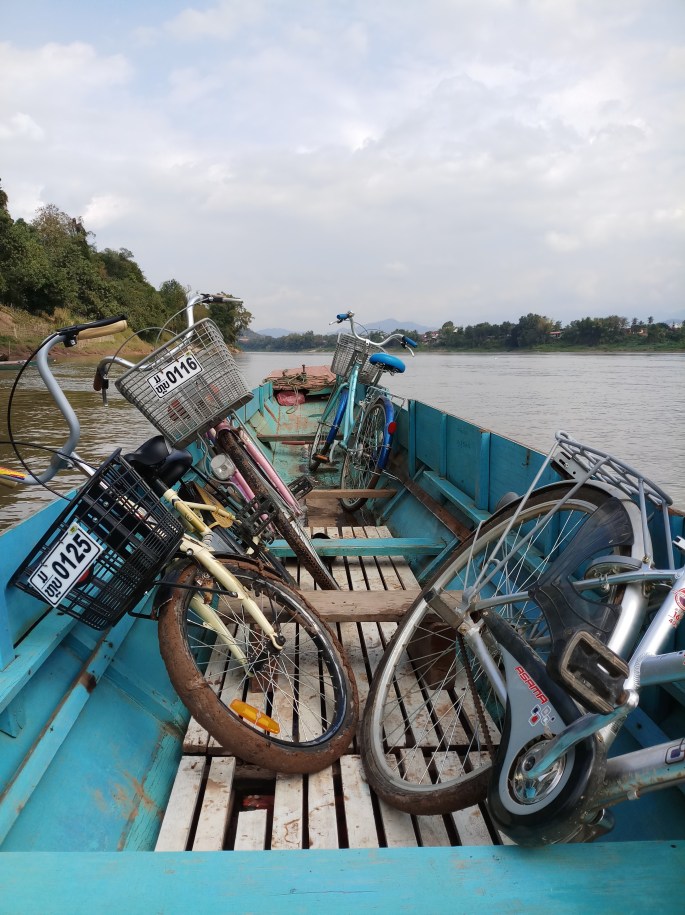
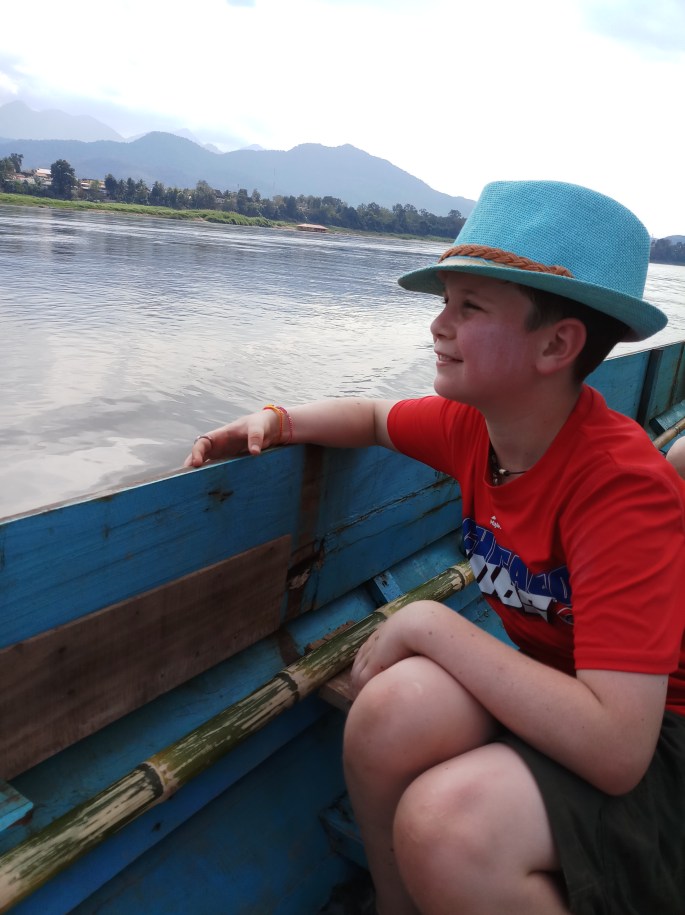
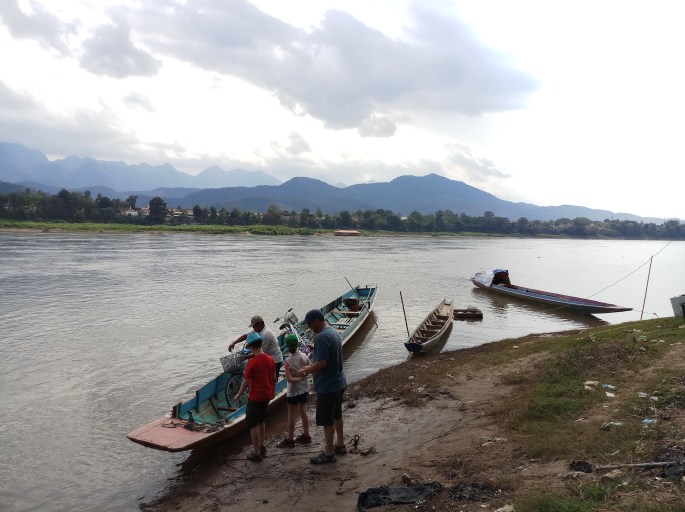
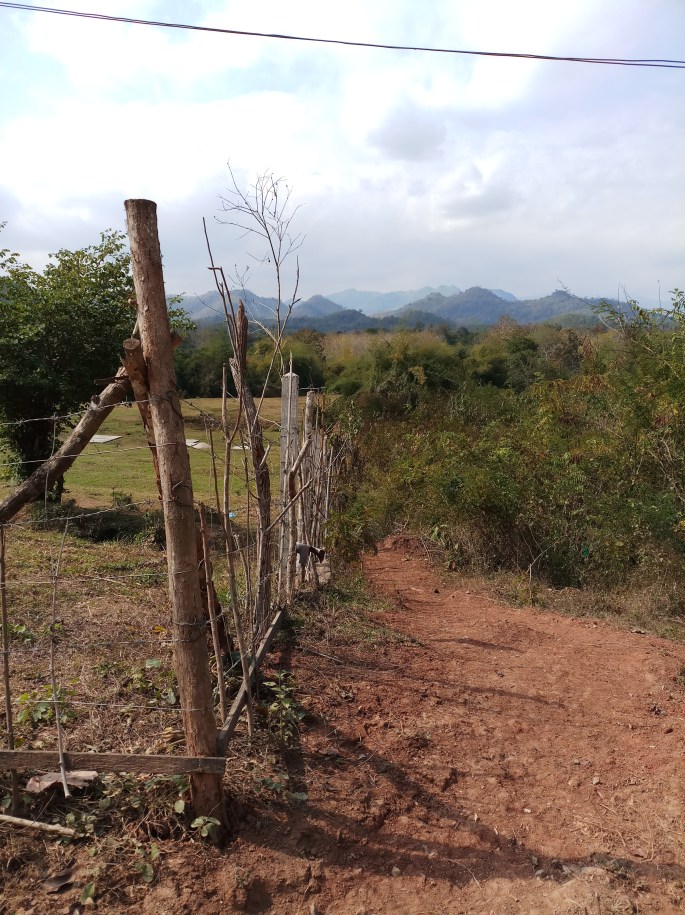
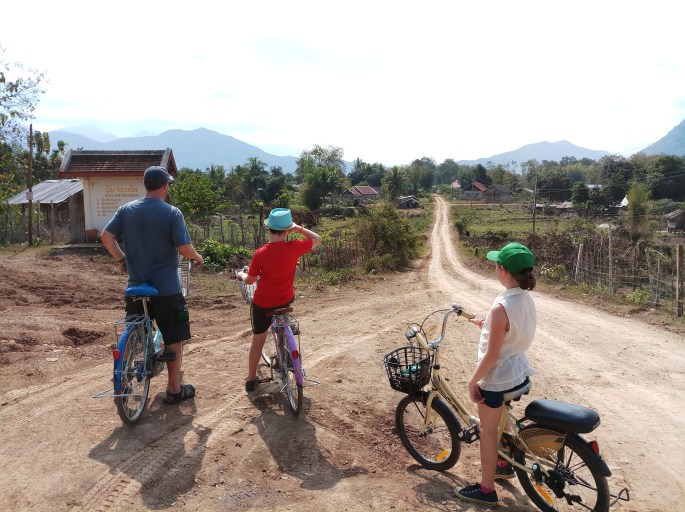
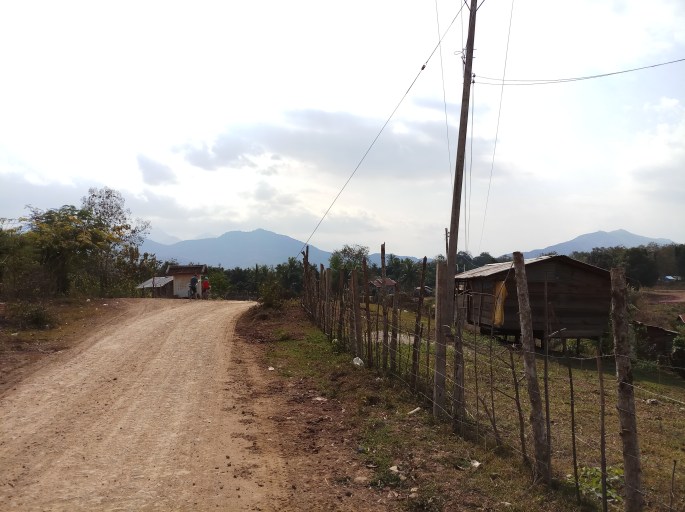
We took our bikes over the Mekong on a ferry that serves the locals and biked along dusty gravel roads, through villages and herds of water buffalo. It was hot, uphill and according to Addie, “the worst bike ride ever.” The scenery was spectacular and I kept laughing at our adventure folly as I watched Addie ride her bike through a herd of large water buffalo or Jack echo the “bleeps” back and forth in a conversation with a goat on the side of the road.

20180127_134042.jpg
The boat on the way back over the river
20180127_133637.jpg
Putting our bikes on this small rickety boat
20180127_131827.jpg
Our scenery

20180127_125050.jpg
We are getting tougher!
20180127_131817.jpg
Countryside
20180127_115410.jpg
Happy in the city before the bike ride from hell…
20180127_123802.jpg
Local ferry with local roosters

Trudging up a sand bank with our bikes going back, this is the conversation I overheard.

Addie asks “Dad, what does D I C K spell?”

Cork answers “It spells dick.”

Addie asks “What does that mean?”

Cork answers “Its a word for penis.”

Addie states “Well thats what Mom called you back there when you rode ahead and would not wait for us.”

There are tough moments for all of us. I laughed out loud when I overheard this exchange. We all did. We are learning a lot over this year!