
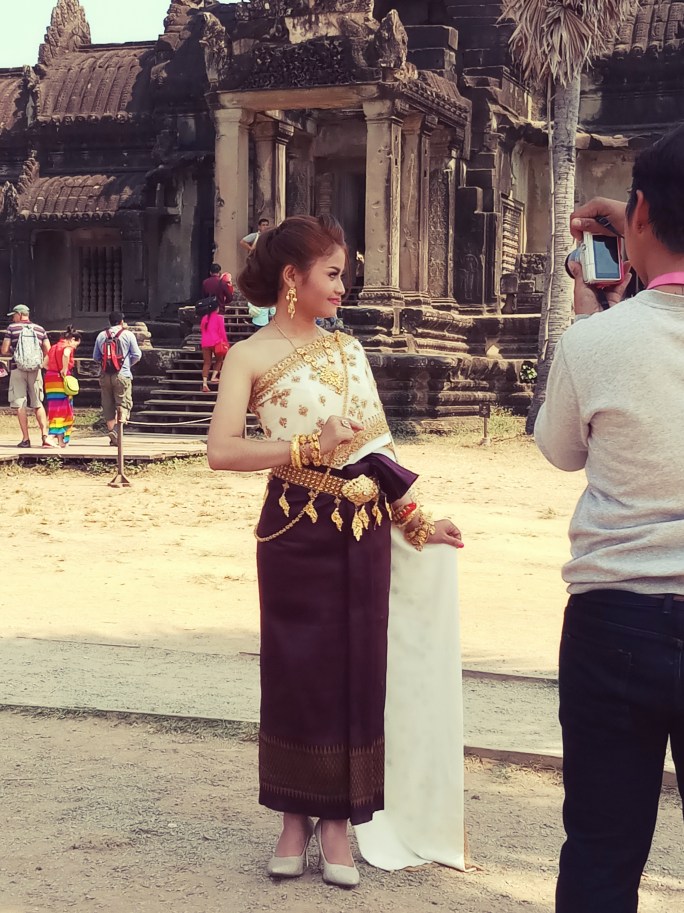
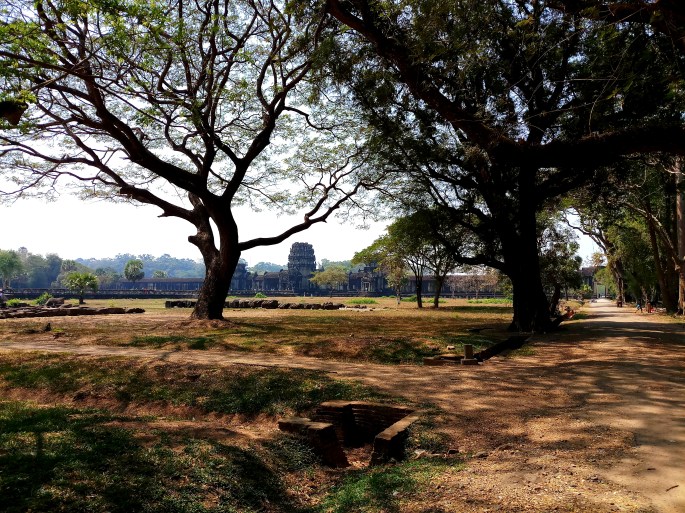
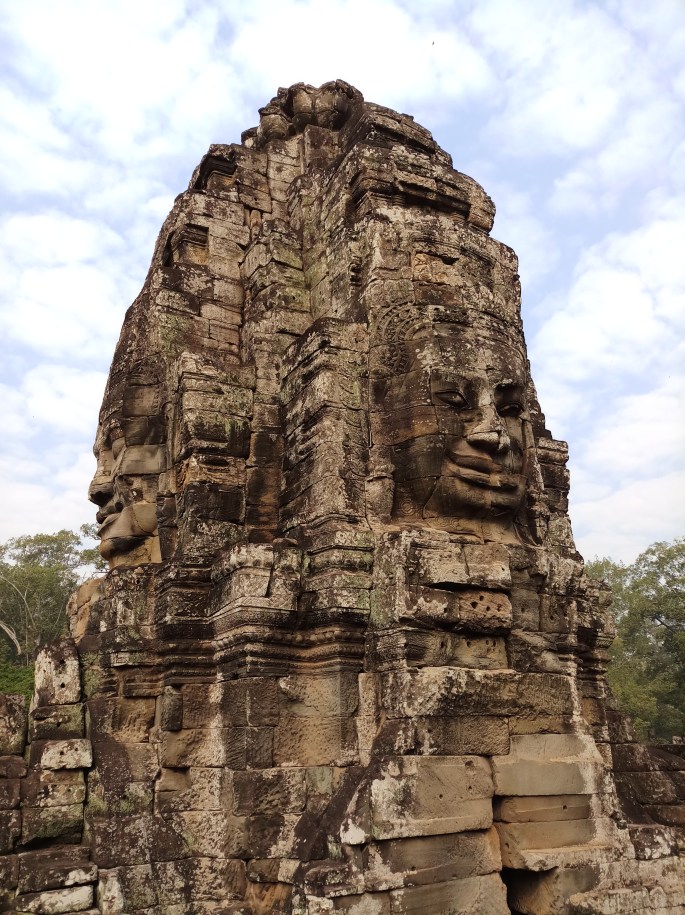
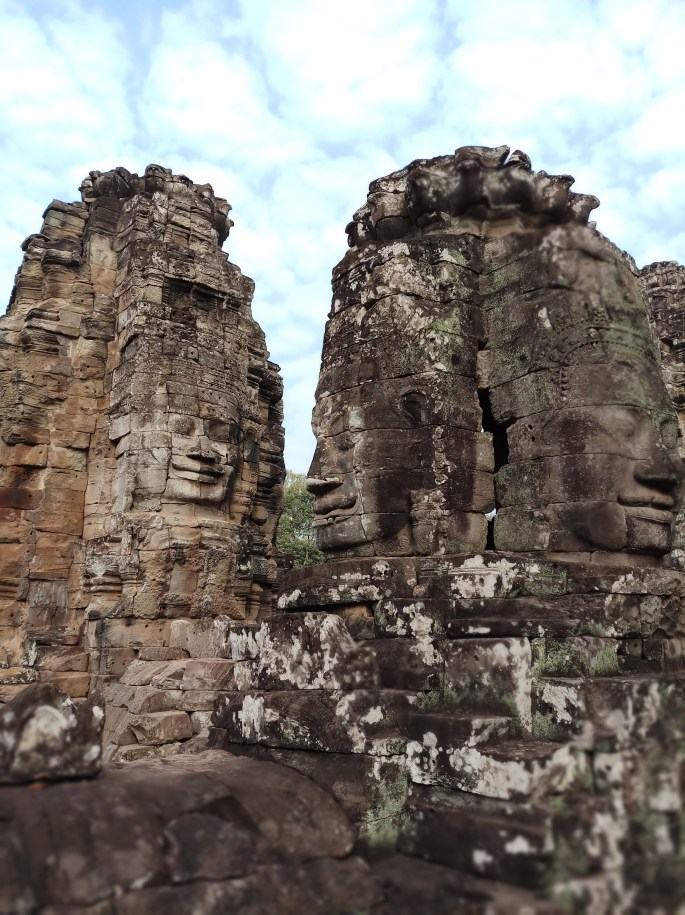
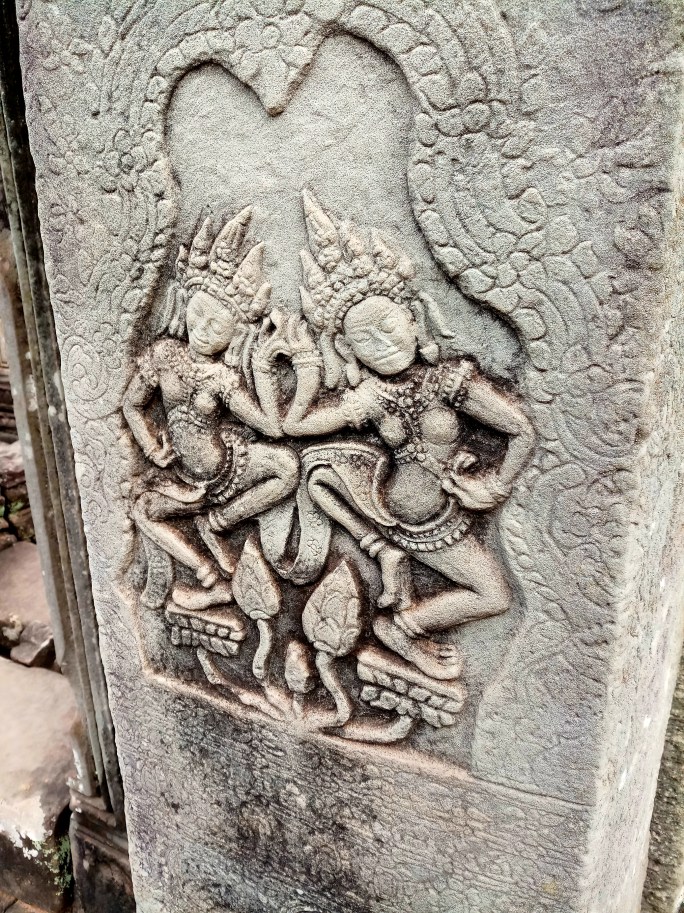
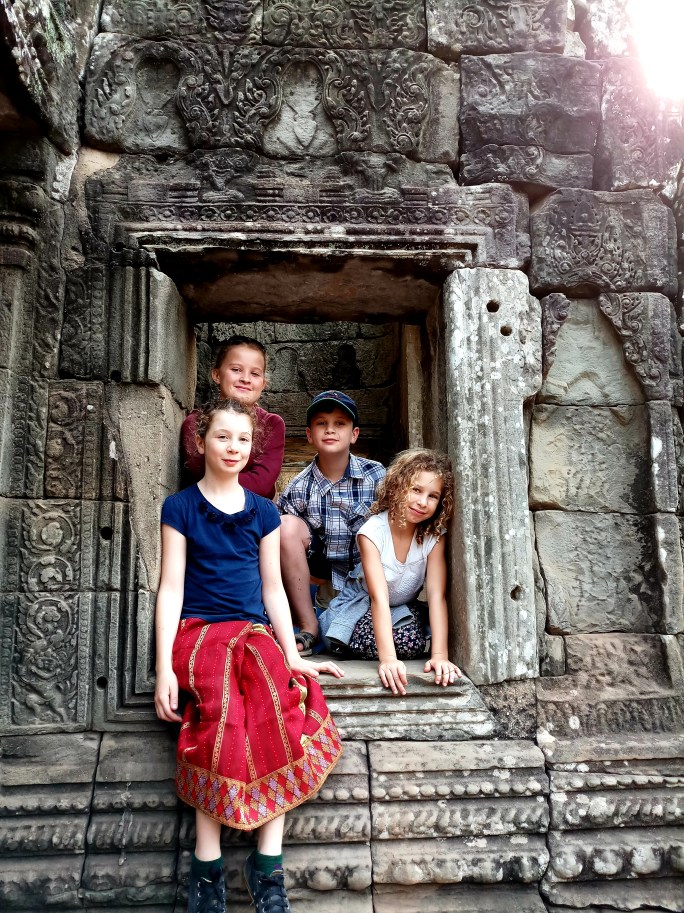
Angkor Wat is the reason that most people visit Cambodia. They come to walk around the largest religious temple built in the world. It covers 400 acres. Built at the behest of a succession of kings as a palace and place of worship during the 12th century, it is really a feat of architectural genius. At a hefty $37 entry fee per person for one day, this tourist attraction is a huge revenue source for the government. At 0830 in the morning, the large temple Bayon, the temple famous for its 215 towering Buddha faces was so packed with tourists taking selfies, that I felt claustrophobic. Considering what a huge money-making attraction Angkor Wat is, there is a slim chance that the Cambodian government will limit visitors. As a result, the experience loses a bit of its magic due to the sheer number of chatty, flower hat donning, mainly Chinese who arrive in large tour groups in a steady stream of buses.
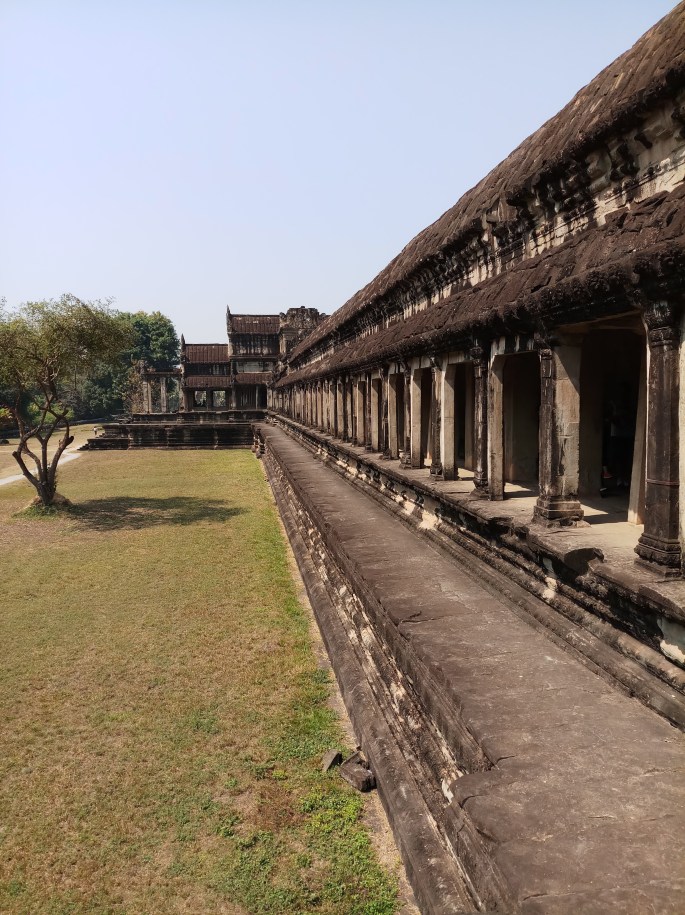
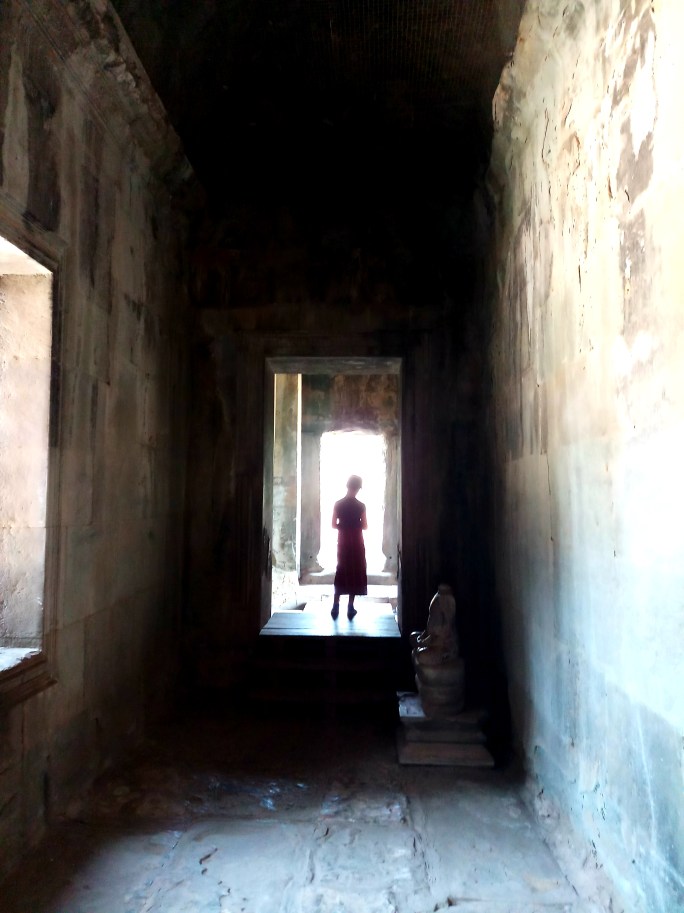
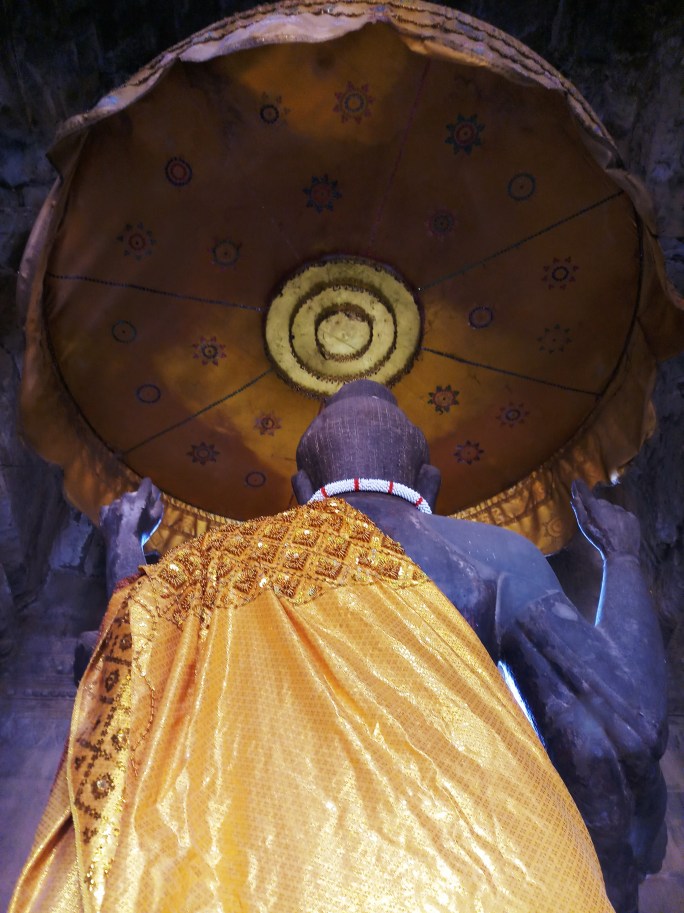
The enormity of this temple complex is symbolic of the level of world leadership that Cambodia held at one point in history. The Angkor Kings were considered Gods, the king of kings, thought to be capable of anything. The massive structures of Angkor Wat, sophisticated irrigation canals and advanced trade relationships are hallmarks of this great empire. The Khmer Empire, a Hindu-Buddhist power, dominated over most of Southeast Asia from 802 until 1431. Angkor, during its peak in the 11th to 13th centuries, was the largest pre-industrial urban center in the world. The Khmer empire fell in the 15th century to the Ayutthaya (Thai) armies. It is thought that climate change, long drought and plague weakened the empire before it was conquered. However, it is still a mystery exactly how this great society fell.
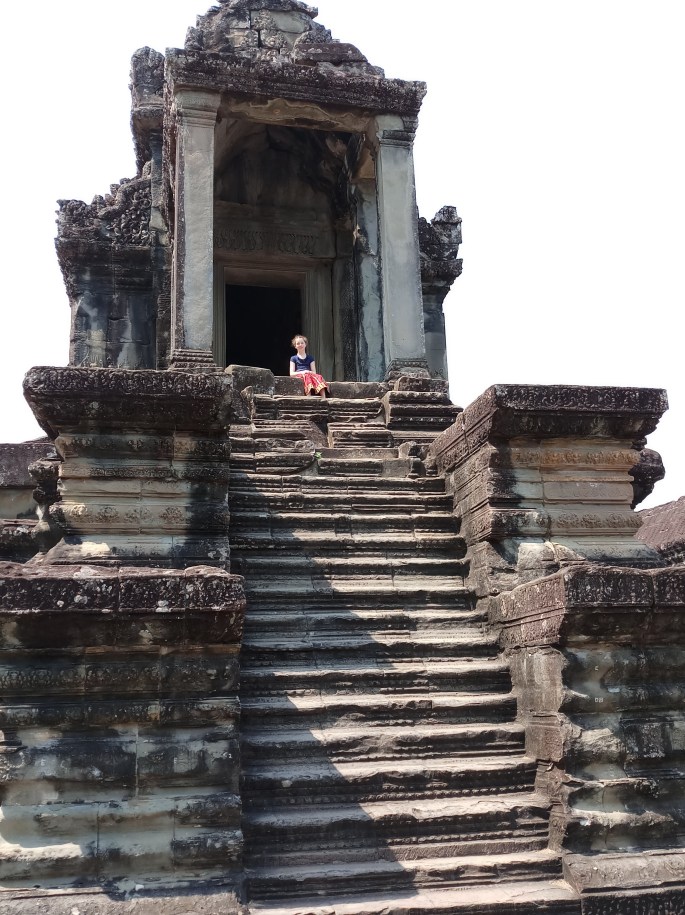

After 1500, Cambodia entered a dark age. Increasingly controlled by Thailand, and then dominated by Vietnam in the 17th century, Cambodia accepted French Protectorate status in 1863 as to not be absorbed by Vietnam or Thailand. Controlled and colonized by the French, Cambodia languished. It was bombed extensively during the Vietnam war, and then overtaken by the Khmer Rouge that promised an egalitarian agrarian society but delivered a sadistic genocide. Subsequent years of fighting, violence and starvation followed into the early 1990s. After the UN experiment failed to bring about real democracy, Hun Sen remains the prime minister. He fought for the Khmer Rouge for seven years, only switching to the Vietnamese side when it was clear the Khmer Rouge was losing. Through corruption, intimidation and violence he has maintained power for thirty years. His family is estimated to be worth 500 billion dollars. The average annual household income is $1,093. 
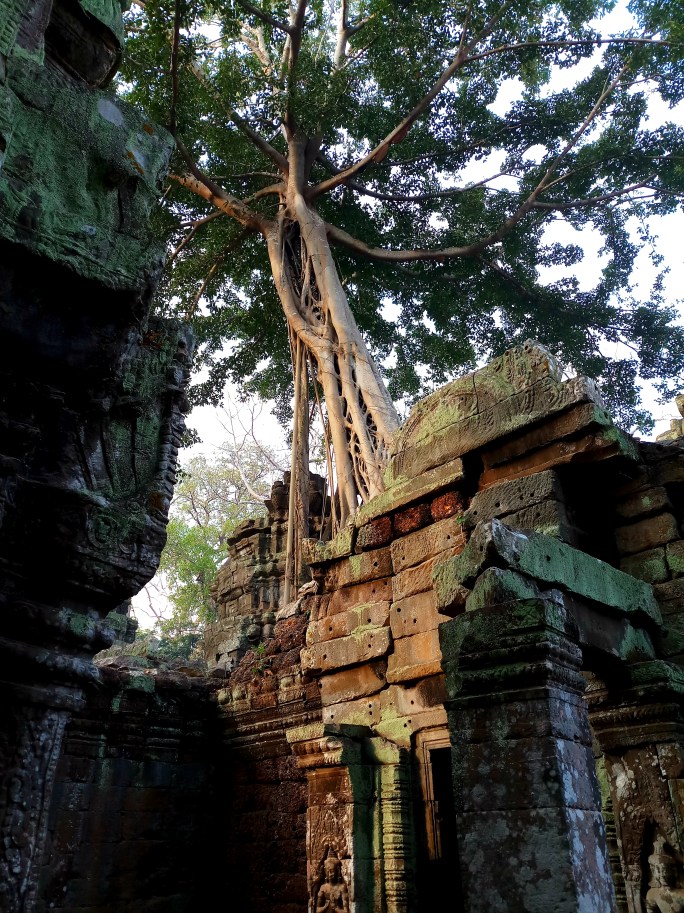
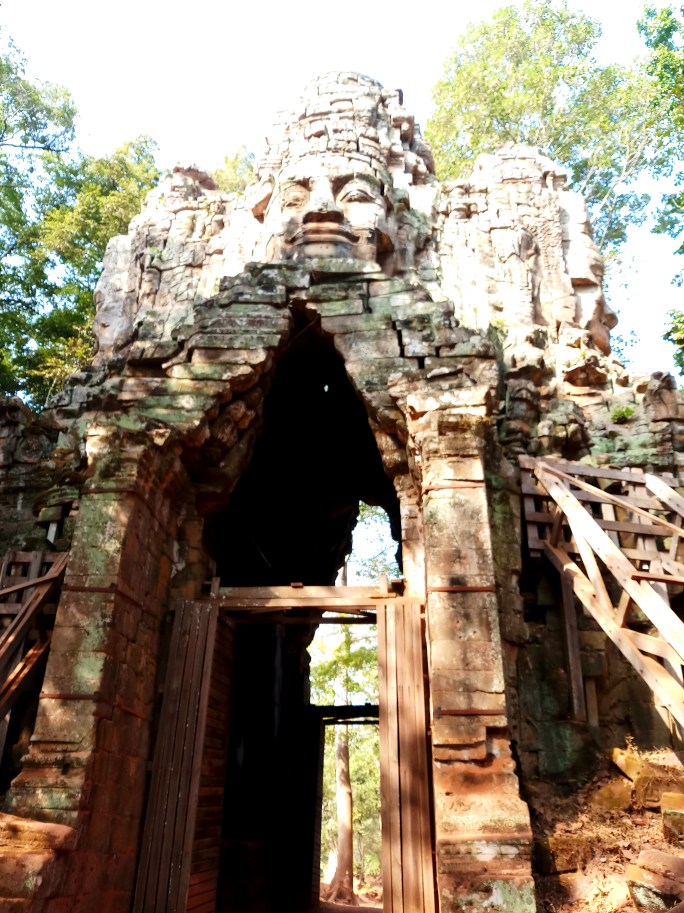
The people of this country have been to hell and back. The reason that I discuss the history of this region is that you can see how these missteps and decisions affect Cambodia today. Before traveling here my knowledge of these historical events was rather superficial. I am learning in real time what these events mean today. Shelled and burned out French homes in Battanbang and Kamphot remain standing and empty. Our TukTuk driver grew up in a refugee camp in Thailand when his family fled Cambodia. The woman who makes our lunch buried her mother and sister when she was nine years old and lived in the jungle for three years hiding from the Khmer Rouge. It is real and unescapable.
 Bochner Family Adventure
Sounds like a very interesting experience!
LikeLike
My wife and I traveled Cambodia and Angkor Wat in 2013.
We went in October there were, no crowds and the experience was magical.
From what I have read with increased tourisim there have been problems , due to some tourists disrepecting the culture and customs of the people. It is a shame that this wonderful place may have become too commercialized and considered nothing more then a money maker by the Cambodian government. For us it was an experience we will not soon forget .
LikeLike
It was still great but super crowded. Glad to hear your voice! Retired yet, enjoying life? Miss you.
Sukey
On Feb 15, 2018 12:00, “Bochner Family Adventure” wrote:
>
LikeLike